Cala d’Or, Mallorca: things to do, from cove to cove
13 min readUpdated  By Antoon
Contents
- Arriving in Cala d’Or
- Cala d’Or beaches: the cove walk from Cala Ferrera to Cala Egos
- Things to do in Cala d’Or and nearby
- Es Fortí, the fort of Cala Llonga
- From Cala d’Hort to Cala d’Or: Picarol and the white houses
- Cala d’Or market: where and when
- A day in Cala d’Or
- Cala d’Or through the seasons
- How to get to Cala d’Or by bus or car
- Where to stay in Cala d’Or: which area
- What you miss if you only pass through
- FAQ
Cala d’Or is the main resort in the municipality of Santanyí, on the south-east coast of Mallorca (Majorca), 64 km from Palma by road. The cartoonist Josep Costa Ferrer, known as Picarol, began dividing the land into plots in 1932 around a chain of small sandy coves, with white Ibiza-style houses. Six coves now follow one another along the shore, linked on foot, with a marina below the centre and an 18th-century fort on the point.
Cala d’Or suits you if you want to swap coves without a car (it is 840 m on foot from Cala Esmeralda to Cala Gran), if you travel by bus between April and October, or if you like a marina lined with restaurants. It suits you less between November and March, when most hotels and restaurants close and the summer bus lines stop on 31 October, or if you want a long beach: the coves are short, and Cala Esmeralda is just 25 m long. Allow half a day for the coves and the fort, two or three days if you add Cala Mondragó, Portopetro and Santanyí market.
Arriving in Cala d’Or
The 515e express bus from Palma stops on Avinguda de Calonge, on the edge of the centre. Two minutes’ walk away, the pedestrianised Plaça d’Antoni Costa bears the founder’s name and opens onto Carrer d’Andreu Roig, a traffic-free street of shops and restaurants. Carrer Picarol, which crosses Avinguda de Calonge, recalls his pen name.
The houses are white, cubic and flat-roofed, set behind dry-stone walls and pines. The church of Santa Maria del Mar, on Plaça de sa Figuera, stands on land the developer donated in 1956, and was built in the same Ibizan style as the villas.
From the square, a 500 m walk downhill brings you to the little cove of Cala d’Or itself, formerly Caló de ses Dones, which gave the resort its name. Pleasure boats anchor in front of fine sand laid out in terraces. Above it, on Avinguda de Bèlgica, stands the Hotel Cala d’Or, opened in the 1930s by the Belgian painter Médard Verburgh. To the north lie Cala Gran and Cala Esmeralda. Cala Ferrera, beyond them, already belongs to the neighbouring municipality of Felanitx.
Cala d’Or beaches: the cove walk from Cala Ferrera to Cala Egos
Six sandy coves line the Cala d’Or coast, separated by low rocky points. From north to south, from Cala Ferrera to Cala Egos, the walk covers about 7.3 km along streets and seafront paths, or 1 hour 40 minutes without stops. The longest stretch skirts the marina to reach the fort. Every stop has its own way into the water.
- Cala Ferrera (start). The northernmost cove is in Felanitx. It has a first-aid post, a marked zone for kayaks and paddleboards, and a few escars, boat sheds cut into the rock where fishermen still keep their boats.
- Cala Esmeralda (560 m, 7 min). Once called Caló des Corrals, it takes its current name from the colour of the water. The sand is 25 m long and 25 m wide, between low cliffs covered in pines, and there is a car park next to the beach.
- Cala Gran (840 m, 11 min). The largest cove in Cala d’Or sits at the end of a winding inlet. Arab ships landed here in the 14th century before sacking Santanyí. A lifeguard watches over it in summer.
- Cala d’Or, the cove of the name (700 m, 9 min). The little beach was called Caló de ses Dones, then Cala d’Hort, before becoming Cala d’Or. Terraces of sand rise behind the shore, and yachts drop anchor at the entrance.
- Plaça d’Antoni Costa (550 m, 7 min). Walk up through the pedestrian streets to the founder’s square. On Sunday evenings from May to October, it hosts a craft market.
- Port Petit, at the head of the marina (680 m, 9 min). The marina fills the former Cala Llonga, once a small fishing harbour for the people of Calonge. Opened in 1969, it holds more than 500 boats. Port Petit, a restaurant selected by the Michelin Guide, looks out over the pontoons on Avinguda de Cala Llonga.
- Es Fortí, on Punta Citerea (2.5 km, 35 min). Skirt the marina via Porto Cari, then follow Avinguda des Fortí to the point that closes off Cala Llonga. The square fort of 1793 stands 11.5 m above the sea, facing the open water.
- Caló des Pou and Cala Egos (1.4 km, 19 min). South of the fort, two small sandy coves border the Cala Egos district. To get back, the 521 bus stops at Cala Egos.
Things to do in Cala d’Or and nearby
The first five places below are within walking distance of the centre. Portopetro and Cala Mondragó are on the 521 bus line.
Cala Gran
The biggest of the coves ends at the tip of a winding inlet, over shallow white sand. The rocks on either side are good for a mask and snorkel; for more spots around the island, see our guide to snorkelling in Mallorca. There is a lifeguard in summer, with sunloungers and parasols for hire.
Cala Esmeralda and Cala Ferrera
Cala Esmeralda, the northernmost cove in Santanyí, measures 25 m by 25 m between low cliffs dotted with hotels and pines. Cala Ferrera, in Felanitx, lies at the end of a long inlet, with white sand and shallow water; fishermen’s boat sheds are dug into its rocky sides, and you can hire kayaks and paddleboards.
The marina
Dug in 1969 into the former Cala Llonga, the marina is split between Port Petit, below the centre, and Porto Cari, to the south. It has more than 500 berths, and the restaurants are at Port Petit.
Es Fortí
This square fort, 26.20 m along each side and completed in 1793, guarded the entrance to Cala Llonga. Listed as a site of cultural interest, it remains open as a viewpoint, on Avinguda des Fortí, 2.5 km on foot from the centre via the marina.
Portopetro
The neighbouring harbour, 3 km away on buses 515 and 521, grew up in the early 20th century on the land of the Sa Punta estate. The pedestrian Passeig de la Duana runs around the harbour and the Reial Club Nàutic, with boat sheds opening right at the water’s edge.
Cala Mondragó and S’Amarador
The two beaches of the Mondragó natural park, protected since 1992, are linked by a coastal path of about 400 m, and both hold a 2026 Blue Flag. They are 6 km away by car, or on the 521 bus from April to October. See our guides to Cala Mondragó and S’Amarador.
Santanyí
The main town of the municipality, 13 km away on the year-round 515 bus, keeps the Porta Murada, a remnant of its 14th- to 16th-century walls, and the church of Sant Andreu with its 18th-century organ. See our guide to Santanyí.
Es Fortí, the fort of Cala Llonga
In 1715, during the War of the Spanish Succession, part of the French fleet landed in the undefended bay of Cala Llonga. In 1740 a wooden battery with four cannons was set up on the point; it was taken down three years later.
The present fort was built on the orders of the commander Bernat de Tortosa, partly at the expense of the people of Santanyí, and completed in 1793. Sold at auction in 1878 and turned into a house in 1970, it was bought in 1992 by the Fundació Illes Balears and restored between 1993 and 1995.
Its landward walls, almost 1.5 m thick at the base, are pierced with loopholes. On the sea side, two large cannons fired through embrasures and two smaller ones over the parapet. In the middle of the courtyard, an octagonal well in local marès stone tops a cistern from the mid-19th century. From the gun terrace, the view takes in the whole coast the fort was meant to defend, from Cala Ferrera to Cala Egos.
From Cala d’Hort to Cala d’Or: Picarol and the white houses
Josep Costa i Ferrer was born in Ibiza on 7 June 1876. In Barcelona he drew for the satirical magazine L’Esquella de la Torratxa under the pen name Picarol, then for the Chicago Tribune. Back from Chicago in 1928, he opened the Galeries Costa in Palma and in 1929 published the Guies Costa, the first mass-market travel guides to Mallorca.
In 1932 he bought land on the Santanyí coast, between Cala Gran and Cala Llonga, and divided it into plots. He named the place Cala d’Hort, after a cove in Ibiza, but common usage turned it into Cala d’Or, “golden cove”. Among the first residents were the folklorist Antoni Mulet, the painters Olegari Junyent and Hermen Anglada Camarasa, and Natacha Rambova, former wife of Rudolph Valentino.
Costa wanted the architecture of his native island: white façades, flat roofs, stone walls and gardens around the houses. In 1956 he gave the land for the church, also built in the Ibizan style. He died in Palma on 9 December 1971. Plaça d’Antoni Costa and Carrer Picarol now carry both his names.
Cala d’Or market: where and when
Santanyí council lists no weekly market in Cala d’Or. The nearest is at Calonge, 4 km away, on Thursday morning on Plaça de Sant Miquel, mostly fruit and vegetables. At s’Alqueria Blanca, on the road to Santanyí, the market is on Tuesday morning.
The big market of the area is in Santanyí, on Wednesday and Saturday mornings on Plaça Major, 25 minutes away on the 515 bus. The full island calendar is on our page about Mallorca’s markets.
In Cala d’Or itself, from May to October, two craft markets set up in the evening: on Sunday on Plaça d’Antoni Costa, with around twenty stalls of jewellery, clothes and homeware, and on Thursday on Avinguda de sa Marina, in Cala Egos.
A day in Cala d’Or
This plan works on a summer day between 24 April and 31 October, when the 521 bus runs. On a Sunday, finish on Plaça d’Antoni Costa.
- 9am: a swim at Cala Gran, the largest cove.
- 10.35am: bus 521 to Cala Mondragó. It leaves from Avinguda de Calonge and reaches the natural park in 25 minutes (2026 summer timetable).
- 1.35pm: back for lunch at the marina. The 1.35pm bus from Cala Mondragó reaches the centre at 2pm; the restaurants at Port Petit face the pontoons.
- 4.30pm: around the marina to the fort, 35 minutes on foot from Port Petit to Es Fortí.
- 7pm: the terrace of Es Fortí in the late light, looking along the coast from Cala Ferrera to Cala Egos.
- 8.30pm: the Sunday evening market (May to October), with stalls of crafts, jewellery and clothes on Plaça d’Antoni Costa.
Cala d’Or through the seasons
Spring. The 515e express to Palma returns at the end of March (27 March in 2026), and lines 521 to Cala Mondragó and 428 to Porto Cristo at the end of April (24 April in 2026). Hotels reopen gradually in April. May and June are good months: the summer buses run and the coves aren’t yet full.
Summer. On 15 August, Cala d’Or celebrates Santa Maria del Mar with an evening mass at dusk followed by a procession at sea. From May to October, the craft markets run on Sunday evening on Plaça d’Antoni Costa and Thursday evening in Cala Egos.
Autumn. Lines 515e, 521 and 428 run until 31 October, and many hotels close on the same date. September is another good month to come. On the third Saturday of October, the Fira de Santanyí showcases farming, crafts and local industry, 13 km away.
Winter. The resort empties from November to March. The 515 bus still links Cala d’Or with Campos roughly every two hours, with a connection to Palma. In Calonge, the Sant Antoni bonfires are lit on the eve of 17 January.
How to get to Cala d’Or by bus or car
By car, Cala d’Or is 64 km from Palma, about an hour on the Ma-19, which passes close to the airport and then runs via Llucmajor, Campos and Santanyí. From the airport, allow 58 km and an hour. To compare deals, see our page on car hire in Mallorca. Cala Esmeralda has a car park next to the beach; at Cala Gran, you park in the surrounding streets.
From the end of March to 31 October, the 515e express links Palma’s Estació Intermodal with Cala d’Or via Santanyí and Portopetro in 1 hour 25 minutes, with five departures a day in each direction, some on weekdays only. The rest of the year, take the 501 to Campos, then the 515, which takes 40 minutes from Campos to Cala Esmeralda.
There is no direct bus from the airport: the A51 runs from the airport to Campos, where the 515 takes over. Our guide to TIB buses in Mallorca explains how the network works.
- 515e: Cala d’Or – Portopetro – Santanyí – Palma, 1 hour 25 minutes, five departures a day from 27 March to 31 October (2026).
- 515: Cala d’Or – Portopetro – s’Alqueria Blanca – Santanyí – Campos, 40 minutes to Campos, roughly every two hours, all year.
- 521: Cala d’Or – Cala Egos – Portopetro – Cala Mondragó, 25 minutes, 11 departures from 8.20am to 8.05pm, from 24 April to 31 October (2026).
- 428: Cala d’Or – Portocolom – Cales de Mallorca – Porto Cristo, 25 minutes to Portocolom and 1 hour 10 minutes to the Caves of Drach, hourly from 9.30am to 8.30pm, from 24 April to 31 October (2026). Our guide to Porto Cristo covers the harbour at the end of the line.
- 514: Cala d’Or – Calonge – S’Horta – Felanitx – Porreres, all year.
- A51: airport – Campos, then the 515, all year.
Where to stay in Cala d’Or: which area
The centre wraps around Cala Gran; the hotel districts spread north towards Cala Esmeralda and Cala Ferrera, and south towards Cala Egos. According to Booking.com, Cala d’Or has 16 all-inclusive properties, one of the highest totals on the island (see our all-inclusive hotels in Mallorca).
Centre, Cala Gran and the cove of Cala d’Or
Between Plaça d’Antoni Costa and Cala Gran, everything is on foot, including the 515e stop. The four-star Hotel Cala d’Or overlooks the cove from Avinguda de Bèlgica. Best for a stay without a car, as close as possible to the coves.
Cala Esmeralda and Punta Grossa
The northern hotel district runs down to Cala Esmeralda. The four-star superior Inturotel Cala Esmeralda sits right on the cove and only takes adults aged 16 and over. Cala d’Or Playa is on Avinguda de Punta Grossa. Best for couples who want to be by the water.
Cala Ferrera and Cala Serena
These two northern districts belong to Felanitx. Cabot Cala Ferrera is on Avinguda de Felanitx, and Robinson Club Cala Serena on Carrer del Caló Petit. Best for families and holiday clubs.
Es Fortí and Cala Egos
South of the marina, hotels line Avinguda des Fortí: Rocamarina at no. 14, Alua Suites Las Rocas at no. 107, and Calimera Fido Gardens in Cala Egos. The 521 bus passes here. Best for peace and quiet, near the fort and the buses to Mondragó.
Portopetro
The neighbouring harbour is 3 km away on lines 515 and 521, and 2.9 km on foot from Cala Mondragó. The five-star grand luxe Ikos Porto Petro is on Camí des Far, and Iberostar Waves Club Cala Barca on Carrer de sa Barca Trencada. Best for a smaller harbour.
What you miss if you only pass through
- The octagonal well and loopholes of Es Fortí, and the view from its gun terrace over the coast from Cala Ferrera to Cala Egos.
- The escars of Cala Ferrera, boat sheds dug into the rock where fishermen still keep their boats.
- Carrer Picarol and Plaça d’Antoni Costa, which keep both names of the cartoonist who founded the resort.
- The waterside boat sheds of Portopetro, 3 km away on the 515 or 521 bus.
- The Thursday morning market in Calonge, 4 km away, and its neo-Romanesque church, blessed in 1909.
FAQ
What day is the market in Cala d’Or?
No morning market is listed in Cala d’Or. The nearest is in Calonge, 4 km away, on Thursday morning, and Santanyí holds its own on Wednesday and Saturday mornings. From May to October, a craft market takes place on Sunday evening on Plaça d’Antoni Costa.
Is Cala d’Or in Santanyí or Felanitx?
Cala d’Or belongs to Santanyí and is its largest settlement, with around 4,150 registered residents in 2024. Cala Ferrera and Cala Serena, at the northern end of the resort, belong to Felanitx.
How do you get to Cala d’Or from Palma or the airport by bus?
From the end of March to 31 October, the 515e express leaves Palma’s Estació Intermodal and takes 1 hour 25 minutes. In winter, take the 501 to Campos, then the 515. From the airport, the A51 goes to Campos, where the 515 takes over.
What is the biggest beach in Cala d’Or?
Cala Gran, at the end of a narrow inlet, with shallow white sand, a lifeguard in summer and restaurants behind the beach. Cala Esmeralda is only 25 m long.
Is Cala d’Or open in winter?
Barely. Most hotels and restaurants close at the end of October, along with bus lines 515e, 521 and 428. The 515 bus keeps running between Cala d’Or, Santanyí and Campos all year.
Read next
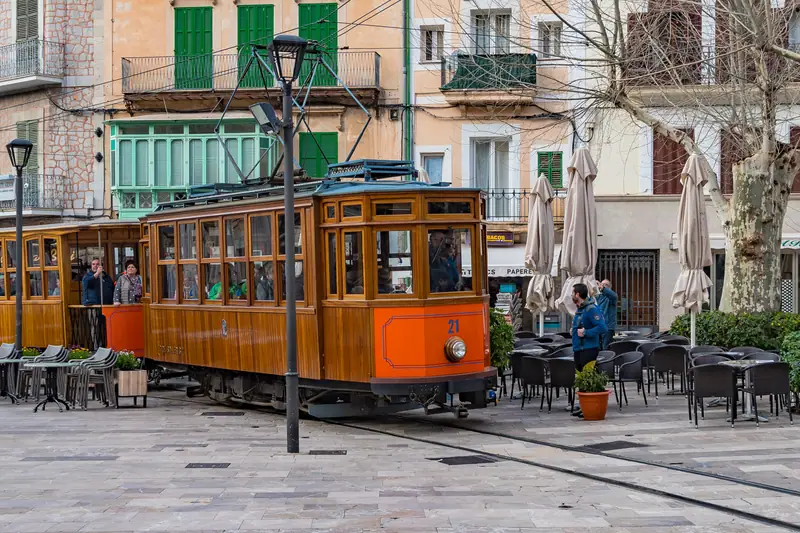
Things to do in Sóller, Mallorca: the train, the tram, the port and the valley
Things to do in Sóller, Mallorca: train or free tunnel, Sant Bartomeu church, the tram to the port, red prawns and where to park.
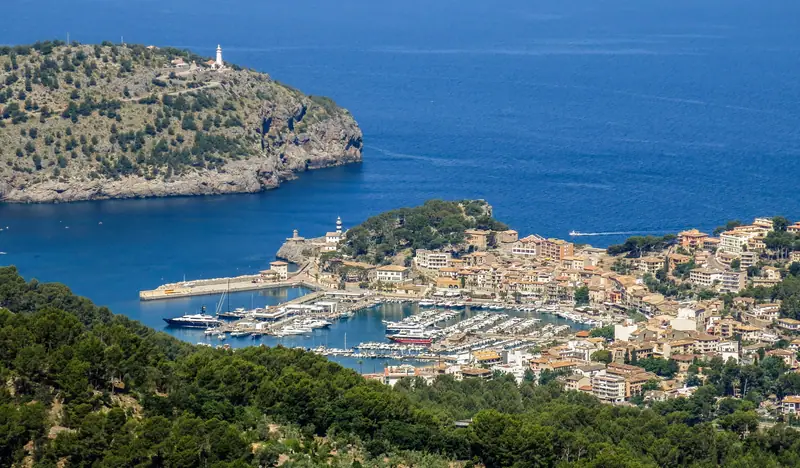
Port de Sóller, Mallorca: things to do, the tram, beaches, lighthouses and where to stay
Things to do in Port de Sóller: the 1913 tram from Sóller (30 min, €10), Repic beach, the Cap Gros lighthouse, boats to Sa…
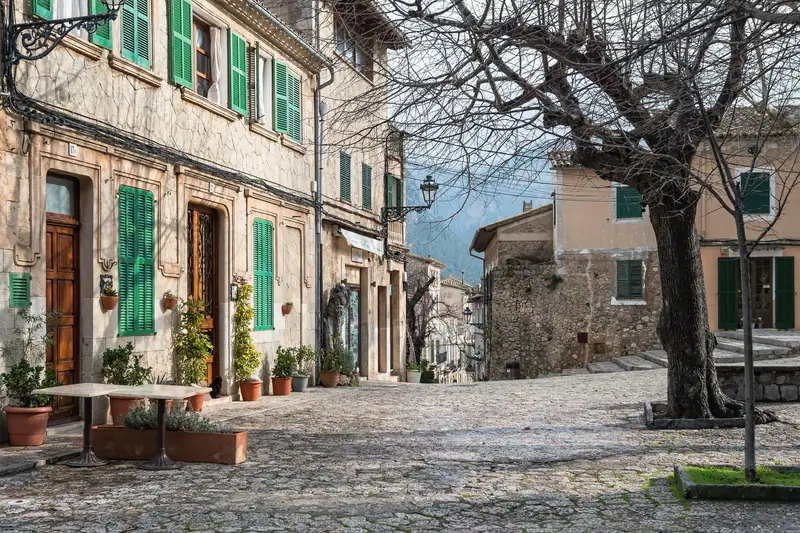
Valldemossa, Mallorca: the Charterhouse, coca de patata and parking
Valldemossa without the crowds: Chopin's Charterhouse (€12.50), coca de patata at Ca'n Molinas, the best viewpoint, the…