Santanyí market and village: market days, what to see and nearby calas
8 min readUpdated  By Antoon
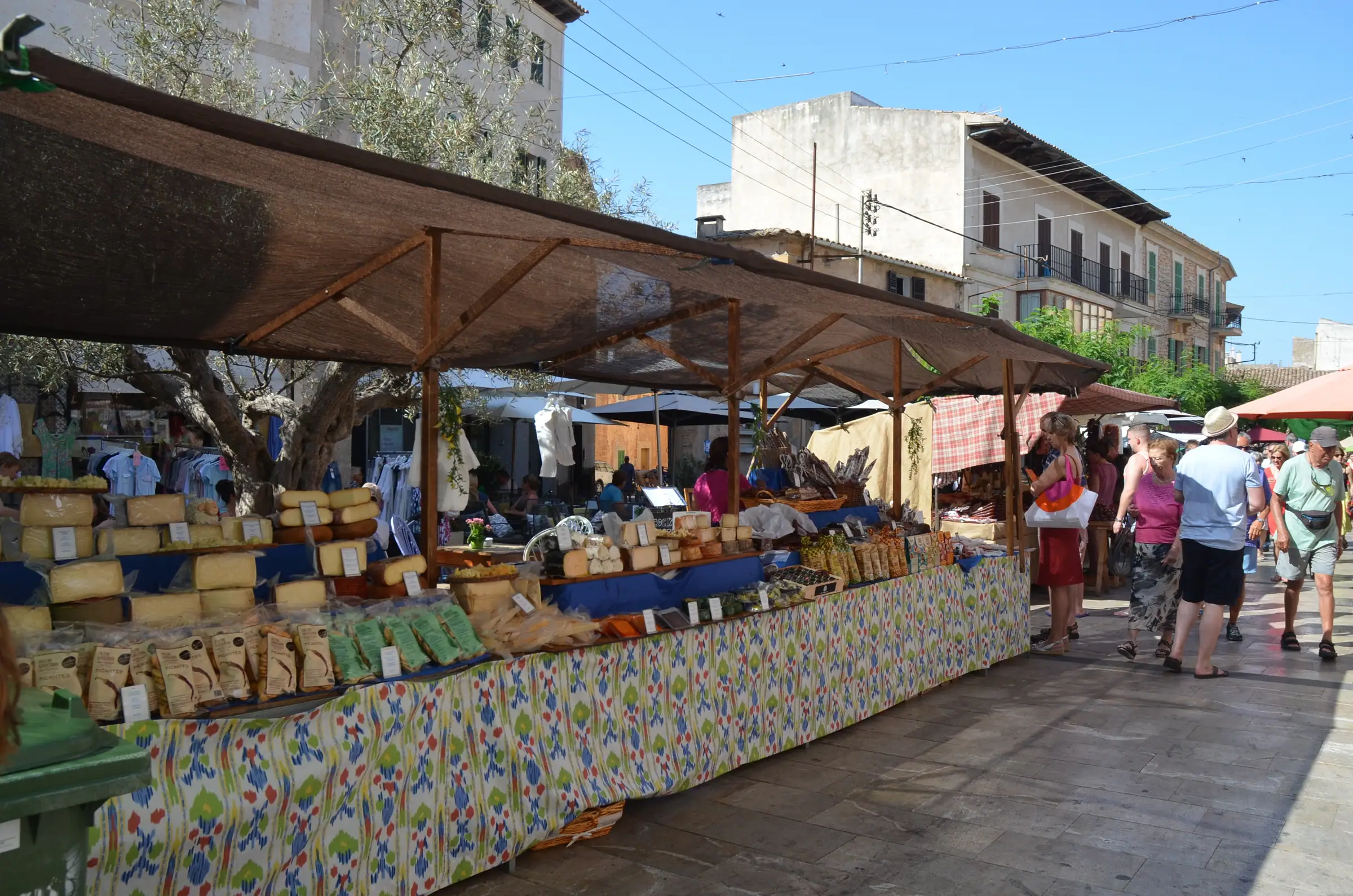
Photo: Krisztina.Konczos, CC BY-SA 2.0, via Wikimedia Commons
Contents
- What makes Santanyí different: the stone that built Palma
- Santanyí market: Wednesday and Saturday mornings
- Things to do in Santanyí beyond the market
- Restaurants in Santanyí
- Santanyí festivals: Sant Jaume and the Fira
- Beaches near Santanyí: the best calas of the south-east
- Nearby villages to combine with Santanyí
- How to get to Santanyí from Palma
- FAQ
Santanyí market fills the Plaça Major and the surrounding lanes every Wednesday and Saturday morning, all year round. Arrive between 9am and 10.30am and park near the fire station, a five-minute walk from the square. The village itself, built in honey-coloured stone, sits in the south-east of Mallorca, 50 km from Palma, with some of the finest calas of the south a few kilometres away, such as Caló des Moro; the long beach of Es Trenc, in the municipality of Campos, is a little further.
Most visitors drive straight through on their way to a beach. Those who stop for an hour or two often stay the whole day. Come on a Wednesday morning, when locals buy their vegetables before the tourists arrive: that is when Santanyí feels like a living village rather than a backdrop.
What makes Santanyí different: the stone that built Palma
The village is built almost entirely in Santanyí stone, a local honey-coloured limestone that has been quarried in the area for centuries. The same stone was used to build Palma Cathedral, and you find it on most of the old façades in the village. The result is a coherent, warm-looking place, free of the modern blocks that spoil other villages.
In the late afternoon, the façades on the Plaça Major turn somewhere between gold and pinkish ochre. The municipality is also the southernmost on the island, with around 35 km of coastline and the Mondragó Natural Park (about 766 hectares), protected since 1992.
Santanyí market: Wednesday and Saturday mornings
The market has made the village’s name across the island. It is one of the best-rated in the calendar of Mallorca’s markets, and it takes over the Plaça Major and every lane leading off it in the historic centre. Some stalls set up 200 metres from the main square, which gives you an idea of its size.
Two markets in one: local produce and makers
On the Plaça Major you find the local produce: fruit and vegetables from the Campos plain, artisan cheeses, sobrassada and botifarró, salt from the Ses Salines salt pans, local olive oil and homemade jams, sold directly by the producers.
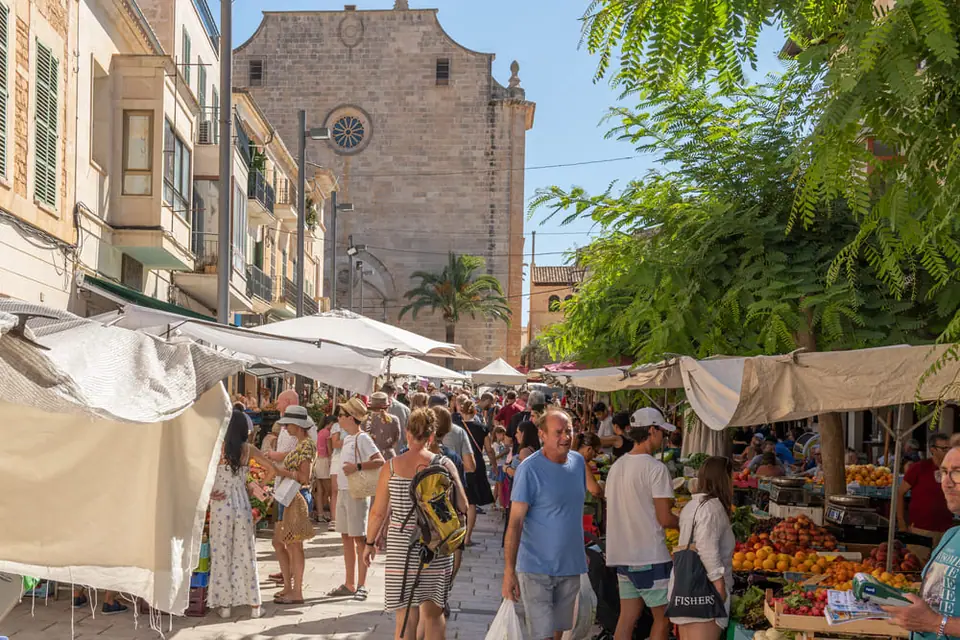
In the lanes, the makers take over: handmade jewellery, linen and cotton clothes, Pòrtol ceramics, sculptures in Santanyí stone and roba de llengües, the traditional Mallorcan fabric with coloured stripes. Locally it is called the “chic market” of Mallorca, and it earns the name: well-dressed stalls, a bohemian mood and a loyal international crowd. To be fair, a few stalls on the edges sell tat. To avoid them, stay in the lanes close to the square and look for the stallholders speaking Mallorquí: they are the local producers.
Santanyí market times: when to arrive
The ideal window is 9am to 10.30am. The best food goes early, and the local producers do not restock. In July and August, after 11am, the narrow lanes become hard going, with heat trapped between the façades and dense crowds. Wednesday is slightly quieter than Saturday and has more locals, a good option if you prefer a village atmosphere.
The market runs all year, except on a few national public holidays. In winter there are fewer craft stalls, but it is easy to get to and the atmosphere is genuinely local.
Santanyí market parking
Avoid the town centre. The best car park is near the fire station (Carrer Bernat Vidal y Tomàs): it is large and five minutes on foot from the Plaça Major.
Things to do in Santanyí beyond the market
Sant Andreu church and its 1762 organ
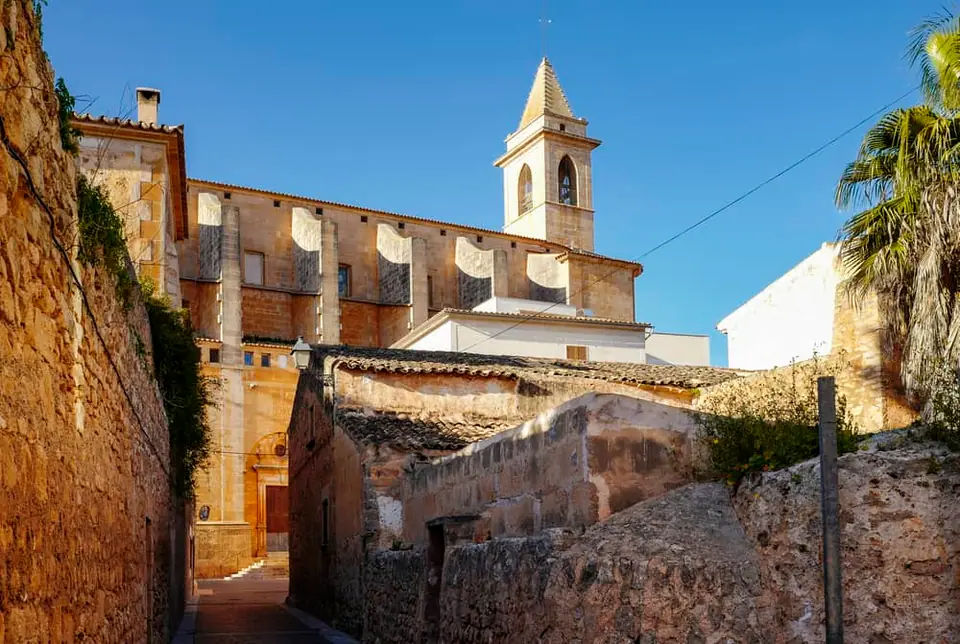
Sant Andreu church dominates the Plaça Major. Building began on 25 July 1786, a date the village still celebrates every year at the Sant Jaume festival. Built entirely in Santanyí stone, it houses a baroque organ made in 1762 by Jordi Bosch for the convent of Sant Domingo in Palma, and moved here after that convent closed in the 19th century. Concerts of the International Music Festival (April to September, often free) are held here, and the interior is worth a few minutes even without a concert. Close by, the Porta Murada, a gate in the old medieval walls, restored and listed, leads into the oldest lanes of the village.
Art galleries and studios in the lanes
On Carrer de s’Aljub, the house and studio of Gemma Leys, a Dutch artist who has lived here for twenty years, is open to visitors: a maze of rooms with walls covered in her colourful work, in an old house she lives in day to day. Entry is free. The Galerie Barceló, on the square, shows contemporary work that changes every season, and several designer shops round off a walk around the square.
Es Pontàs: the natural arch near Cala Santanyí
Two kilometres from Cala Santanyí, Es Pontàs is a rock arch carved by the sea, one of the most striking in the Mediterranean. It is a cult spot for psicobloc climbers (deep-water soloing above the sea) and a superb place for photos at sunset. You reach it by the coastal path from Cala Santanyí, about 20 minutes on foot. There is nothing to pay.
Restaurants in Santanyí
Ocre, the restaurant of the Can Ferrereta hotel (Carrer de Can Ferrereta, 12), is one of the village addresses selected by the Michelin Guide: Mediterranean cooking, served in the patio when the weather allows. Booking is essential, especially at weekends. For something more relaxed, Es Cau, in the lanes near the Porta Murada, serves local tapas and a list of Mallorcan wines in a cosy wine-cellar setting. Allow €20 to €30 for a full meal.
On market day, many visitors simply graze on the Plaça Major: some stalls sell fresh morning ensaïmadas, local sheep’s cheese and olives marinated with garlic and herbs. For dinner, the restaurants at Cala Santanyí (5 km) have several seafront terraces, decent fish and sunsets over the cliffs.
Santanyí festivals: Sant Jaume and the Fira
Two yearly events are worth the trip if you are on the island at the right time.
The Sant Jaume festival (25 July), also called the “festa de l’obra”, commemorates the laying of the first stone of the parish church; the patron saint’s day, Sant Andreu, falls on 30 November. For several days the Plaça Major is transformed, with open-air concerts in the evening, ball de bot (traditional Mallorcan dancing), fireworks and an extended craft market. The atmosphere is local and family-friendly: worth the detour at the end of July.
The Fira de Santanyí (third Saturday in October) is the annual agricultural, craft and trade fair: local livestock, a contest for the best sobrassada, craft demonstrations and produce from the south-east of the island. Less touristy than the weekly market. Our page on local festivals in Mallorca lists the exact dates each year.
Beaches near Santanyí: the best calas of the south-east
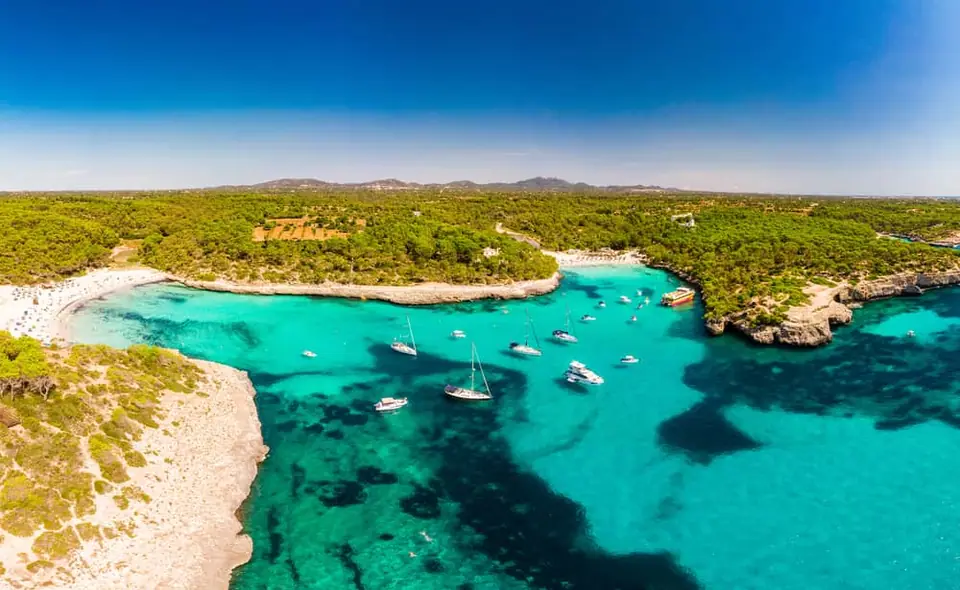
Within 10 km of the village you find a cluster of calas among the most beautiful in Mallorca. Three stand out.
Cala Santanyí: 110 metres of white sand and full facilities
Five kilometres from the village. A Blue Flag beach with 110 metres of fine white sand and calm, shallow water, ideal for families with young children. Showers, sunbeds for hire, restaurants and a wheelchair-accessible walkway. In July and August it is packed from 10am: arrive before 9.30am in high summer, or come out of season to have the beach almost to yourself.
Cala Llombards: the cove hidden behind the cliffs
The least known of the three, and often the best for snorkelling. Crystal-clear water framed by high cliffs and Mediterranean scrub, fine white sand and a small beach bar. On a weekday out of season you can spend two hours there almost alone. You can get there by car or on foot from Santanyí.
Cala Mondragó: the wild one, inside its natural park
Ten kilometres away, in the Mondragó Natural Park (about 766 hectares, protected since 1992). Two coves, Cala Mondragó and S’Amarador, are linked by a coastal path through dunes, pine woods and marshland. No concrete, no resort. Parking is regulated in summer. Our guide to Cala Mondragó covers access and the park’s footpaths.
Nearby villages to combine with Santanyí
The south-east is easy to explore from Santanyí. Two villages are worth a 30 to 45-minute stop.
Ses Salines (8 km north-west) is the village of Mallorca’s salt plain. The nearby Salines de Llevant are a nature reserve for migrating birds, including flamingos from April to September, with free entry. The road there, lined with dry-stone walls, fig trees and carob trees, is classic Mallorcan countryside.
Campos (14 km north) is the market town of the southern plain. Its Thursday market is more practical than touristy, with plenty of local farmers and few foreigners. If you are after the cheapest sobrassada on the island, bought straight from the producer, this is the place. The Farmàcia del Roser, in the centre, is a historic 19th-century pharmacy preserved intact, listed as a monument of local interest and open to the public.
How to get to Santanyí from Palma
Santanyí is 50 km from Palma, about 40 minutes by car on the MA-19 motorway via Llucmajor and Campos. By bus, from the Estació Intermodal on Plaça d’Espanya, the TIB 515e express reaches Santanyí in about 45 minutes to an hour (Monday to Friday); otherwise, take line 501 to Campos, then the 515 to Santanyí. Lines 515, 516 and 517 run to the nearby calas. Our guide to public transport in Mallorca covers frequencies and timetables by season.
FAQ
What days is Santanyí market?
Every Wednesday and Saturday morning, all year round. Only a few national public holidays can change the dates. In winter there are fewer craft stalls, but the atmosphere is more local and getting there is easier. Aim for 9am to 10.30am.
Is there parking in Santanyí on market day?
Yes. The best car park is near the fire station (Carrer Bernat Vidal y Tomàs), five minutes from the Plaça Major. Avoid the centre: the streets are narrow and often blocked from 9.30am on market days.
What is the best beach near Santanyí?
For families, Cala Santanyí (5 km, fine sand, full facilities). For snorkelling and peace and quiet, Cala Llombards. For wild, unspoilt nature, Cala Mondragó, in the Mondragó Natural Park (10 km).
When is the best time to visit Santanyí?
April to June and September to October: good weather, warm enough to swim in the calas, and a market you can reach without fighting for a parking space. In July and August, arrive before 9.30am. Winter shows a quieter, truer side of the village, and the Wednesday market still runs.
Can you visit Santanyí without a car?
Yes. The TIB 515e express links Palma and Santanyí on weekdays, or take the 501 to Campos and change to the 515. Lines 515, 516 and 517 serve the coast. Market in the morning, cala in the afternoon: a very good day without a car.
Read next
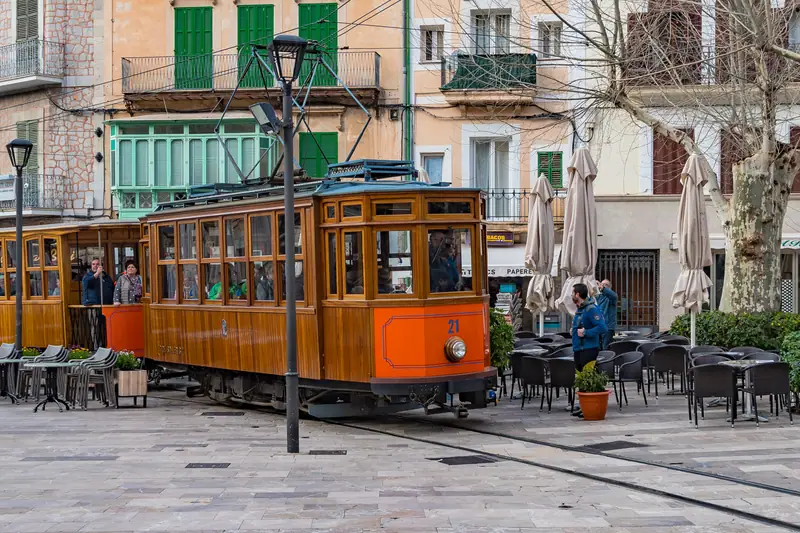
Things to do in Sóller, Mallorca: the train, the tram, the port and the valley
Things to do in Sóller, Mallorca: train or free tunnel, Sant Bartomeu church, the tram to the port, red prawns and where to park.
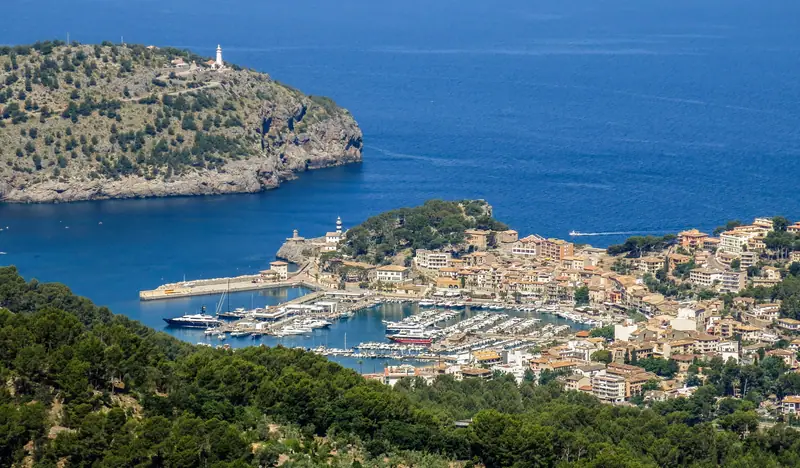
Port de Sóller, Mallorca: things to do, the tram, beaches, lighthouses and where to stay
Things to do in Port de Sóller: the 1913 tram from Sóller (30 min, €10), Repic beach, the Cap Gros lighthouse, boats to Sa…
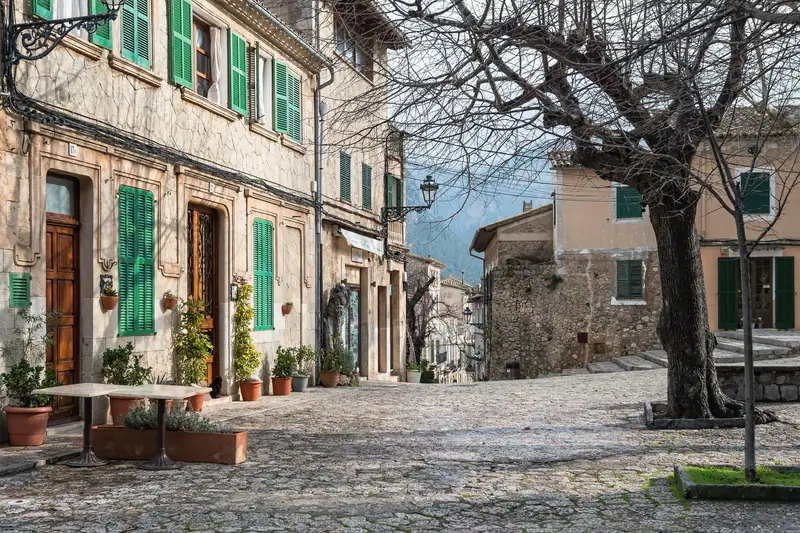
Valldemossa, Mallorca: the Charterhouse, coca de patata and parking
Valldemossa without the crowds: Chopin's Charterhouse (€12.50), coca de patata at Ca'n Molinas, the best viewpoint, the…