Deià, Mallorca: the artists’ village and Cala Deià (access, swimming, parking)
7 min readUpdated  By Antoon
Photo: Michal Osmenda from Brussels, Belgium, CC BY 2.0, via Wikimedia Commons
Contents
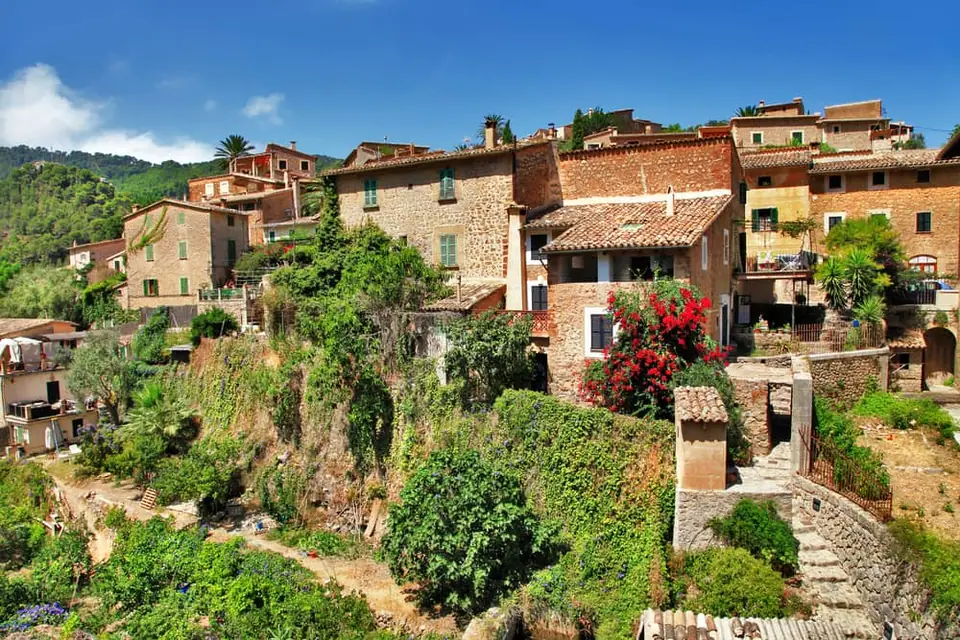
Deià, Mallorca: four letters, around 740 residents and a reputation far bigger than the village. Clinging to the mountainside in the Serra de Tramuntana, 30 km north-west of Palma, it has drawn artists and writers for 150 years. Three kilometres below, Cala Deià waits for swimmers with its pebbles and sapphire-blue water.
It is worth seeing in summer and in November alike, when the lanes fall silent and the old olive trees rustle in the Tramuntana wind.
Why Deià has drawn artists for 150 years
It started with the light. Painters talk about “the light of Deià”: between sea and mountain, the reflections of the water on the cliffs of the Serra give it a quality all of its own.
The Archduke and the first bohemians
Deià’s bohemian story really begins in 1867, when Archduke Ludwig Salvator of Austria arrived in Mallorca and fell for the north-west coast. He bought several estates between Deià and Valldemossa, including Son Marroig, which he turned into a dream residence overlooking the sea. Artists and cultured aristocrats followed. The Catalan painter Santiago Rusiñol, Ulrich Leman, the composer Manuel de Falla: the names pile up from the early 20th century.
Robert Graves, the soul of the village
One name stands above the rest: Robert Graves. The British poet and novelist arrived in Deià in 1929 with the poet Laura Riding. In 1932 he moved into a house called Ca N’Alluny, “the faraway house” in Mallorquí. Apart from an exile from 1936 to 1946, during the Spanish Civil War and the Second World War, he never left it, and he lived in Deià until his death in 1985, aged 90. His novel I, Claudius and his collections of poems were written here, in the house above the olive groves.
Graves is buried in the small village cemetery, at the foot of the church. His grave is simple, and many visitors leave a flower.
Deià today: famous residents and local studios
Since the 1970s the list of famous residents has kept growing. The Belmond La Residencia hotel regularly hosts exhibitions in its Sa Tafona gallery, with works by Joan Miró or contemporary artists who have stayed in Mallorca.
Beyond the celebrities, Deià has kept its local studios. In the lanes, some ochre stone houses have become creative spaces open to the public. Ceramics by Joanna sells handmade pieces, and Café Sa Fonda, the locals’ favourite bar, puts on live music all year round. The bohemian feel is genuine.
Things to do in Deià
The church of Sant Joan Baptista and the artists’ cemetery
The church of Sant Joan Baptista (San Juan Bautista) has watched over the village since the 14th century. Its bell tower was built into an old defence tower, a reminder of the centuries Mallorca spent watching for corsair raids. Inside, the parish museum holds works of art left by the village’s artists over the generations.
Right next door is Deià cemetery, often described as one of the most beautiful in Europe, set on a hillside with a direct view of the Mediterranean. Here lie the Mallorcan painters Antoni Ribas Prats and Antoni Gelabert, and of course Robert Graves. It is a calm place that deserves 20 minutes of your time.
The Robert Graves house museum
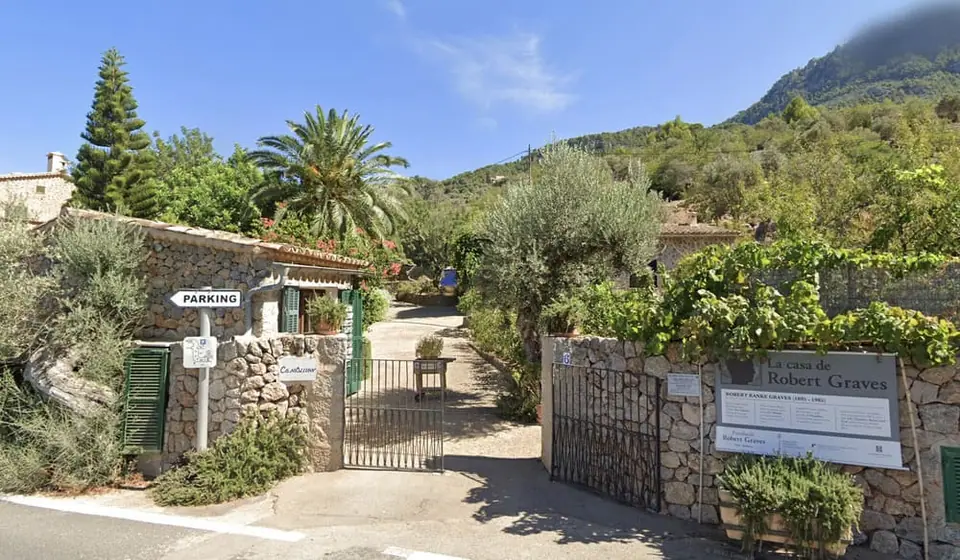
Bought by the Balearic government in 2003, Robert Graves’ house has been open to the public since summer 2006. You can see the library, the study with his typewriter and the olive garden, with his personal belongings still in place. It is Deià’s main cultural visit: allow an hour and book in high season, as numbers are limited. Tickets cost €10 for adults and €7 for pensioners and students; it opens Monday to Friday.
The archaeological museum and village workshops
Deià’s archaeological museum (DAMARC) was founded in 1962 by the American painter and archaeologist William Waldren. It displays prehistoric finds from the area, including bones of Myotragus balearicus, a dwarf goat endemic to Mallorca that died out more than 4,000 years ago, shortly after humans arrived. Waldren, who came in 1956, was also a painter: a fitting founder for artists’ Deià.
After the museums, stroll along the main street, Via Archiduc Lluís Salvador, with its local designer shops, Mallorcan crafts and delis selling olive oil and local jams. Nothing flashy.
Son Marroig and the Sa Foradada viewpoint
Two kilometres west of Deià, the Son Marroig estate, the Archduke’s former home, has a museum and a spectacular garden looking out over the Sa Foradada peninsula, a rocky headland pierced by a huge hole, visible from the road and from the estate. Concerts are held here in summer. Entry is around €4.
Cala Deià, the cove below the village
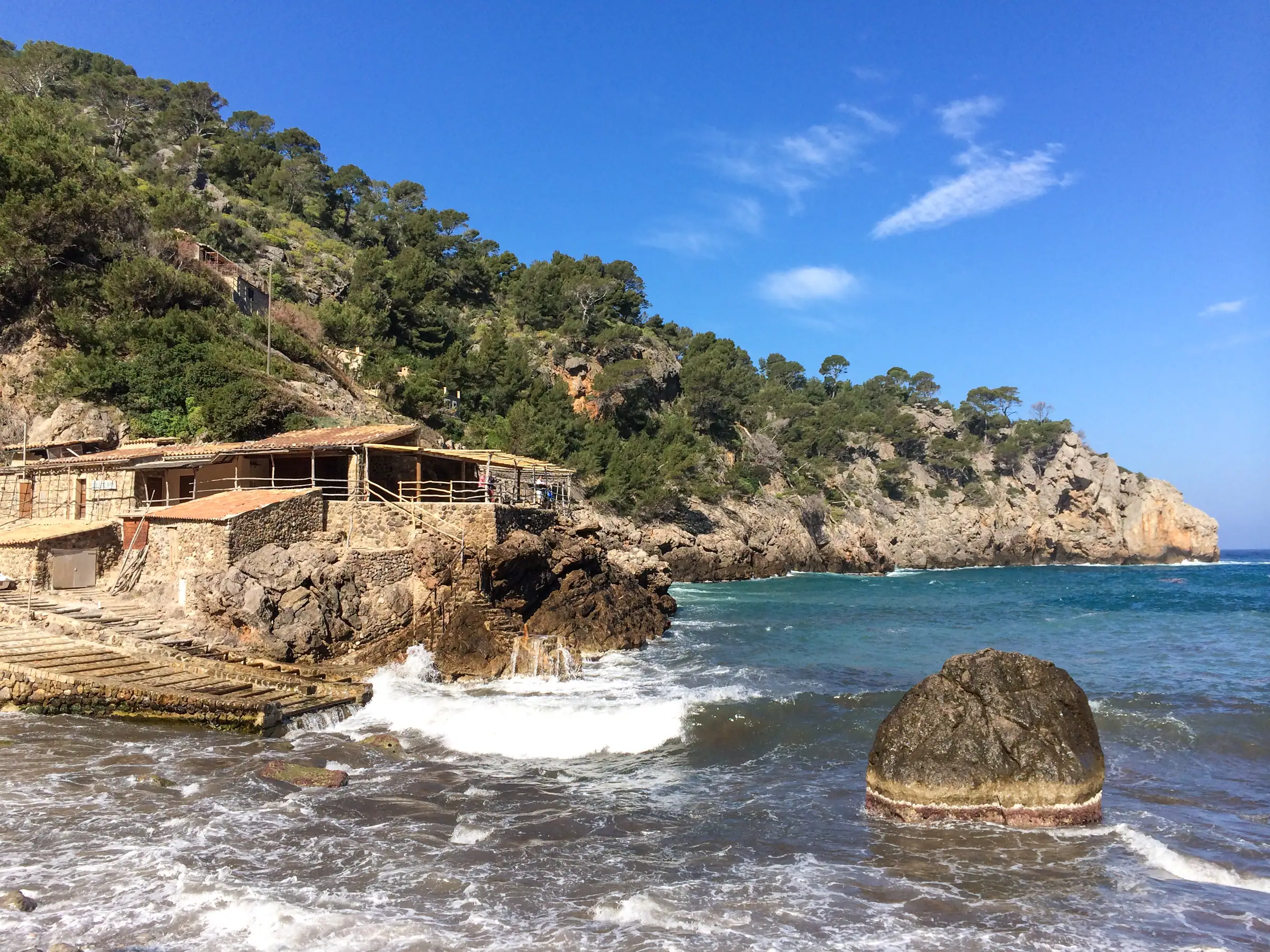
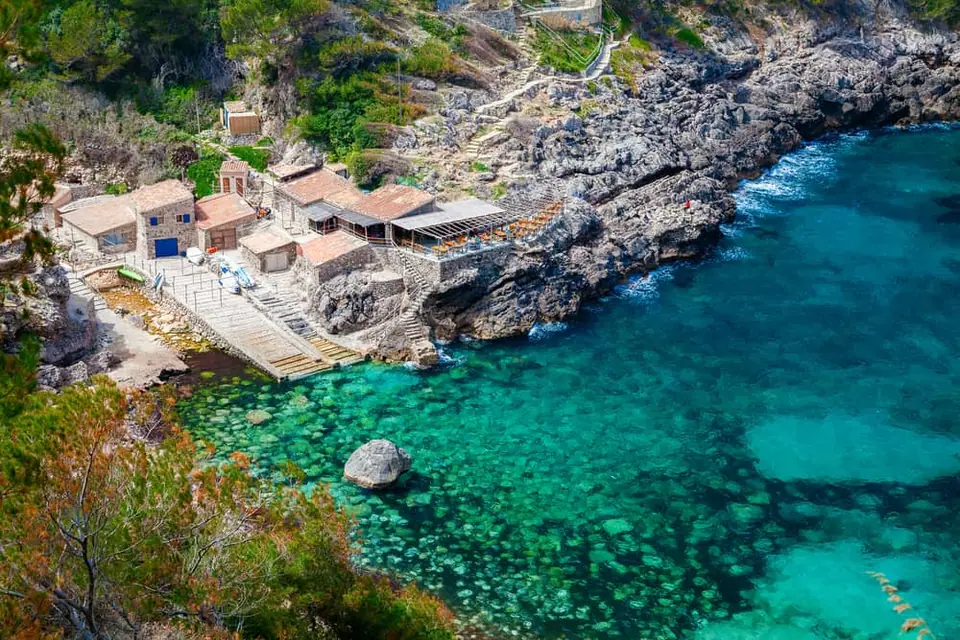
Three kilometres below the village, Cala Deià is one of the most unspoilt calas in Mallorca. Not a brochure beach of fine sand, but a cove of pebbles and rocks, 70 metres long and 6 metres wide, framed by cliffs covered in pine and scrub. Natural caves serve as garages for the local fishermen’s boats. The water is turquoise, crystal clear and often cool even in August.
Getting down to Cala Deià: on foot or by car
If you are hiring a car in Mallorca, you can drive down, but walking is just as pleasant. From the village, you have two options:
- On foot: allow 15 to 20 minutes on a path through olive and lemon groves. The way down is easy, the climb back a little more strenuous. Wear closed shoes.
- By car: five minutes from the village. Leaving Deià towards Sóller, the road down to the cala is on your left after 600 metres. A paid ORA car park (around €2 an hour) sits just behind the cove.
- The last stretch on foot from the car park runs past the fishing boats stored in the caves, one of the finest approaches to any cove on the island.
Tip: arrive before 9am in July and August. The cala is still empty, the fishermen are bringing their boats out of the caves and the morning light on the cliffs is worth the early start.
Swimming, snorkelling and atmosphere
The water at Cala Deià is remarkably clear, and the snorkelling is excellent: the rocky bottom, sheltered from currents, attracts plenty of marine life. Bring water shoes, as you get into the sea over pebbles and rocks.
The cala is popular with locals and well-informed visitors. No parasols or sunbeds to hire, no pedalos: just the sea, the rocks and the boats. That is what makes it special.
Cala Deià restaurants: Ca’s Patro March and Can Lluc
Two restaurants face each other on the rocks, with terraces above the sea:
- Ca’s Patro March (on your right as you arrive): the better known of the two, refined Mediterranean cooking, fresh fish and seafood, and an outstanding terrace. Allow €40 to €60 per person. Booking essential in summer.
- Can Lluc (on your left): a simpler menu of traditional Mallorcan dishes at lower prices (€20 to €35). Ideal for an easy lunch after a swim.
Visiting Deià: practical information
How to get to Deià from Palma
Deià is 30 km from Palma, about 45 minutes by road.
- By car: the Ma-10 from Valldemossa is spectacular, with hairpins, sea views and viewpoints to stop at. Allow time: the road is narrow and traffic is heavy in season.
- By TIB bus 203: from the Estació Intermodal, under Plaza de España in Palma, via Valldemossa, about three quarters of an hour. The bus runs all year and stops in the village, not at the cala.
When to visit Deià and how to avoid the crowds
The best months are April to June and September to October: the village is lively, the cala is warm enough for swimming and the crowds have not arrived. In July and August, Deià fills with groups between 11am and 4pm; early morning and evening are fine.
Out of season (November to March), Deià becomes intimate again. Restaurants open at weekends, the lanes are empty and the winter light on the Tramuntana is beautiful. The cala is cold but magnificent.
Deià parking and other tips
- Free car park at the entrance to the village (limited, arrive early)
- Paid parking near Cala Deià
- No petrol station in Deià: fill up in Sóller or Valldemossa
- Decent mobile signal, no wifi in the lanes
- Deià’s International Classical Music Festival has been held every summer since 1978: check the programme to combine a visit with a concert at Son Marroig
FAQ
Where is Deià in Mallorca?
In the north-west of the island, in the Serra de Tramuntana, a UNESCO World Heritage Site since 2011. The village lies between Valldemossa (to the south) and Sóller (to the north), 30 km from Palma.
Can you swim at Cala Deià?
Yes, from June to October. The water is clear and ideal for snorkelling. There is no sand, only pebbles and rocks, so bring water shoes.
Is there parking at Cala Deià?
Yes, a paid car park sits just behind the cove (around €2 an hour). In high season, arrive before 9am to find a space easily. There is also a free but limited car park at the entrance to the village.
Who was Robert Graves and why did he live in Deià?
Robert Graves (1895-1985) was a British poet and novelist, author of I, Claudius. He came to Deià in 1929, drawn by the light, the calm and the distance from London’s literary world. He lived there until his death and is buried in the village cemetery.
When is the best time to visit Deià?
April to June and September to October: good weather, swimming at the cala and fewer people. In July and August the village is busy between 11am and 4pm.
Read next
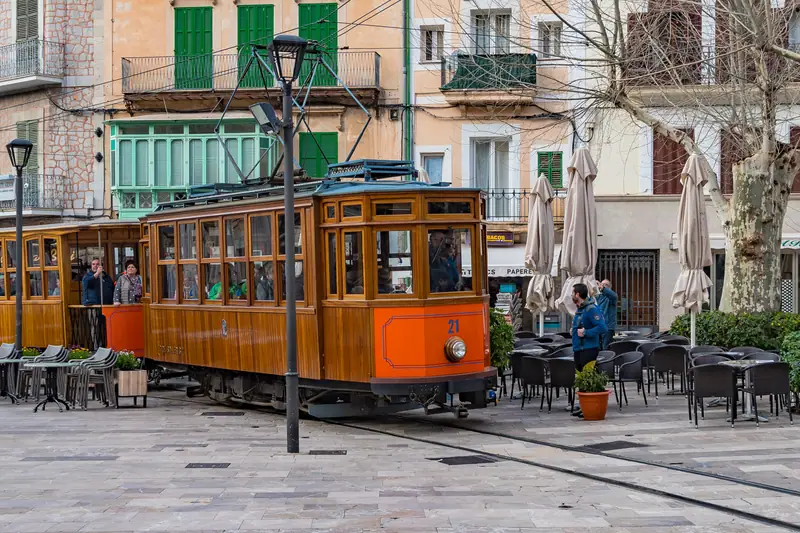
Things to do in Sóller, Mallorca: the train, the tram, the port and the valley
Things to do in Sóller, Mallorca: train or free tunnel, Sant Bartomeu church, the tram to the port, red prawns and where to park.
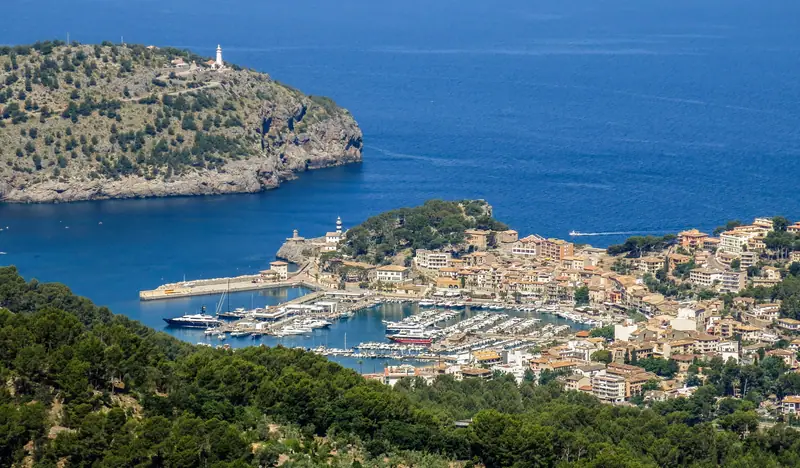
Port de Sóller, Mallorca: things to do, the tram, beaches, lighthouses and where to stay
Things to do in Port de Sóller: the 1913 tram from Sóller (30 min, €10), Repic beach, the Cap Gros lighthouse, boats to Sa…
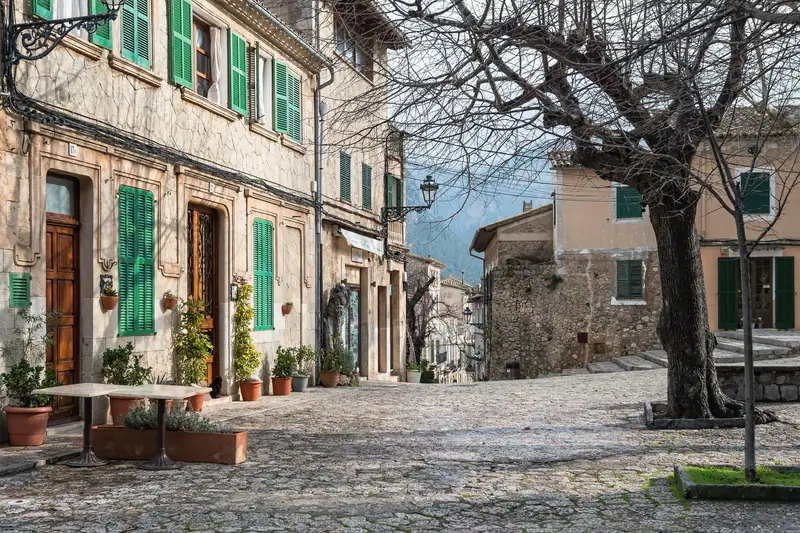
Valldemossa, Mallorca: the Charterhouse, coca de patata and parking
Valldemossa without the crowds: Chopin's Charterhouse (€12.50), coca de patata at Ca'n Molinas, the best viewpoint, the…