Things to do in Sóller, Mallorca: the train, the tram, the port and the valley
7 min readUpdated  By Antoon
Contents
- How to get to Sóller: the wooden train or the road
- Sóller town: the “French” legacy and modernism
- The orange Sóller tram: nostalgia or tourist trap?
- Port de Sóller: the sea framed by mountains
- What to eat in the Sóller valley
- An escape: the hamlet of Biniaraix and its Barranc
- Parking in Sóller: how to avoid a fine
- FAQ
Sóller, in Mallorca, can be seen in one day: the town and its modernist church of Sant Bartomeu, then the horseshoe-shaped port, reached by the orange tram or on foot along the Camí de Sa Figuera. Here are the things to do in Sóller and how to get there.
For centuries, Sóller turned its back on the rest of Mallorca. Shut away in their striking mountain bowl in the Serra de Tramuntana, the locals preferred to take the boat to Marseille rather than cross the passes by mule. The result of this isolation is a town unlike any other on the island, steeped in a bourgeois elegance paid for by the mass export of oranges and lemons to France in the 19th century.
Today the road tunnel has ended that isolation, but the spirit remains. Sóller lives a double life: a town of lavish architecture at the foot of the island’s highest peaks, and a half-moon port that seems sheltered from the noise of the world. To dodge the crowds, it helps to understand how the valley works. Here’s how to plan your visit.
How to get to Sóller: the wooden train or the road
First, the journey: it’s the first big decision of your day.
The Sóller train from Palma: is it worth it?
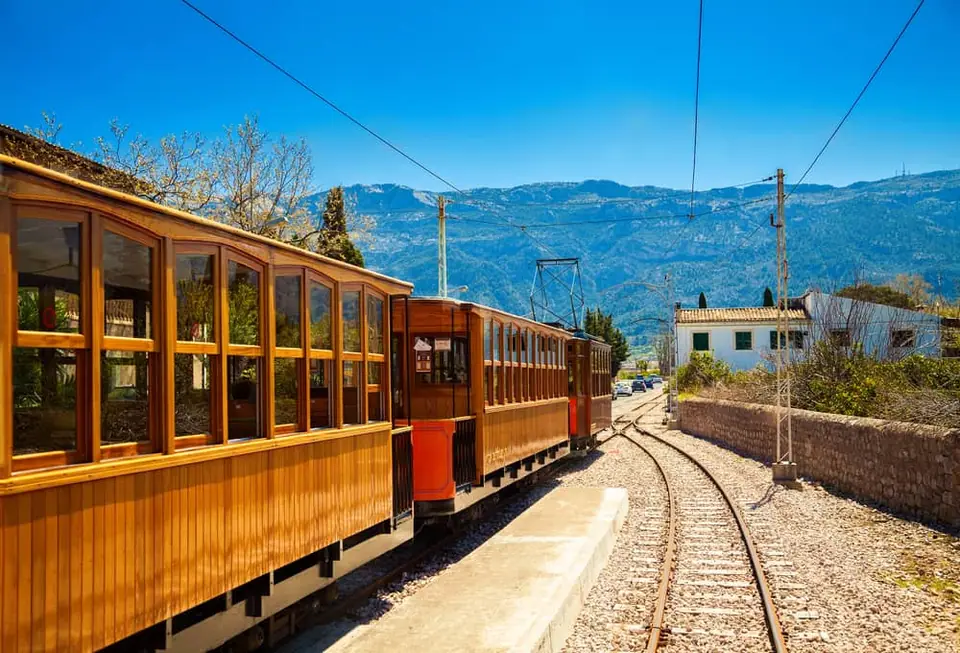
It’s the most sought-after attraction in Mallorca. The Sóller train, with its mahogany and brass carriages, has linked Plaza de España in Palma with Sóller since 1912. The journey takes an hour, runs through 13 hand-dug tunnels and winds above fields of almond trees. A return ticket costs €30 (€40 with the tram down to the port). Should you take it? If you love slow travel and vintage photos, it’s a wonderful experience. But if you already have a hire car, the return trip costs you half a day of flexibility.
The local’s tip: the TIB bus and the free tunnel
If railway romance doesn’t justify emptying your wallet, there’s a simple answer. The Sóller road tunnel, long the most expensive in Spain, has been completely free since 2017.
| Transport (from Palma) | Journey time | Estimated cost | Our verdict |
|---|---|---|---|
| Century-old wooden train | 1 hour | about €30 (return) | Beautiful but time-consuming. |
| Hire car through the tunnel | 35 minutes | Free (plus fuel) | Freedom, but watch out for parking. |
| TIB bus 204 (Intermodal station) | 35 minutes | A few euros (cheaper by bank card) | The cheapest option, quick and air-conditioned. |
Sóller town: the “French” legacy and modernism
As soon as you set foot in the centre, the atmosphere is a world away from villages such as Valldemossa. Forget humble whitewashed fishermen’s cottages. The families who came back from France at the end of the 19th century brought with them a taste for Modernisme (Spanish Art Nouveau). This wealth, earned in exile, literally redrew the town’s skyline.
Plaça de sa Constitució and the church of Sant Bartomeu
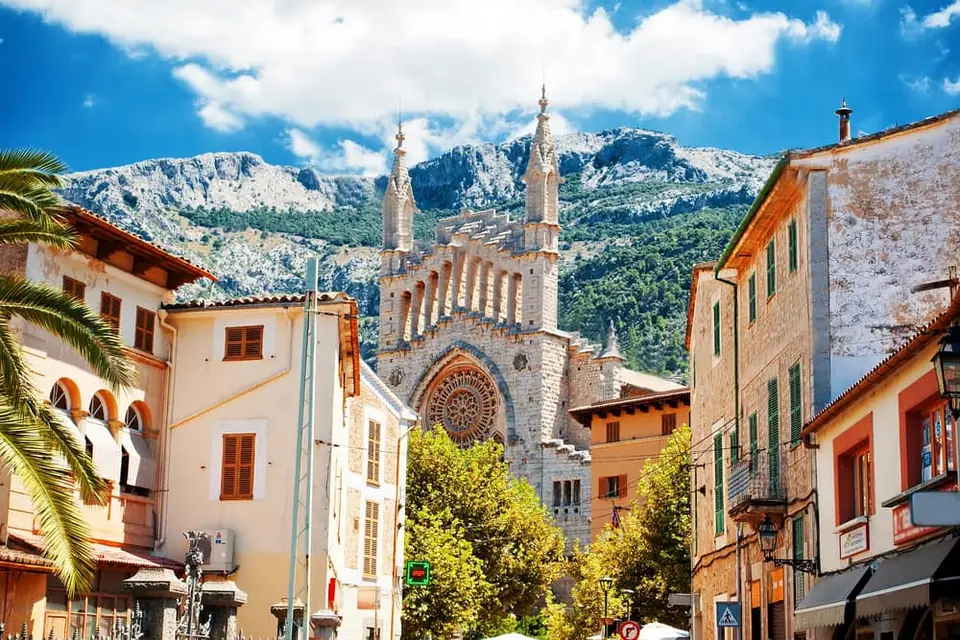
The main stage is the Plaça de sa Constitució, where the tram brushes past your knees while you drink your coffee. Take a close look at the façade of the church of Sant Bartomeu. It follows none of the rules of traditional Mallorcan Gothic. It’s the work of Joan Rubió i Bellver, a direct disciple of the great Antoni Gaudí. The grey stone takes organic, almost living shapes. It’s one of the finest examples of Catalan Modernisme outside Barcelona.
Can Prunera and the hidden patios
Don’t stay rooted to the main square. Walk up Carrer de Sa Lluna, the town’s main shopping street. Ignore the shops selling imported trinkets and look for the Can Prunera museum, a former mansion turned art gallery. Go for the spiral staircase and the original stained glass, which show the extravagance of the period.
Wander on past the doorways of private houses. The heavy wooden doors often give a glimpse of open patios, paved with patterned hydraulic tiles and sheltering hidden gardens where the inevitable orange trees grow.
The orange Sóller tram: nostalgia or tourist trap?
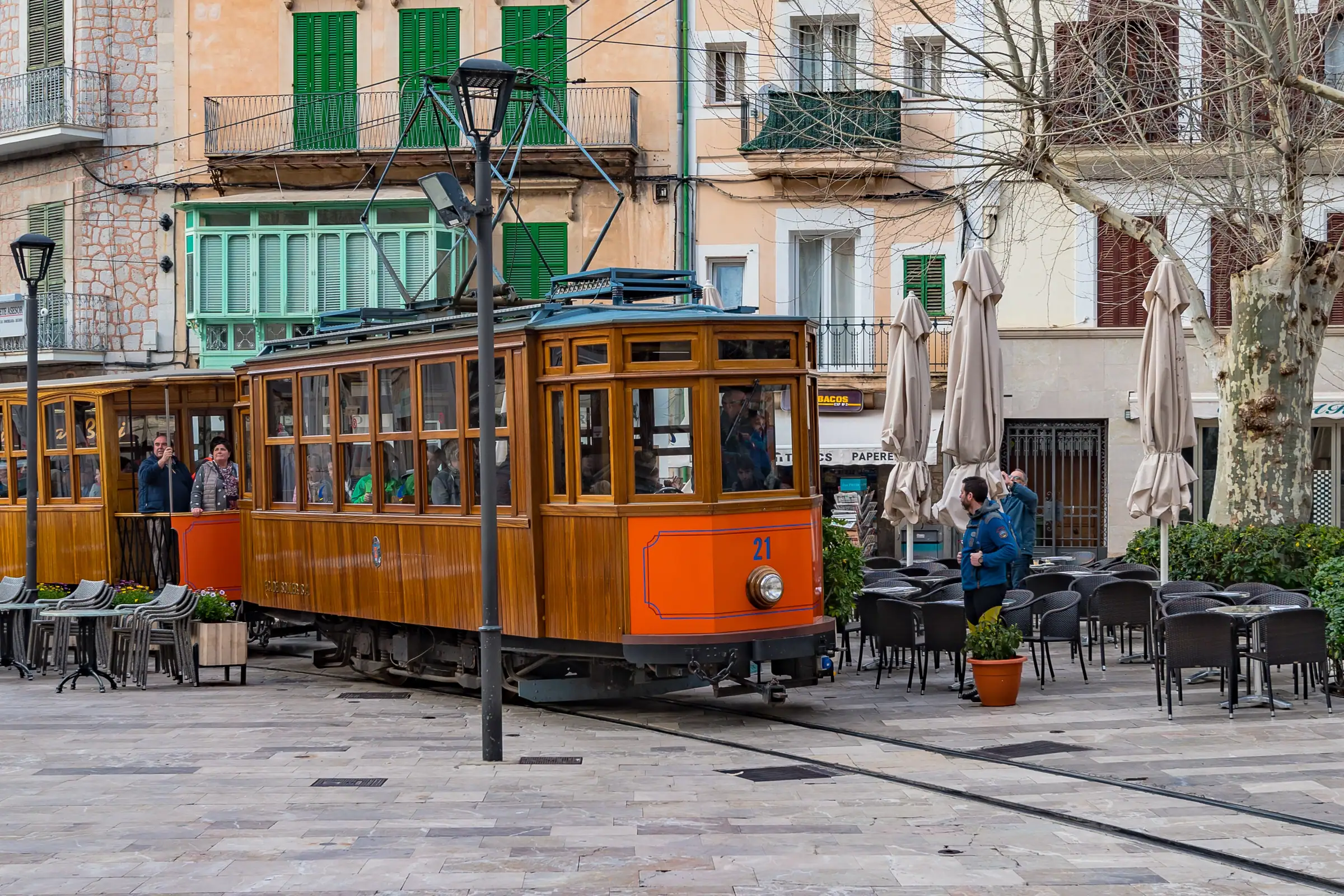
Once you’ve explored the gleaming paving stones of the centre, the sea starts calling. To reach the coast, the orange tram, in service since 1913, is the obvious choice.
No point pretending about the figures: €10 one way for 5 kilometres is very expensive for the distance. Should you take it anyway? Yes, once. For the screech of metal on the rails as it swings round the square, and the feeling of gliding past back gardens and dry-stone walls.
The best way to do it: take the tram down to the port, where the view as you drop towards the sea is more spectacular, and catch TIB bus 204 back up to the town.
If you’d rather walk, the Camí de Sa Figuera is a free alternative. This path through the orchards links the centre with the port in 45 minutes of flat walking, and you’ll smell the orange blossom far more intensely than from a wooden bench seat.
Port de Sóller: the sea framed by mountains
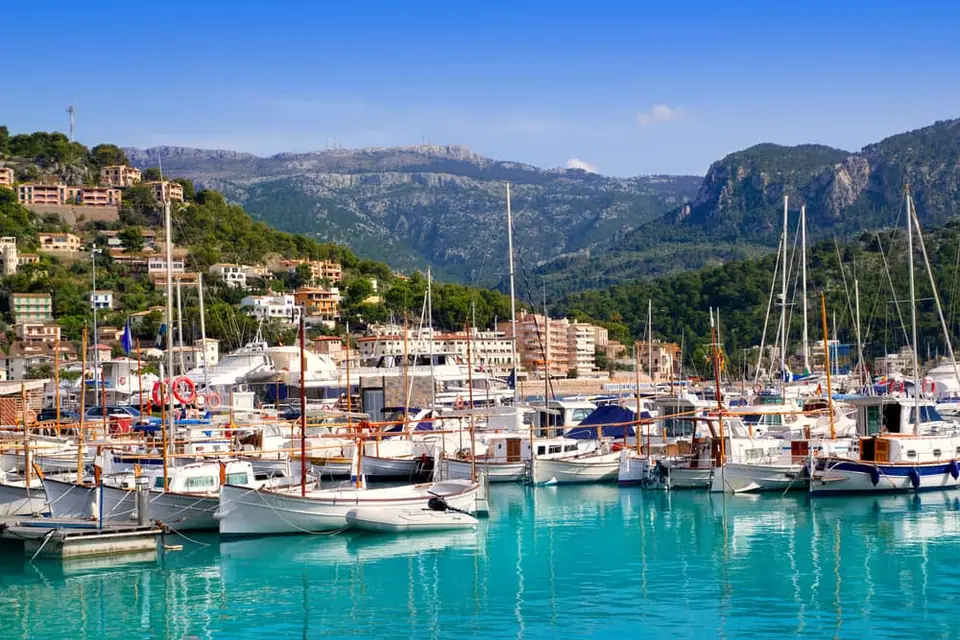
At the end of the line, Port de Sóller opens up in a perfect horseshoe. It’s one of the very few natural harbours on Mallorca’s rocky north coast, which explains its fierce defence against pirate raids in the 16th century. The water is often calm, held back by the natural shelter of the bay.
Leave the main promenade (the Passeig des Traves), lined with tourist menus, quickly. Head straight up to the Santa Catalina quarter, where the lanes are steep and the sailors’ houses far more authentic. The view down over the open sea is at its most striking near the Oratory.
If you still have energy, walk 20 minutes towards the Muleta lighthouse. You’ll feel you’ve reached the end of the world: on one side the closed, peaceful bay, on the other the open sea crashing against sheer cliffs. It’s the area’s best spot to watch the sun sink into the water.
What to eat in the Sóller valley
Sóller is the island’s vegetable garden and seafood larder. Don’t let a bad meal spoil your day.
The star: the Sóller red prawn
The valley’s signature product is the gamba roja, a bright red prawn that lives in very deep sea trenches off the north coast. Its flesh is naturally sweet, with an almost creamy texture. The golden rule: eat it only a la plancha, with a pinch of coarse salt. Walk away from any place that serves it drowned in garlic sauce. Locals suck the heads, where the briny flavour is most intense. Always ask the price per 100 g before ordering, as it varies a lot with the day’s catch.
Oranges, Fet a Sóller ice cream and the secret of saïm
Never order bottled juice here: real juice is squeezed in front of you. To go one better, head to Fet a Sóller. This local institution uses almonds and citrus fruit from the local cooperative. Its orange ice cream contains real pieces of candied peel that change the whole balance of flavours.
In bakery windows you’ll spot ensaïmadas. The secret of their flaky, stretchy texture is saïm, lard from Mallorcan black pigs. It’s extremely rich, but it’s the official fuel after a day’s walking.
An escape: the hamlet of Biniaraix and its Barranc
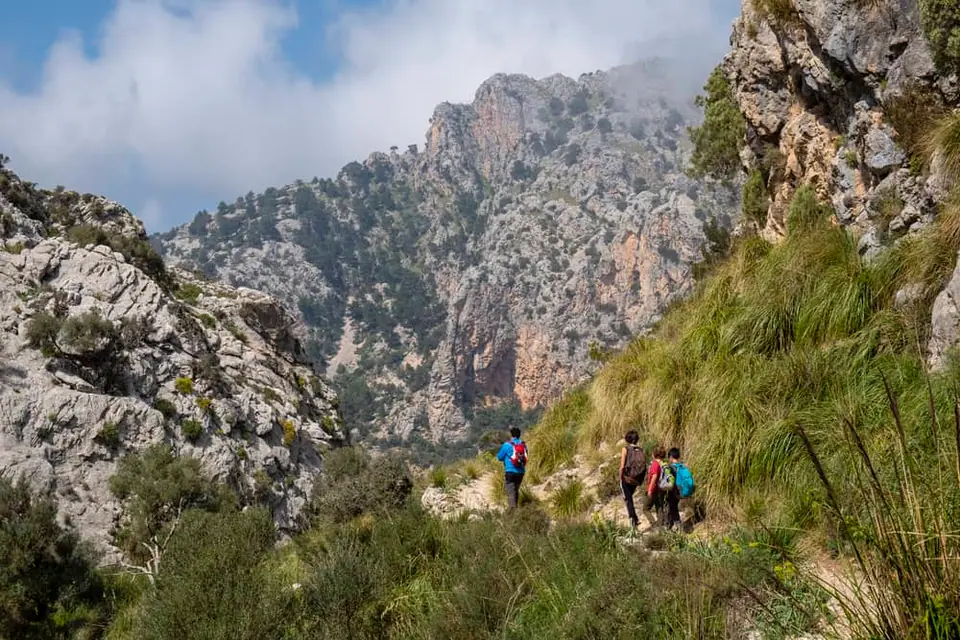
This outing is more demanding than a visit to the centre. If the crowds on the main square start to weigh on you, walk 15 minutes uphill from the town to reach Biniaraix.
This tiny stone hamlet seems frozen in the 17th century. No shops, no engines, just the steady sound of water running down old Moorish irrigation channels. It’s the starting point of the Barranc de Biniaraix, a gorge climbed by a long path of dry-stone steps. The climb takes real effort, but even the first part of the path is enough to see the Sóller valley open out below you like a vast green and gold carpet.
Parking in Sóller: how to avoid a fine
Parking a hire car in Sóller is a contact sport. The historic centre is pedestrianised or strictly reserved for residents with permits, and traffic wardens spot hire cars at a glance.
Never try the “only five minutes” approach near the train station: it’s the surest way to come back to a €90 ticket under your windscreen wiper.
Your safest bet is the Cetre car park or the surrounding areas on Carrer de Cetre, as long as you arrive before 9.30am. The calmest option is the tip above: leave the car at your hotel and come by TIB bus from Palma. You’ll save on parking and on the cold sweat of an impossible parallel park.
FAQ
How do you get to Sóller from Palma?
Three options: the historic train from Plaza de España (1 hour, €30 return), the car through the tunnel (35 minutes) or TIB bus 204 from the Intermodal station (35 minutes, a few euros, cheaper by bank card).
Is there a toll on the Sóller tunnel?
No. The Sóller road tunnel, long the most expensive in Spain, has been completely free since 2017.
What are the best things to do in Sóller?
See the Plaça de sa Constitució and the church of Sant Bartomeu, visit the Can Prunera museum, ride the tram down to the port, climb to the Santa Catalina quarter and walk 20 minutes to the Muleta lighthouse for sunset. Walkers can reach the hamlet of Biniaraix in 15 minutes.
Where can you park in Sóller?
The historic centre is pedestrianised or reserved for residents. Aim for the Cetre car park or the areas along Carrer de Cetre, arriving before 9.30am.
Read next
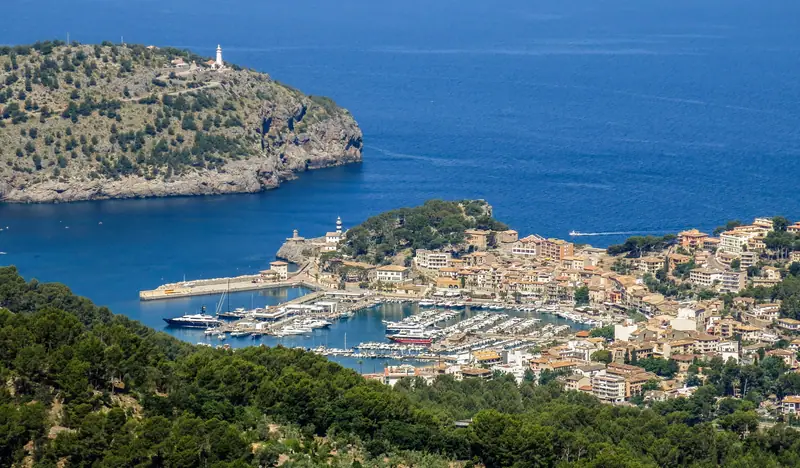
Port de Sóller, Mallorca: things to do, the tram, beaches, lighthouses and where to stay
Things to do in Port de Sóller: the 1913 tram from Sóller (30 min, €10), Repic beach, the Cap Gros lighthouse, boats to Sa…
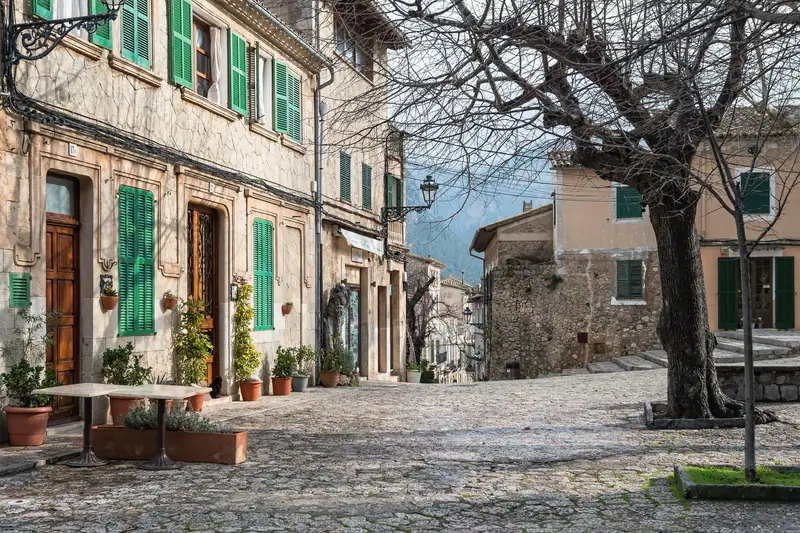
Valldemossa, Mallorca: the Charterhouse, coca de patata and parking
Valldemossa without the crowds: Chopin's Charterhouse (€12.50), coca de patata at Ca'n Molinas, the best viewpoint, the…
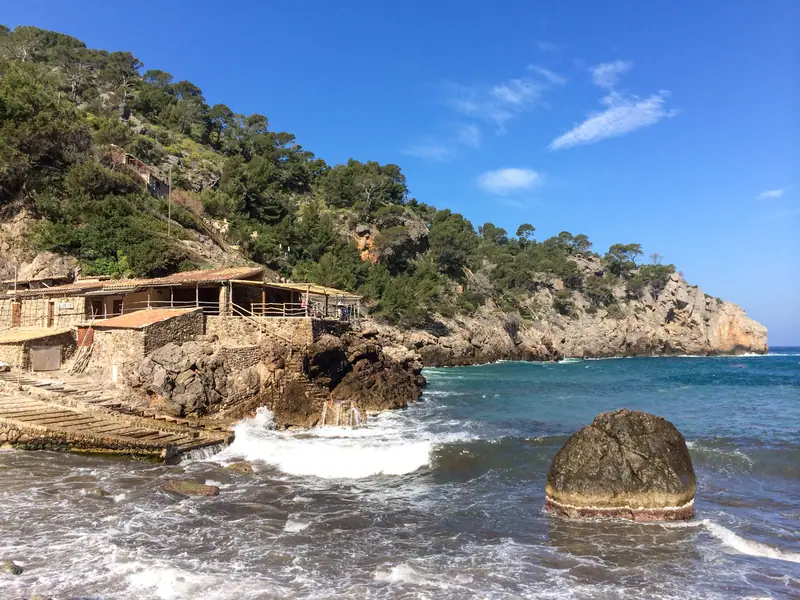
Deià, Mallorca: the artists’ village and Cala Deià (access, swimming, parking)
Deià, Mallorca: stone houses, Robert Graves' home, swimming at Cala Deià, how to get there from Palma, where to eat and where to…