Pharmacy in Mallorca: duty pharmacies, doctors, PAC, A&E and emergency numbers
10 min readUpdated  By Antoon
Contents
- Pharmacies in Mallorca: your first port of call
- Duty pharmacy in Mallorca: open at night and on Sundays
- Seeing a doctor in Mallorca: the PAC, the link almost nobody knows about
- GHIC or EHIC: the card half of all tourists leave at home
- Emergency numbers in Mallorca: 112 and 061
- Hospitals in Mallorca and what they mean for tourists
- The most common holiday health problems in Mallorca
- A few Spanish words that prevent misunderstandings
- Who to call in Mallorca: the summary to screenshot
- FAQ
Finding a pharmacy in Mallorca is easy, and so is seeing a doctor, as long as you know which door to knock on. Picture a Wednesday in August, around 10.30pm, somewhere between Alcúdia and Can Picafort. Your eight-year-old has had a temperature of 39.5°C for several hours, you don’t speak Spanish, and the hotel has simply told you “llamad al 112”. Ambulance or car? In this case the right answer is the PAC in Alcúdia, four kilometres away: within an hour, the child has been seen and leaves with a prescription.
What most tourists don’t realise is that Mallorca has a solid, well-organised medical network, largely free for European visitors who carry the right card, provided you know how it works. The problem isn’t the system: it’s that you arrive thinking about beaches, never about what to do if you fall ill in Mallorca. This guide answers that question directly, according to how serious the situation is.
The first principle: there are three levels of medical care here, and choosing the wrong one will cost you hours of pointless waiting or, worse, make you miss proper treatment. The pharmacy, the PAC and hospital A&E. Each has its role, and mixing them up is the most common mistake holidaymakers make.
Pharmacies in Mallorca: your first port of call
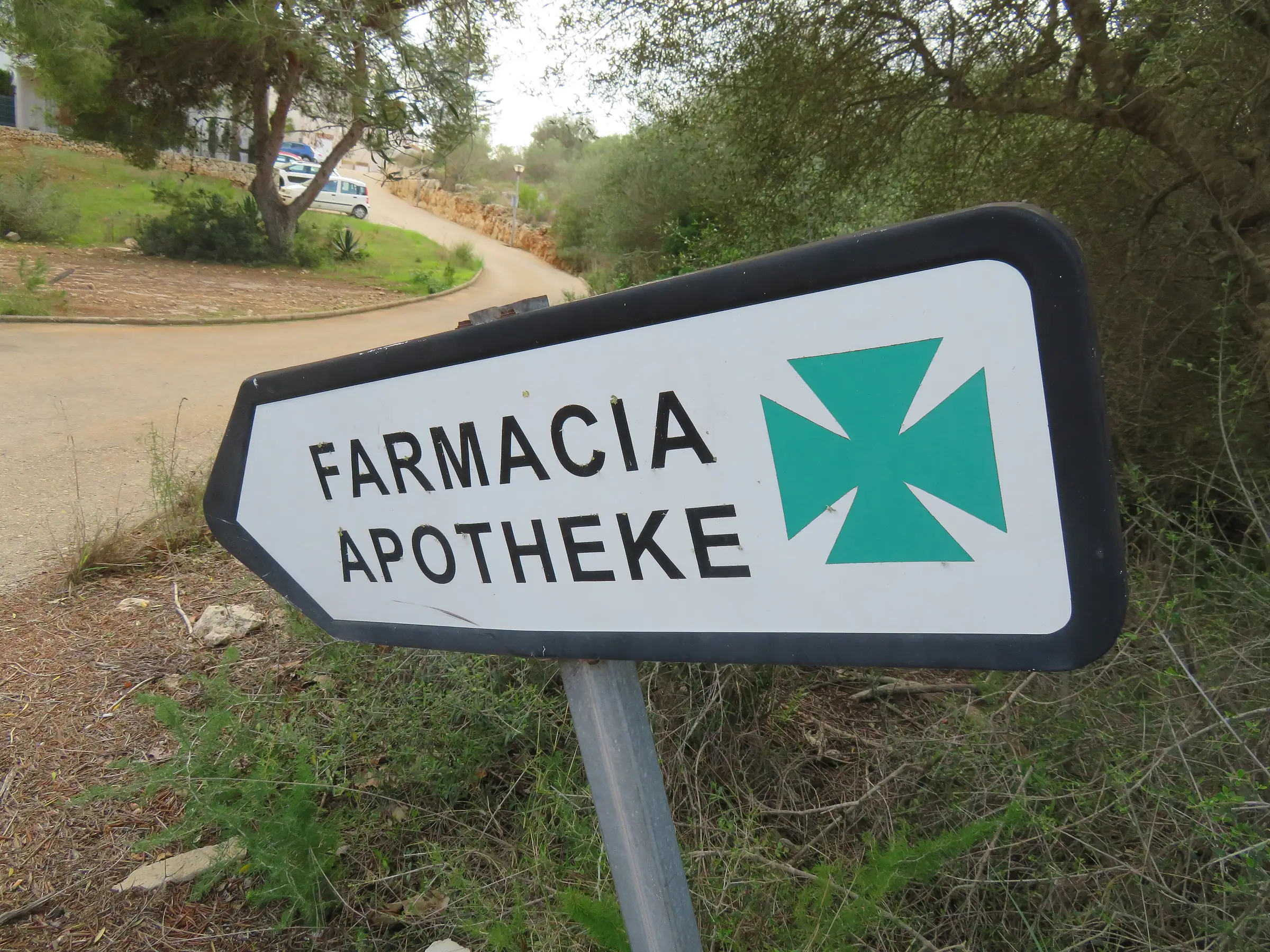
The illuminated green cross is one of the most visible signs on the island. You’ll find a pharmacy in every village, even the smallest, and enough of them in the resorts that you’re never far from one. Opening hours vary: pharmacies usually open from 9am to 1.30pm and from 4.30pm to 8pm, and many close at lunchtime and on Sundays.
This is the first level of care. For mild sunstroke, traveller’s diarrhoea, an insect bite, a small cut or the start of sunburn, the pharmacist is competent, available and, in the resorts, often able to manage in English.
Spanish pharmacists have fairly wide latitude to recommend medicines that don’t need a prescription, so describe your symptoms directly at the counter. For prescription-only medicines you’ll have to see a doctor first, as anywhere else.
Duty pharmacy in Mallorca: open at night and on Sundays
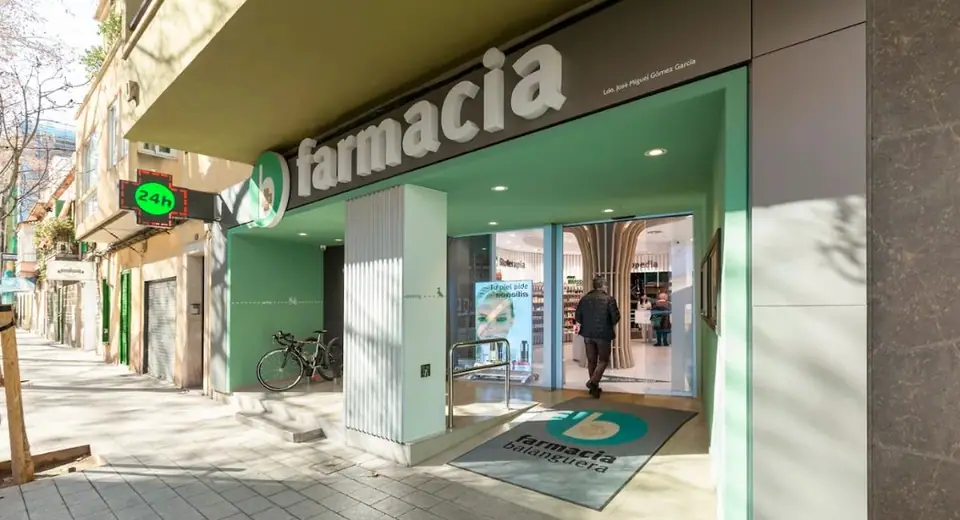
The real question comes up at night or at the weekend. There is always a farmacia de guardia (duty pharmacy) open 24 hours in every area of the island. There are several ways to find it: its address is posted in the window of every closed pharmacy, and the Official College of Pharmacists of the Balearic Islands publishes the list of duty pharmacies for each municipality on its website (cofib.es). You can also call 11 888, or type “farmacia de guardia” into Google Maps, which works perfectly. Don’t call 112 for this: that number is for genuine medical emergencies, not for tracking down ibuprofen at midnight.
Seeing a doctor in Mallorca: the PAC, the link almost nobody knows about
The PAC (Punt d’Atenció Continuada, or continuous care centre) is the equivalent of a permanent out-of-hours medical centre. It’s where you should go for anything beyond the pharmacy that doesn’t justify hospital A&E: a persistent fever, tonsillitis, an ear infection, a bad stomach bug, a minor fracture, a sprain, a wound that needs stitches, a skin infection. PACs have their own doctors, their own first-level emergency service and sometimes basic specialists. Waits are noticeably shorter than in hospitals, especially in high season.
The network is dense. The main PACs are in Palma (several, depending on the district), Alcúdia, Manacor, Inca, Calvià, Felanitx, Llucmajor, Pollença and Santanyí, among other towns. If you’re staying in a hotel, ask reception for the nearest PAC: they all know. In a holiday rental, ask any pharmacy: it’s their reflex.
If you’re hiking in the Serra de Tramuntana, especially on the GR221, which crosses areas far from any village, finding the nearest PAC to the start of your stage before setting off isn’t paranoia, it’s common sense. A sprain on the rocks at 900 metres, with the Sóller PAC 30 minutes away by car: knowing it exists changes everything.
The question comes up often: PAC or straight to A&E? The answer is almost always the PAC. Hospital emergency departments are geared to life-threatening cases. For the rest, the PAC treats exactly the same conditions, with the same doctors, and without July’s packed waiting room.
GHIC or EHIC: the card half of all tourists leave at home
Your health insurance card, the UK Global Health Insurance Card (GHIC) or a valid European Health Insurance Card (EHIC), is the most important document in your travel kit for Mallorca, and it’s the one people always forget, because they’ve never had one or it has expired. Here’s what it does: it gives you access to care in all Spanish public facilities (PACs, public hospitals) on the same terms as people insured in Spain, in other words without paying a single euro. You show the card at reception and you’re seen.
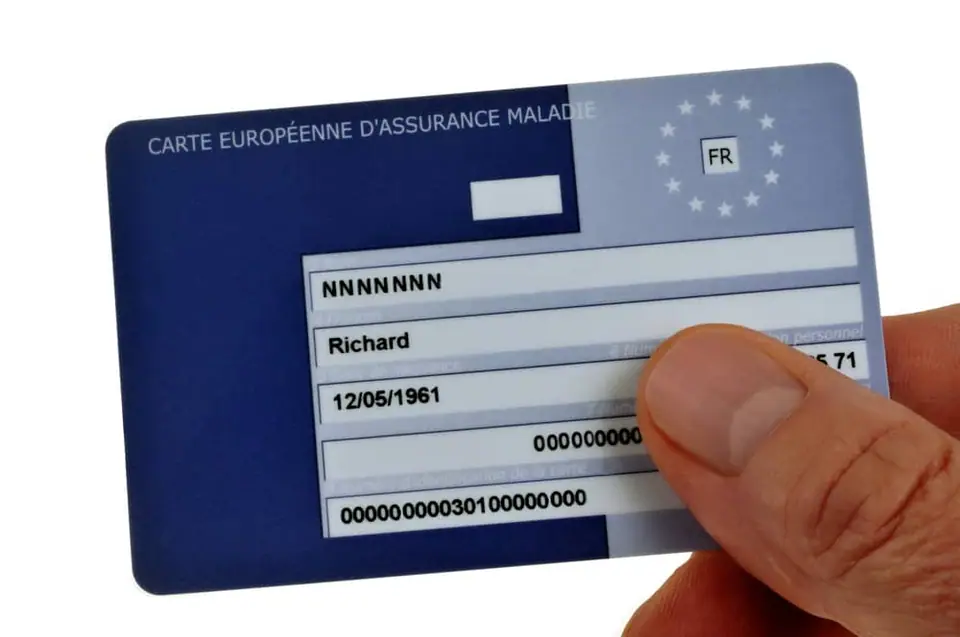
The card is free, but apply well before you leave rather than at the last minute. It’s individual and in your name: every member of your family, children included, needs their own. If you don’t have it with you in Mallorca, you won’t be refused treatment, but you’ll have to pay upfront, keep the receipts and claim the money back when you get home, which may leave part of the cost with you. To be treated in the public system without paying anything, the card is essential.
Watch out for a classic trap: some clinics in Mallorca run a public and a private service under the same roof. If you’re sent to the private part without being told so explicitly, your card covers nothing. Always ask: “¿Es el servicio público?” Yes or no, the answer is clear.
Emergency numbers in Mallorca: 112 and 061
112 is Spain’s universal emergency number. It covers medical ambulances, the fire brigade and the national police. It works 24 hours a day, and the operators are multilingual (always English, Spanish and often other languages depending on the team). Your call is geolocated: you don’t need to know your exact address if you’re on a beach or a road, they’ll find you. This is the number to call for anything life-threatening: a heart attack, drowning, an open fracture, severe heatstroke, a serious allergic reaction.
061 is the number of the Balearic emergency medical service (SAMU). If you need a medical ambulance and already know the nature of the emergency (heart attack, loss of consciousness, serious accident), this number puts you straight through to the medical dispatchers, without going through the fire and police filter. In practice, 112 transfers you to 061 if needed: both work.
The rule of thumb: 112 as soon as a life may be in danger, the PAC for anything that can wait half an hour’s drive, the pharmacy for the rest. Going to Son Espases A&E with a sore throat on a Sunday in July means several hours in a packed waiting room. That’s not a lack of medical skill, just triage: non-urgent cases wait, serious ones go first.
Hospitals in Mallorca and what they mean for tourists
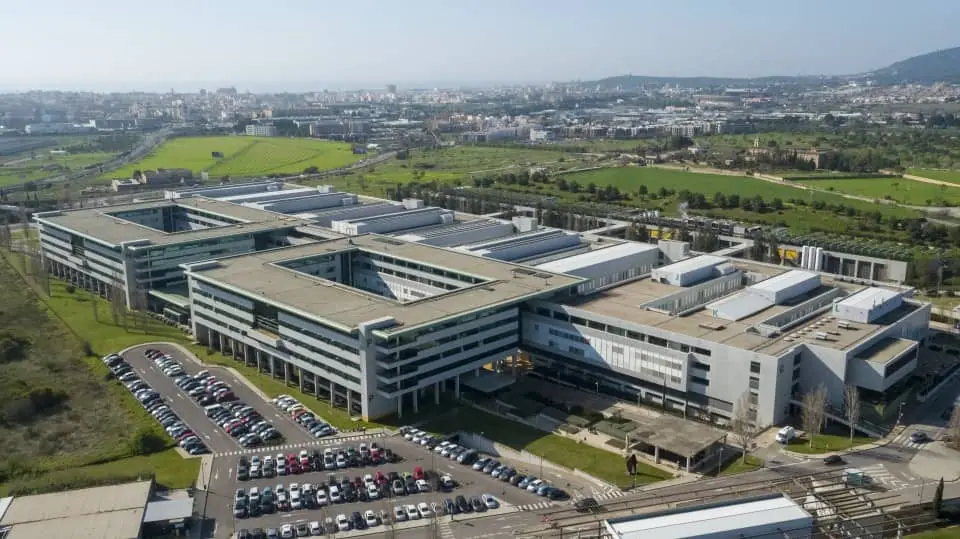
The island has four large public hospitals. Hospital Universitario Son Espases (Carretera de Valldemossa, 79, Palma) is the reference hospital for the Balearics: about 152,000 A&E visits and 24,000 operations a year. It’s where you’ll be transferred for anything beyond a PAC’s capabilities. It can be reached by bus (line 20) from central Palma and has a helipad for medical transfers from other parts of the island. Hospital Son Llàtzer (Manacor road, km 4, Palma) runs a 24-hour emergency department and has a maternity unit. In the north and east of the island, Hospital d’Inca and Hospital de Manacor cover their areas with full emergency departments.
On the private side, Clínica Juaneda deserves a special mention for tourists. It offers free interpreters in several languages, a 24-hour emergency department and a scheme called “Juaneda Accessible” that lets you, even without private insurance, quickly get a specialist consultation, tests or an X-ray at prices shown in advance. Handy if you need a second opinion or a specialist without waiting for the public system.
Waiting times at A&E in high season deserve plain speaking. For a non-urgent case (a sprain, an ear infection, a cut with no risk to life), expect several hours of waiting in a hospital emergency department on a Saturday in July or August. That’s not a malfunction, it’s standard European triage, and on this point there’s almost no difference between public hospitals and private clinics. Go to the PAC.
The most common holiday health problems in Mallorca
Stomach bugs are the number one reason for summer consultations in Mallorca. Contrary to what you often hear, tap water on the island is safe to drink, though its strong chlorine taste puts many people off. Most cases come from meals eaten on the go, fresh food kept badly in the heat, or not drinking enough. A mild stomach upset (24–48 hours) means the pharmacy and rest. If it lasts more than 48 hours with a fever, go to the PAC.
Heatstroke and sunstroke come second. In July and August, temperatures regularly approach 36°C, and the humidity makes the heat feel worse, especially at night. Mild heat exhaustion (headache, tiredness, nausea): pharmacy, rehydration, shade. Severe heatstroke (loss of coordination, confusion, a temperature above 40°C, dry burning skin): call 112 immediately, not the PAC. Severe heatstroke is a life-threatening emergency.
Swimmer’s ear from lots of swimming, cuts on the rocks in coves, sprained ankles on hiking paths and severe blistering sunburn complete the picture. All four are dealt with at the PAC. For jellyfish stings, the pharmacy is enough in the vast majority of cases, except for a severe allergic reaction, which needs 112. If you have a known allergy to bee or wasp stings, bring your adrenaline auto-injector (EpiPen): it’s prescription-only, and the product may be unavailable in Spain or sold under another name.
On cost: with your GHIC or EHIC, a consultation at a public PAC costs nothing. Without the card, or in the private system, a GP consultation is at your expense (between €60 and €120), and the bill rises for a specialist or tests. Clínica Juaneda gives you a quote in advance, which avoids nasty surprises.
A few Spanish words that prevent misunderstandings
Medical staff in Mallorca speak Spanish (Castilian) and Catalan (Mallorcan). English is common in hospitals and the large clinics, less so in village PACs. Here are the useful phrases:
- Estoy enfermo/enferma: I’m ill
- Me duele aquí: It hurts here (pointing)
- Tengo fiebre: I have a temperature
- Necesito un médico: I need a doctor
- ¿Dónde está la farmacia de guardia?: Where is the duty pharmacy?
- Tengo alergia a…: I’m allergic to…
- ¿Es el servicio público?: Is this the public service? (for your GHIC or EHIC)
These seven phrases are enough to get the conversation going in most situations. Spanish doctors are used to European tourists who don’t speak Spanish, and they’ll find a way to make themselves understood. Patience and calm do the rest. Never raise your voice or show impatience: hospital admin staff aren’t there to penalise you, but the bureaucracy has its own rhythm, and losing your temper has never sped up a stamp.
In the large private clinics such as Juaneda, an interpreting service is available. In public hospitals, English generally gets you by, and basic Spanish does the rest.
Who to call in Mallorca: the summary to screenshot
| Situation | Where to go | Number |
|---|---|---|
| Cold, small cut, insect bite, mild sunstroke | Pharmacy (farmacia) | cofib.es (duty pharmacy) |
| Fever, tonsillitis, ear infection, stomach bug >48h, sprain, stitches | PAC (health centre) | Ask a pharmacy or your hotel to find it |
| Fracture, chest pain, severe allergic reaction | Hospital A&E / ambulance | 112 or 061 |
| Cardiac arrest, drowning, severe heatstroke, accident | Ambulance immediately | 112 |
One last thing, perhaps the most practical in this whole article: pack your GHIC or EHIC, check its expiry date and take a photo of it on your phone. If you lose your wallet on the beach, which happens more often in Mallorca in high season than anyone likes to admit, you’ll be glad of it. Five minutes before you leave can spare you several hundred euros of medical costs paid upfront, and a claim when you get home.
FAQ
How do you find a duty pharmacy in Mallorca?
The address of the duty pharmacy is posted in the window of every closed pharmacy. You can also call 11 888 or type “farmacia de guardia” into Google Maps. Keep 112 for medical emergencies.
Where can you see a doctor out of hours in Mallorca?
At a PAC (Punt d’Atenció Continuada), an out-of-hours medical centre, for a fever, tonsillitis, an ear infection, a sprain or a wound needing stitches. There are PACs in Palma, Alcúdia, Manacor, Inca, Calvià, Felanitx, Llucmajor, Pollença, Santanyí and other towns.
What is the emergency number in Mallorca?
112, Spain’s universal emergency number, works 24 hours a day with multilingual operators and geolocates your call. 061 connects you directly to the Balearic emergency medical service (SAMU) for a medical ambulance.
Do you have to pay to see a doctor in Mallorca?
With a GHIC or EHIC, treatment in public facilities (PACs, public hospitals) costs nothing. Without the card, or in the private sector, expect to pay between €60 and €120 for a GP consultation.
Are there English-speaking doctors in Mallorca?
English is common in hospitals and large clinics, less so in village PACs. Private clinics such as Juaneda offer free interpreters in several languages.
Book onlineThe most populartours
Book online before you go: you pick the time slot, and most tours can be cancelled for free up to 24 hours before.
 At sea
Mallorca boat trip
Compare tours, times and traveller reviews.
See prices →Free cancellation on most Guided tour
Serra de Tramuntana tour
Compare tours, times and traveller reviews.
See prices →Free cancellation on most Day trip
Caves of Drach
Compare tours, times and traveller reviews.
See prices →Free cancellation on most
Read next
Getting around Mallorca: buses, trains, taxis, car hire and ferries
Getting around Mallorca: A1 airport bus, TIB and EMT buses paid by card, Sóller train and metro, taxi fares, car hire, parking in…
Mallorca weather by month: the best time to visit, sea temperature and prices
The best time to visit Mallorca is June or September: 28°C, a 21-25°C sea, fewer crowds. Mallorca weather by month (AEMET…
Mallorca in winter: temperatures, what’s open and a month-by-month verdict
Is Mallorca in winter worth it? October to February month by month: temperatures, sea, rain, what closes, almond blossom and how…