Valldemossa, Mallorca: the Charterhouse, coca de patata and parking
10 min readUpdated  By Antoon
Contents
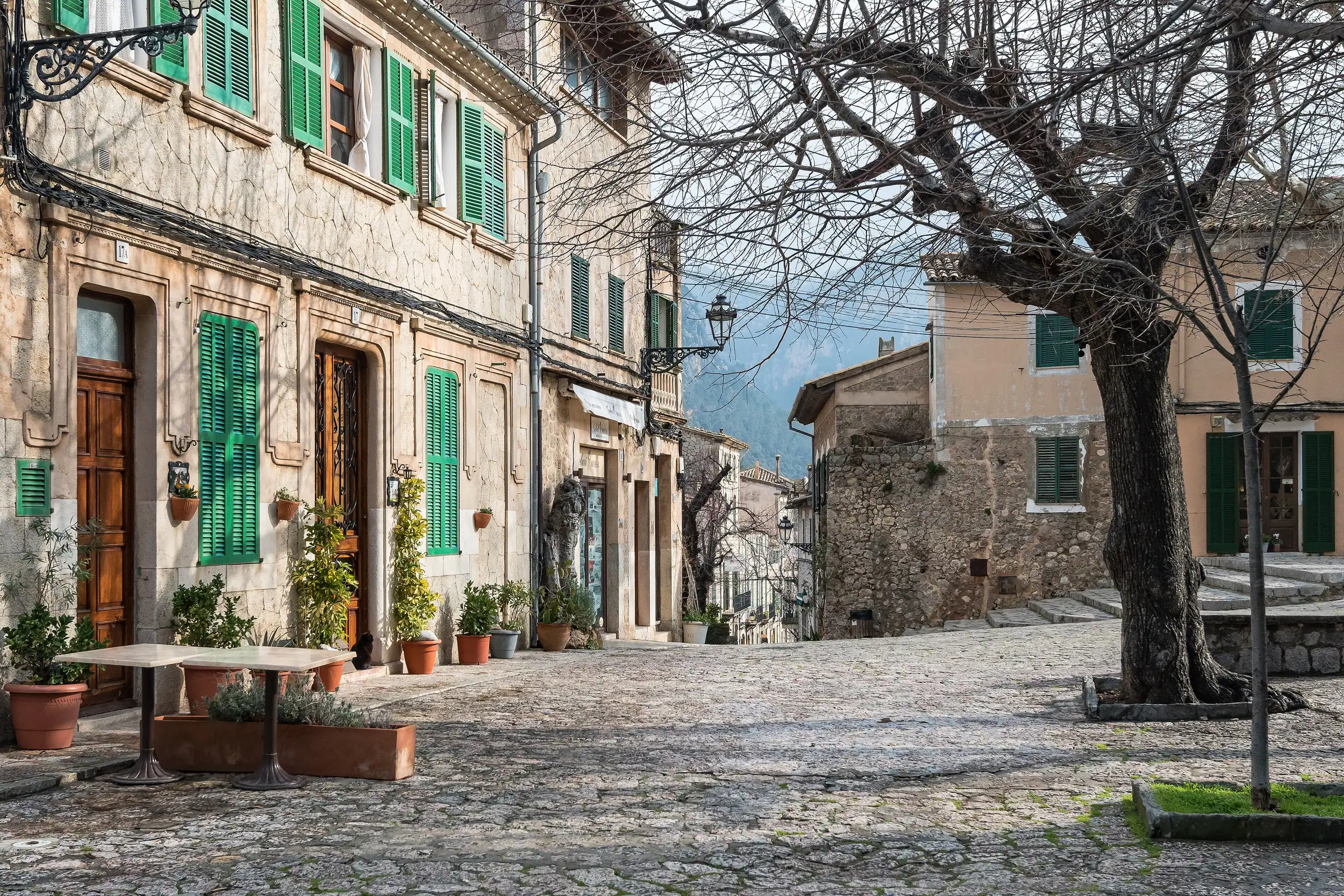
Valldemossa, Mallorca: if the island were an Instagram account, this would be its profile picture. It is one of the most photographed villages on Mallorca: golden stone that changes colour at sunset, bottle-green shutters, a lush valley and that famous turquoise bell tower that keeps amateur photographers busy.
In the 19th century, Frédéric Chopin and George Sand came here to escape the Paris salons and tuberculosis. Ironically, it is now the least “hidden” place on the island. In July at 11am, the main street (Via Blanquerna) feels like the Tube at rush hour, only hotter.
So has Valldemossa become a tourist trap? No. Its architecture is rare and striking. But to enjoy it without elbowing your way through, you need a plan: the best times to come, the pastry not to miss and how to dodge the parking nightmare.
In a hurry? The essentials:
- Culture: the Royal Charterhouse (Cartoixa). Entry is paid, but seeing Chopin’s piano and the monks’ pharmacy is unique.
- Something sweet: the coca de patata at Ca’n Molinas. Rich, sweet and an institution.
- The view: the Miranda des Lledoners viewpoint. Free and often empty.
- Parking: arrive before 9.30am or after 5.30pm. In between, it is a battle of nerves.
Valldemossa and Chopin: why the village draws such crowds
Valldemossa is one of the jewels of the Serra de Tramuntana, a UNESCO World Heritage Site. But if coaches unload thousands of visitors here every day, it is for its famous guests.
The story is well known: in the winter of 1838-1839, George Sand (the rebellious writer in trousers) and Frédéric Chopin (the fragile genius) rented a cell in the monastery. Spoiler: it went badly. It rained all winter, the locals were suspicious and the food was poor. Sand took her revenge by writing A Winter in Majorca, a fairly acid book now sold in every souvenir shop. Chopin, despite everything, composed some of his finest Preludes here. That mix of romance, genius and misery is what makes the place legendary.
The Charterhouse (La Cartoixa): is it worth €12.50?
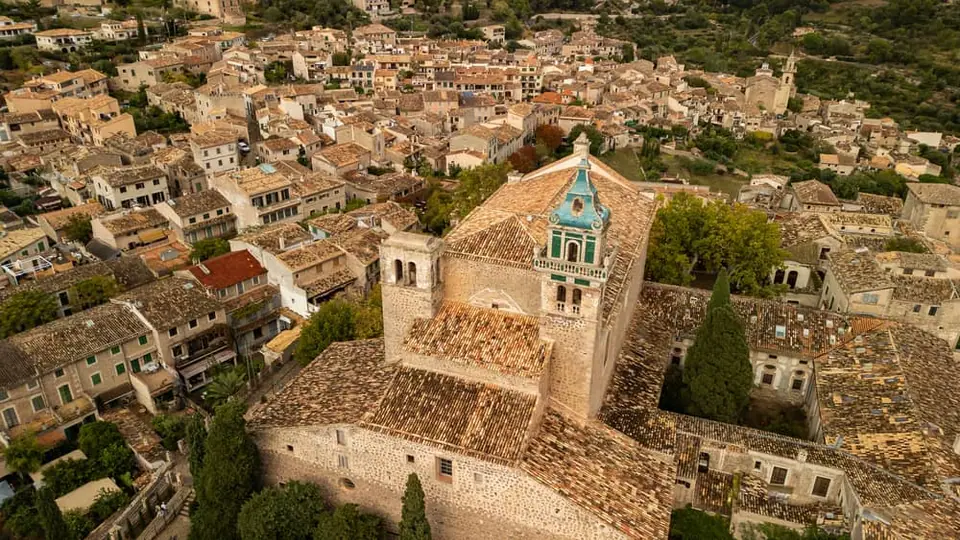
First, good to know: the Charterhouse’s 2026 season ends on 21 November, and the reopening date has not yet been published. Then there is the price, the question everyone asks at the ticket office. Plenty of visitors turn back there, put off by the €12.50 ticket: “just another old monastery you pay for”. That is a shame. Stepping into the Cartoixa is like entering a time capsule. As soon as the heavy door closes behind you, the hubbub of the café terraces on the main square fades away. You change worlds, and above all temperature: the thick stone keeps it wonderfully cool, even in August.
The apothecary: a step back into the 17th century
This is often the first wow moment of the visit. It is not a simple medicine cabinet but a complete pharmacy left untouched for centuries. Dark wooden shelves sag under hundreds of ceramic and blown-glass jars. Look closely: the Latin inscriptions on the pots tell of a time when every ailment was treated with plants from the Tramuntana, and the woodwork still smells faintly of dried herbs. It is one of the most photogenic rooms, but skip the flash out of respect for the place.
The monks’ cells: the luxury of solitude
Forget the image of a two-square-metre cell with a straw bed. Carthusian monks lived alone, but in genuine “mini-villas”. Each cell is an apartment of several rooms with, above all, a private terraced garden.
This is where history meets legend. Two cells claim the memory of Chopin and George Sand: cell no. 2, included in the visit, and cell no. 4, a separate museum with its own ticket, which holds Frédéric Chopin’s Pleyel piano. It took weeks to arrive from Paris, held up by customs and rain, before it was finally used to compose masterpieces. You can picture Chopin, ill and frozen, watching the rain fall over the valley from his little window. Seeing this tired piano in such a bare setting gives a whole new dimension to the Preludes you will hear later.
King Sancho’s Palace and the piano recital
The visit ends in style in the Palau del Rei Sanç (King Sancho’s Palace). The tapestries and furniture are imposing, but the acoustics are the real star: your ticket includes a piano recital of about fifteen minutes. Yes, every tourist goes through it, but when the first notes of the Farewell Waltz ring out under the vaults, time stands still. It is short, but long enough to understand why this place haunted Chopin for the rest of his life.
Tip: don’t queue for 20 minutes in the sun at the ticket office like everyone else. Buy your ticket online while you eat your coca de patata. You will walk past the queue and get the best seats for the recital.
The coca de patata ritual: much more than a bun
If you leave Valldemossa without icing sugar on the tip of your nose, you have missed something. Nobody comes here to count calories, but to taste the coca de patata, the village’s great speciality.
Why potato?
Everyone asks. Don’t worry, you can’t taste the potato at all. Boiled potato is worked into the dough to replace part of the flour, because potato starch holds moisture better than any other ingredient. The result is an airy, cloud-like bun that doesn’t dry out. Add sugar, eggs and lard (the Mallorcan saïm), and you have a sweet bomb.

The institution: Ca’n Molinas
Resist the shiny displays of the cafés on the main street. The temple of the coca hides in a narrow lane: Ca’n Molinas (Carrer de la Rosa, 4).
Founded in 1920, this family bakery has kept its old-world feel, and the smell of yeast and warm sugar hits you as soon as you walk in. Don’t take your bun away: ask to sit in the inner patio, a small secret garden shaded by lemon trees and climbing plants where time seems to stop. It is the most peaceful spot in the village for a break.
How to eat it like a local
There are two schools, depending on the season:
- In winter (or on a grey day): order it with an artisan hot chocolate. This is Spanish hot chocolate: thick, dark and velvety. The coca acts as a sponge: tear it by hand and dunk it generously.
- In summer: pair it with an almond horchata (a typical iced almond milk) or a scoop of Mallorcan almond ice cream. The contrast between the warm bun and the cold almond is addictive.
A little extra: if you plan to hike the next day, buy a bag of two or three at Ca’n Molinas before you leave. Thanks to the potato, they stay soft even after 24 hours: the perfect breakfast before tackling the Archduke’s path.
Escaping the crowds: the lower village
As soon as you step out of the Charterhouse, the temptation is to follow the stream of people towards Via Blanquerna. Resist. To find the soul of Valldemossa, you have to go down: take any lane on your left that drops towards the valley.
The change of mood is dramatic. Within two minutes, the noise of tour groups gives way to mountain silence. Here, around the church of Sant Bartomeu, you will understand why Mallorcans are so proud of their village.
Take your time on Carrer de la Rectoria. It is probably the most photographed street on the island, and for good reason: dozens of flowerpots climb the stone walls, lovingly tended by the residents. Look out for the azulejos, the painted tiles beside each door. They tell the life of Santa Catalina Thomàs, the local saint. They are not there for tourists: it is a living tradition, with each family asking for her protection.
Walk on to the Miranda des Lledoners viewpoint, a stony dead end often skipped by hurried guides. Yet it is the only place with a plunging view over the terraced fields and, on a clear day, the outline of Palma on the horizon. It is the perfect spot for a photo with nobody in the frame: just you and the Tramuntana.
The Archduke’s path: a hike with a view
If your legs are up to it, Valldemossa is the gateway to a feat of engineering: the Camí de s’Arxiduc. This is no goat track but a monumental dry-stone ridge path, built in the 19th century by Archduke Ludwig Salvator of Austria. The eccentric archduke, who fell in love with Mallorca, had it built so he could ride along the summits while gazing at the sea.
You have to earn the start: leave the top of the village and climb steeply through a holm oak forest. The rule is simple: if you are wearing town trainers or flip-flops, forget it. The ground is loose stone and the climb is relentless. Allow a good hour of hard ascent before the magic kicks in.
Once on the ridge, which passes close to the summit of Puig des Teix (1,064 m), the whole coast is at your feet. On your left, cliffs plunge into the Mediterranean; on your right, the plain of Mallorca stretches all the way to the bays of Alcúdia. It feels like the end of the world, with only a few seasoned hikers and black vultures for company.
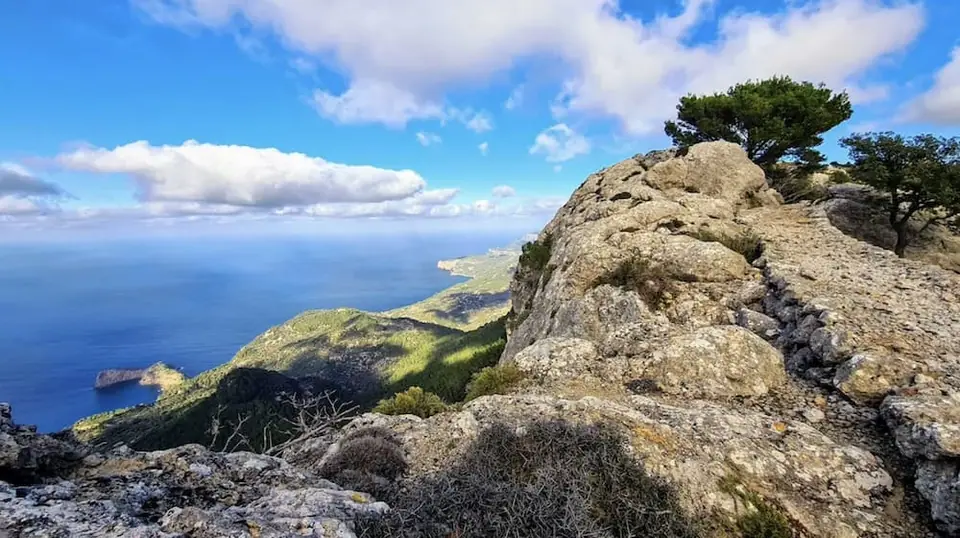
The family alternative: if five hours of walking sounds too much, simply climb to the Cairats refuge (or Son Moragues). The path is wider and shaded, and ends on a plateau where wild goats graze: ideal for a picnic of bread rubbed with tomato and goat’s cheese bought in the village.
Valldemossa parking: how not to ruin your day
No point pretending: parking in Valldemossa can wreck your mood in ten minutes. The village was not designed for thousands of hire cars.
The blue zone (ORA) trap: you will see spaces in the main streets marked with blue lines. Tempting, but often a gamble: time is limited, the meters can be confusing and the wardens patrol constantly. Unless you are very lucky, you will spend more time searching than enjoying.
The public car parks: there are two large ones at the entrance to the village (Parking Valldemossa 1 and 2). They are the simplest option, but at 11am on the dot the “FULL” sign goes on, and latecomers join the queue of cars circling the valley.
The winning strategy:
- Early start: aim to arrive before 9.30am. You will have your pick of spaces and see the village wake up, with delivery vans unloading warm buns and the first light gilding the bell tower.
- Evening session: arrive after 5.30pm. Cruise passengers and coach tours have left, the car park flows again, the air cools and you can enjoy a spectacular sunset over the mountains before dinner on a terrace.
Plan B (calm and greener): if you are staying in Palma, leave the car behind. TIB bus 203 is your best friend. It leaves from the underground station at Plaza España; it is quick, air-conditioned and spares you hill starts on narrow roads. Just pay by contactless card when you board (tap in, tap out). Our guide to buses in Mallorca explains how the network works. Further along the coast, our guide to Deià covers the artists’ village and its cala.
A word of warning about Port de Valldemossa
If your satnav suggests “Port de Valldemossa” for a swim, be careful: it is not the village but a small cove 6 km below. The road down is very narrow, winding and blind. If you are not comfortable with hairpin manoeuvres above a drop, don’t go. Confident drivers will be rewarded: at the bottom, the Es Port restaurant serves an outstanding paella right by the water.
FAQ
Where do you park in Valldemossa?
In one of the two large public car parks at the entrance to the village (Parking Valldemossa 1 and 2). They fill up around 11am, so arrive before 9.30am or after 5.30pm. Blue-zone (ORA) spaces are time-limited and closely watched.
How much does it cost to visit the Valldemossa Charterhouse?
€12.50. The ticket covers the apothecary, the monks’ cells (including the one with Chopin’s piano), King Sancho’s Palace and a piano recital of about fifteen minutes. Buy online to skip the queue. The 2026 season ends on 21 November.
Where can you eat coca de patata in Valldemossa?
At Ca’n Molinas, Carrer de la Rosa, 4, a family bakery founded in 1920 with a shaded inner patio. Have it with hot chocolate in winter, or an almond horchata or almond ice cream in summer.
How do you get to Valldemossa from Palma without a car?
Take TIB bus 203 from the underground station at Plaza España. You pay by contactless card, tapping in when you board and out when you get off.
Read next
Things to do in Sóller, Mallorca: the train, the tram, the port and the valley
Things to do in Sóller, Mallorca: train or free tunnel, Sant Bartomeu church, the tram to the port, red prawns and where to park.
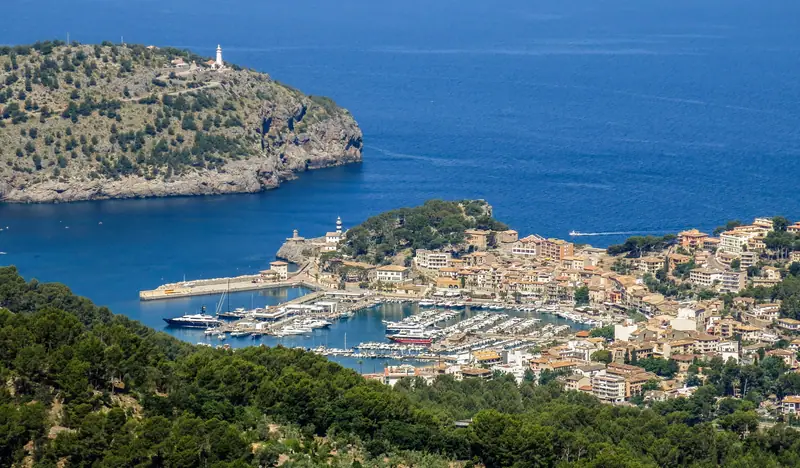
Port de Sóller, Mallorca: things to do, the tram, beaches, lighthouses and where to stay
Things to do in Port de Sóller: the 1913 tram from Sóller (30 min, €10), Repic beach, the Cap Gros lighthouse, boats to Sa…
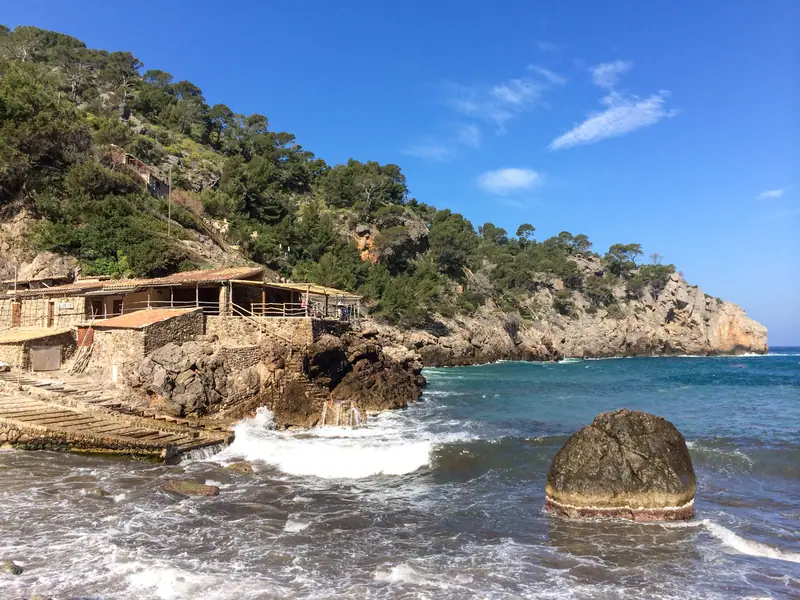
Deià, Mallorca: the artists’ village and Cala Deià (access, swimming, parking)
Deià, Mallorca: stone houses, Robert Graves' home, swimming at Cala Deià, how to get there from Palma, where to eat and where to…