The best beaches in Mallorca: top 10, coves and the wind rule
7 min readUpdated  By Antoon
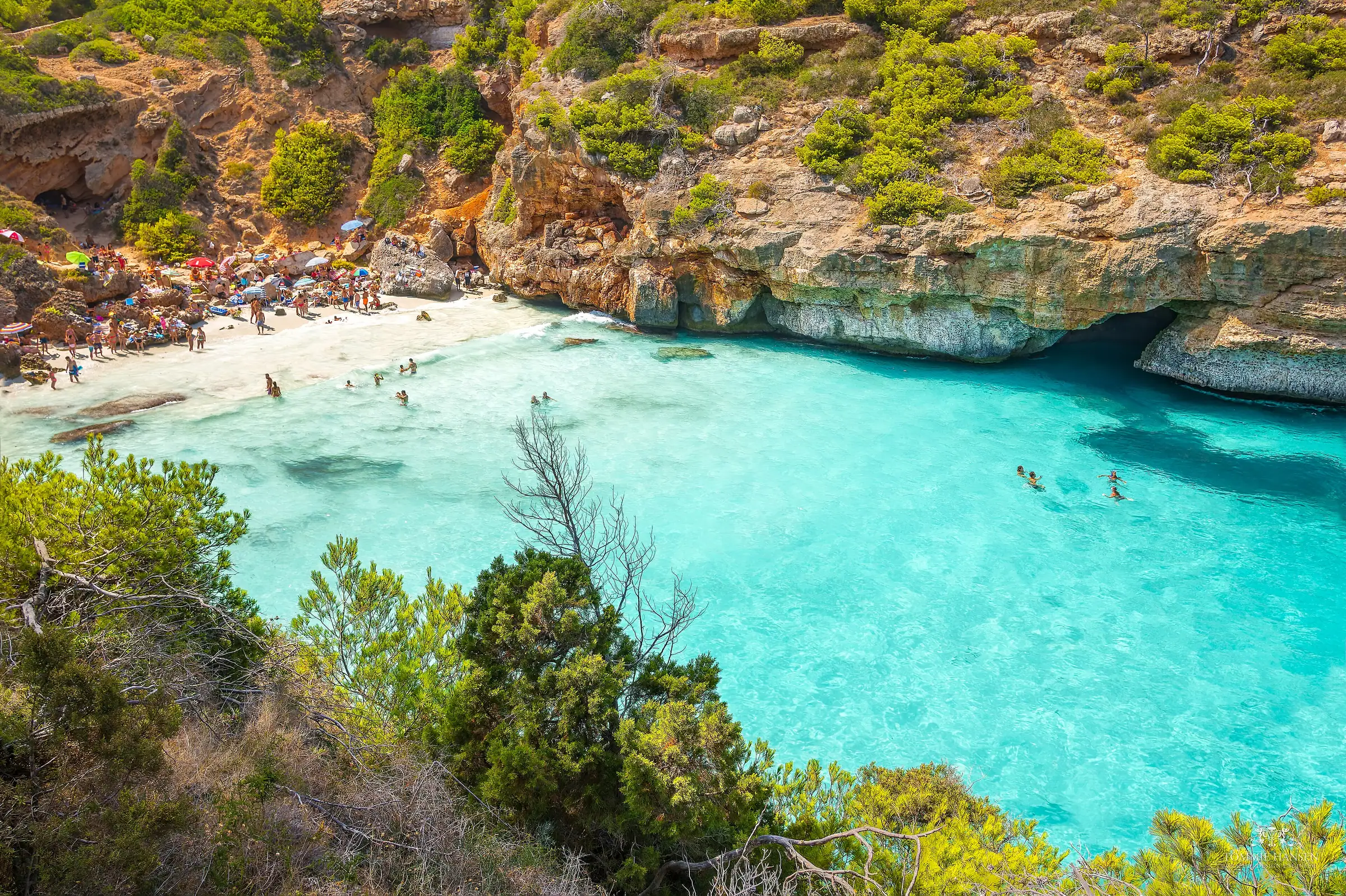
Photo: Tommie Hansen from Stockholm, Sweden, CC BY 2.0, via Wikimedia Commons
Contents
The best beaches in Mallorca are spread along roughly 550 km of coastline: white sand in the south and north, small rocky coves in the east, pebbles and deep water in the west. In all, the island counts 262 beaches. Which one is best for you depends less on the photo than on the wind, your patience and whether you have children with you. Here are our ten favourites, the wind rule, and what you need to know about beach flags and parking.
Which Mallorca beach to choose? The wind decides
The wind decides how clear the water is and whether jellyfish turn up. The rule is simple: a beach facing into the wind gets the waves, a beach with its back to the wind stays calm. We have worked out the orientation of each beach from the coastline, so all you need is the day’s wind direction.
- Wind from the north (Tramuntana): head south. Sheltered: Es Trenc, Caló des Moro, Cala Pi, Cala Llombards, Cala Figuera, Cala Mondragó, Cala Sa Nau, Sa Coma, Platja de Palma, Cala Major and, in the north, Formentor beach.
- Wind from the south (Migjorn): head north and north-east. Sheltered: Cala Agulla, Cala Mesquida, Cala Torta, Cala Sant Vicenç and, in the west, Cala Deià.
- Wind from the east (Llevant): few beaches escape it. Sheltered: Es Trenc and Platja de Palma.
- Wind from the west (Ponent): the east coast is your friend. Sheltered: Cala Agulla, Cala Mesquida, Cala Millor, Sa Coma, Cala Varques, Cala Mitjana, Cala Mondragó, S’Amarador, Caló des Moro, Cala Llombards, as well as Platja de Muro, Cala Sant Vicenç and Portals Vells.
Jellyfish come and go with the wind and currents: see our guide to jellyfish in Mallorca.
The best beaches in Mallorca: our top 10
The best beach is not the prettiest one on Instagram, it is the one that suits your mood and your patience.
1. Es Trenc (south): white sand and nature
Nearly 2.5 km of dunes and pine trees without a single building. The water stays knee-deep for dozens of metres. Access is easy, parking is paid, and the official car park is full from 11am in August. Everything on parking and access: our Es Trenc guide.
2. Caló des Moro (south-east): the most photographed cove
A natural pool between white cliffs and pine trees. Very little sand, no facilities, a 25-minute walk and plenty of crowds. Come at 8am and leave at 10.30am, when the crowds arrive. Access and parking: our Caló des Moro guide.
3. Playa de Muro (north): sand for families
In the bay of Alcúdia: warm, clear water, and you can stand for nearly 50 metres out. The wooden jetty has become a photo spot. Very easy to reach. More in our Playa de Muro guide.
4. Cala Pi (south): a fjord for snorkelling
A Mediterranean fjord protected by two cliffs, with golden sand at the end of 147 steep steps. It is a morning beach: shade takes over around 4pm to 5pm. There is a simple bar at the bottom and restaurants at the top. See our Cala Pi guide.
5. Sa Calobra (north-west): pebbles and a canyon
Two pedestrian tunnels carved through the rock lead to the mouth of the Torrent de Pareis, a giant canyon. Water shoes are essential. You arrive by the hairpin road or by boat: our guide to the road to Sa Calobra has the details.
6. Cala Varques (east): wild, with a hippie spirit
No road, no buildings, no bar, and a 20 to 30-minute walk. An unspoilt beach used by locals and climbers. Bring a picnic. More in our Cala Varques guide.
7. Cala Agulla (east): wild but easy to reach
Near Cala Ratjada, a large sandy beach backed by pine woods. Its old car park has been closed since 2025, so park in Cala Ratjada and walk.
8. Formentor (north): sand, pines and scenery
A sandy beach lined with pines at the foot of the cape. In summer, car access is regulated, so read the access rules in our Formentor guide before you set off.
9. Cala Mesquida (north-east): dunes and waves
Dunes, sand and proper waves: the beach for space and wind, north of Capdepera.
10. Portals Vells (south-west): caves and yachts
A sheltered cove with caves cut into the cliff and sailing boats at anchor, at the end of the Calvià peninsula.
Also worth knowing: Cala Sa Nau, a cove in the east where people jump off the rocks, and Coll Baix on the Alcúdia peninsula, the hardest beach to reach (45 minutes on a cliff path). For underwater life, see the best snorkelling spots.
Mallorca beaches by coast
The north for sand and families, the east for coves, the south for the clearest water, the west for mountains and pebbles.
- North, the kingdom of sand: Alcúdia, Pollença, Can Picafort. More than 10 km of continuous beach, calm water, and wind in the afternoon for kitesurfing.
- East, the coast of the calas: Cala d’Or, Santanyí, Capdepera. Countless small rocky coves that fill up fast in summer. Cala Millor adds nearly two kilometres of white sand.
- South, Maldives blue: Palma, Es Trenc, Colònia de Sant Jordi. Coves and dunes, and often the clearest water thanks to the sandy seabed.
- West, the Tramuntana: Sóller, Deià, Banyalbufar. Little sand, but pebbles and deep, cooler water, ideal for snorkelling.
More beautiful beaches in Mallorca
- Cala Mondragó (south-east): two sandy beaches linked by a coastal path, in a natural park protected since 1992, with car parks and picnic areas.
- Cala Llombards (south-east): white sand between pine woods and cliffs, fishermen’s boat huts, little steps into the water and a natural rock arch close by.
- S’Amarador (south-east): 145 m of white sand with no buildings, dunes and a pond behind, and clear water for snorkelling.
- Cala Mitjana (south-east): a narrow two-armed cove with no road access, reached by a rocky path from Cala Sa Nau or from the sea.
- Cala Torta (north-east): the largest beach in Artà, very wild, exposed to wind and swell, at the end of a track and a walk through the dunes.
- Cala Sant Vicenç (north): four small coves at the foot of the cliffs, sand and pebbles, with a free car park.
- Sa Coma (east): nearly 900 m of fine white sand, a protected peninsula next door and plenty of facilities for families.
- Cala Figuera (south-east): a narrow inlet cut deep into the rock, with trawlers, nets drying on the quay and a defence tower on the point.
- Cala Major (Palma): a small white-sand beach with calm water, 7.3 km from the centre of Palma, close to the Fundació Miró.
- Cala Deià (west): pebbles, islets, fishermen’s shelters and fish restaurants, at the end of a 1.5 km walk from Deià.
Beach flags, jellyfish and posidonia
Green: swimming allowed. Yellow: swim with caution because of waves, currents or jellyfish. Red: swimming strictly forbidden. An orange flag is sometimes used when there is no lifeguard on duty, and a white flag with a purple jellyfish warns of jellyfish. Never ignore a red flag: rip currents (“resaca”) can be violent even when the sea looks calm.
The heaps of brown leaves on the sand are not dirty seaweed but posidonia, a protected marine plant. It is what keeps Mallorca’s water so clear and oxygen-rich, and some municipalities are not allowed to remove it by machine. Swim over it without worry: it is harmless.
Water shoes are a good idea in the west (Deià, Sa Calobra) and in rocky coves, because of painful pebbles and sea urchins. You can buy a pair for around ten euros.
Parking at the beach
White line: free (rare). Blue line: paid. Yellow line: no parking. At Es Trenc, expect a daily flat fee of €8 to €10, so bring cash. Arrive before 9am or after 6pm, especially in July and August: the car parks at the best-known beaches are often full by 10am or 11am. Our car hire guide covers driving on the island.
The coves from the sea
Many coves are best seen from the water: on a boat trip, snorkelling or by kayak.
Affiliate links to GetYourGuide: the price is the same for you, and a commission helps fund this site.
For more ideas beyond the beach, see our guide to things to do in Mallorca.
FAQ
What is the most beautiful beach in Mallorca?
Caló des Moro is the most photographed, Es Trenc the most famous for its white sand and shallow turquoise water. For a calmer moment, try Cala Pi or Cala Sa Nau, arriving early.
Which Mallorca beach is best for children?
Playa de Muro, in the bay of Alcúdia: warm, clear water, you can stand for nearly 50 metres out, and there are plenty of facilities. Avoid Caló des Moro with children: access is too difficult.
How do you avoid the crowds on Mallorca’s beaches?
Arrive before 9am or after 6pm, especially in July and August. The car parks at the best-known beaches are often full by 10am or 11am.
Are there private beaches in Mallorca?
No. Spain’s coastal law (“Ley de Costas”) makes every beach public. Sunbeds and parasols may be charged for, and access by land sometimes has to go round private property.
Is nude bathing allowed in Mallorca?
No Spanish law bans nudity on the beach, but Palma forbids it outside authorised places. Calvià has declared El Mago and Caló d’en Monjo naturist beaches, and nudism is common at Es Trenc, Cala Torta and Cala Varques. Topless is allowed everywhere.
Can you camp on the beach in Mallorca?
No: the coastal law forbids camping on beaches, and in protected areas such as the Tramuntana or Es Trenc, camping without permission costs €300 to €6,000.
Read next
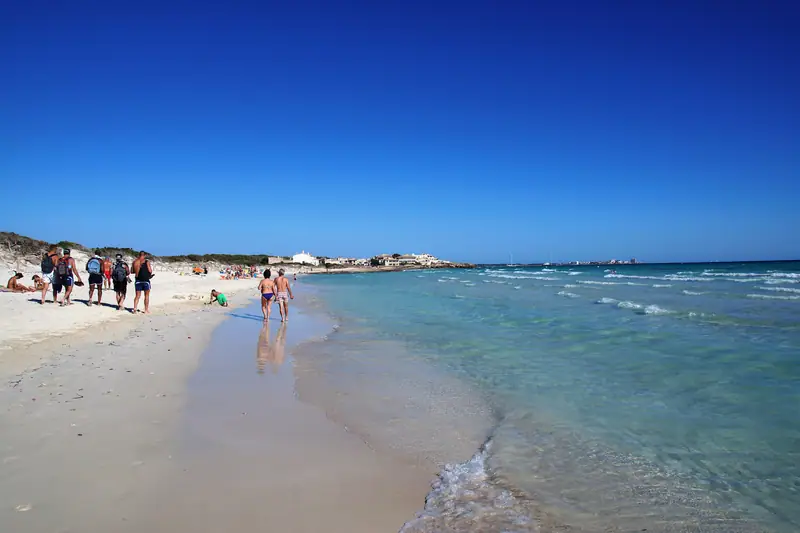
Es Trenc beach, Mallorca: parking, access and how to avoid the crowds
Over two kilometres of white sand with no concrete: where to park at Es Trenc (€8 to €10 a day), how to avoid crowds and seaweed…
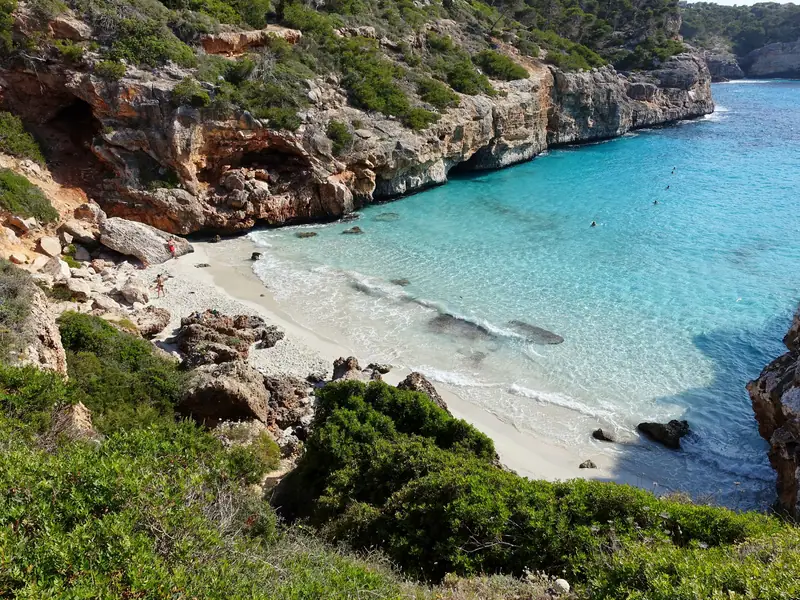
Caló des Moro: parking, access and the best time to go
Caló des Moro parking explained: the free visitor car park, a 25 to 30-minute walk, and why to arrive before 8am.
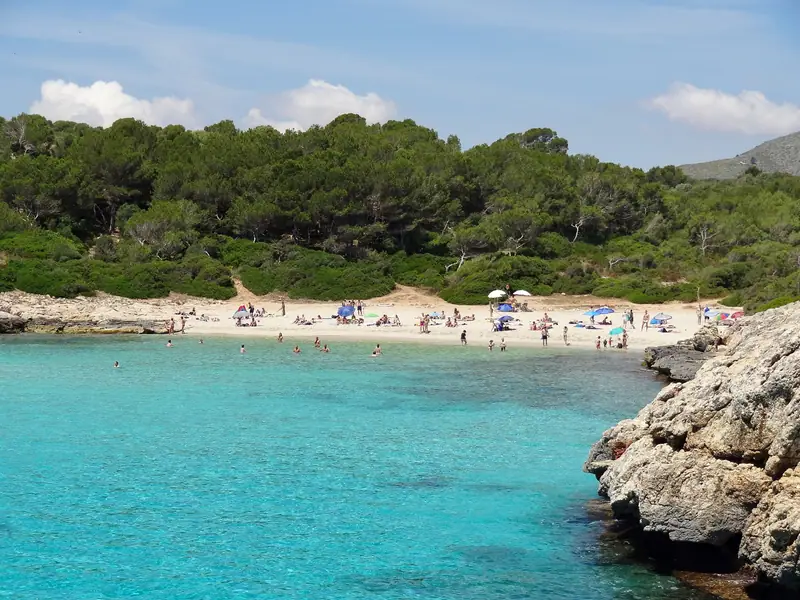
Cala Varques, Mallorca: how to get there, parking, caves and snorkelling
Cala Varques, a wild cove on Mallorca's east coast: the two paths, where to park since 2026, the sea caves, snorkelling spots and…