Mallorca markets by day: which town, what time and how to shop like a local
9 min readUpdated  By Antoon
Contents
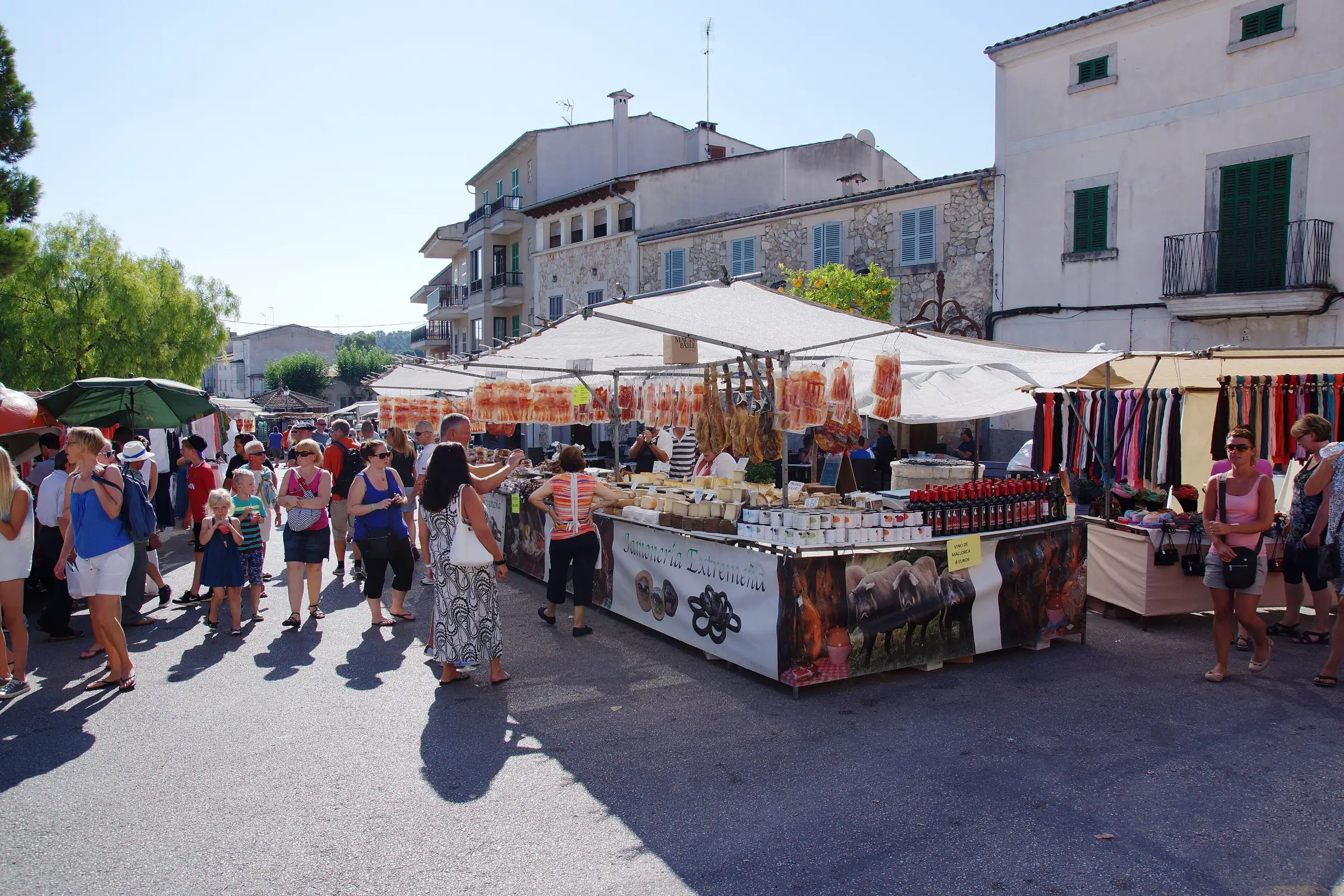
Markets in Mallorca are part of everyday island life, not a sideshow to the beaches. There is a big difference, though, between the market laid on for the tour coaches and the one where Mallorcans do their own shopping. This guide tells you which is which, day by day.
A market here is a social ritual. People come to buy Ramallet tomatoes, haggle over a wicker basket and, above all, sit down for a drink on a café terrace. Forget the lie-in if you want the best produce: everything happens in the morning, and most markets pack up between 1pm and 2pm.
Before you plan your outings, check the weather month by month: some open-air markets are far less pleasant when the tramuntana wind blows or in a heatwave.
Mallorca markets by day: the weekly overview
This table shows at a glance where to go, depending on where you are staying. The tiny markets that are not worth the drive have been left out, so only the ones worth the trip remain.
| Day | Main town (the one to see) | Alternative | Main type | Times (approx.) |
|---|---|---|---|---|
| Monday | Calvià | Manacor | Food and clothing | 8.30am–1.30pm |
| Tuesday | Alcúdia (old town) | Artà | Touristy, crafts | 8.30am–2pm |
| Wednesday | Sineu | Andratx | Farm produce and animals | 7am–2pm |
| Thursday | Inca | Ses Salines | Textiles and leather (very large) | 8am–2pm |
| Friday | Llucmajor | Son Servera | Bric-a-brac and food | 7am–1pm |
| Saturday | Santanyí | Sóller | Chic, homeware, organic | 8am–2pm |
| Sunday | Santa Maria | Pollença | Farm produce and wine | 8am–2pm |
Don’t trust the official closing time. By 1pm the best produce (special breads, fish) has gone and some stalls are already packing up. The golden hour for shopping is between 9.30am and 11am.
The markets worth seeing, day by day
Not all markets are equal. Some have become attractions where “Made in China” sits next to local crafts. Here is a critical pick for each day, with practical details on where to park and where to eat.
Monday markets: Manacor and Calvià
Manacor is the island’s second town. Its market on Plaça Ramon Llull is authentic and sees few tourists. It is the ideal place to buy olive-wood kitchen utensils at local prices.
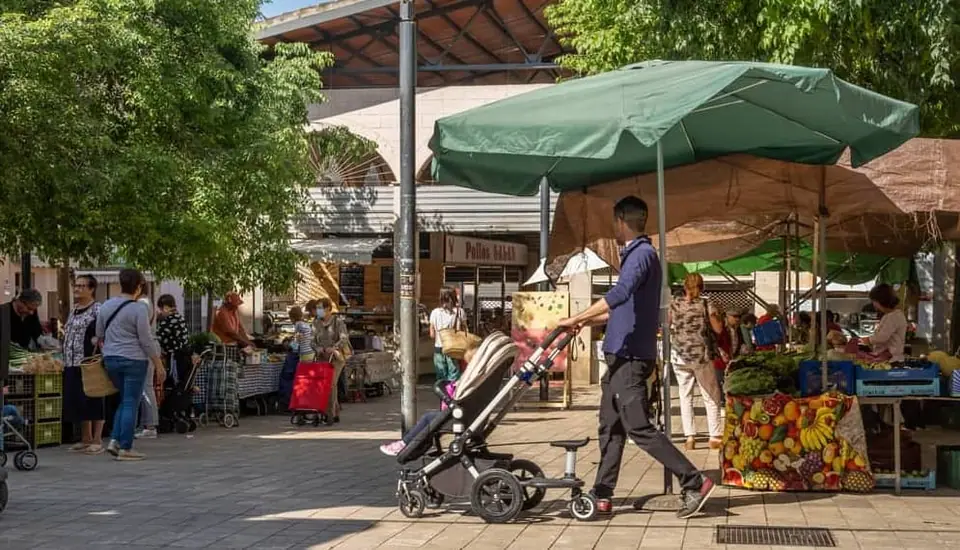
Calvià village (Calvià Pueblo) is a different experience. In the south-west of the island, the market stretches along Carrer Major. The mood is more relaxed and the stalls are a pleasure to look at, with plenty of local charcuterie (sobrassada and camaiot). It is the easiest market to reach if you are staying in the south-west (Palmanova, Santa Ponsa).
Local tip: if you go to Manacor, combine it with a pearl factory or the Nadal Academy, but avoid the industrial estate for lunch and eat in the town centre instead.
Tuesday markets: Alcúdia and Artà
Alcúdia market, on Tuesday and Sunday, is one of the biggest on the island. It sets up at the foot of the medieval walls and, from June to October, spreads into the streets of the old town. The choice is huge: clothes, souvenirs, fruit and vegetables. In summer it is heaving.
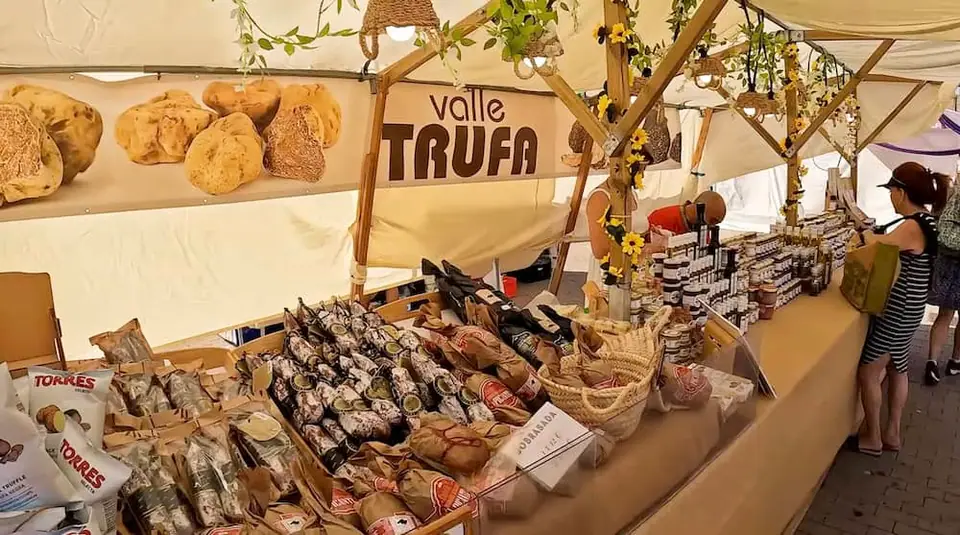
Artà, in the north-east, is a more bohemian alternative. The market is held on Plaça del Conqueridor, and the choice of crafts is often more discerning than elsewhere, with ceramics and jewellery by local makers.
Local tip: in Alcúdia, don’t try to park near the walls. Head for the free car park near the red school (Carrer de la Creu). You will walk five minutes but skip the traffic jams.
Wednesday markets: Sineu and Andratx
Sineu market is one of the few in Mallorca where live animals are still sold, a tradition with a long history. You will see donkeys, hens and goats at the lower end of Plaça des Fossar. It is very picturesque but extremely touristy, and prices sometimes reflect that.
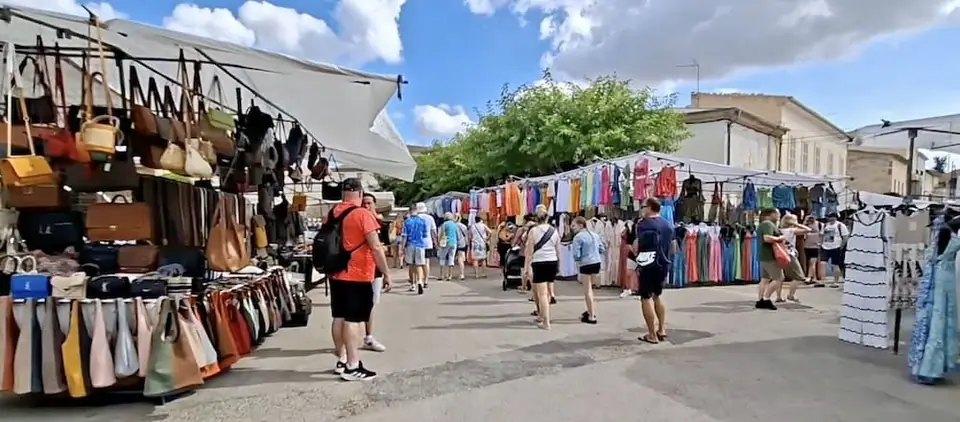
Andratx, in the south-west, is calmer. The market centres on Passeig de Son Mas. It is a good option if you are staying near Camp de Mar or Peguera and want fresh produce without the Sineu crowds.
Local tip: in Sineu, the local sport is eating a frit mallorquí (fried offal and vegetables) in one of the cellers, old wine cellars turned into restaurants, from 10am. Book your table as soon as you arrive.
Thursday market: Inca
Inca is Mallorca’s leather capital, and on Thursday the whole town seems to turn into one big display. It is probably the largest market by area. People come specifically for leather goods, shoes and jackets; the food section comes second but is still decent. Our guide to Inca, its leather outlets and its market has more detail.
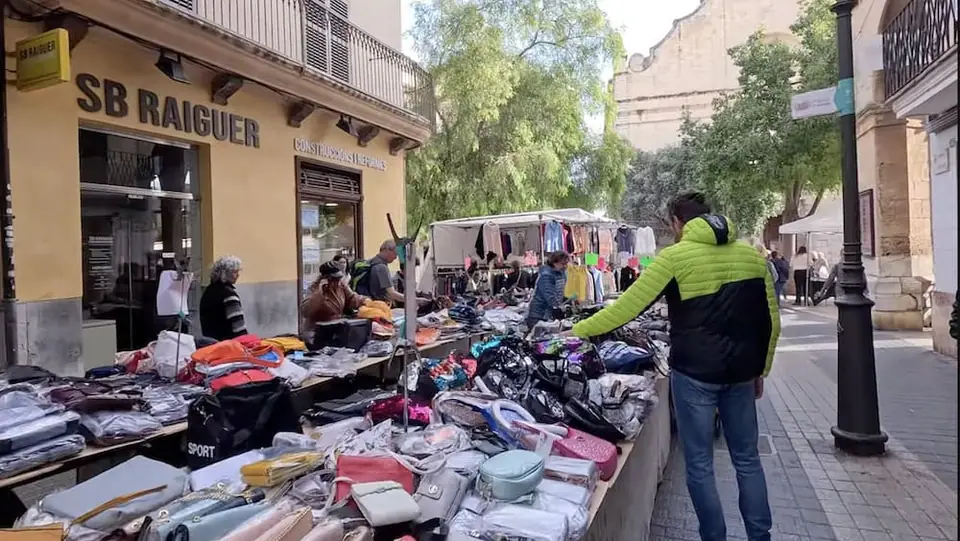
Without a car, Inca is easy to reach by train from Palma (lines T1, T2 and T3). The train is run by SFM (Serveis Ferroviaris de Mallorca); the official timetables are published on the TIB website (tib.org), which covers buses, trains and the metro. For the rest of the island, see our guide to getting around Mallorca by bus.
Local tip: this is the best place to haggle. Clothing sellers expect it here, unlike the food-only markets, where prices are fixed.
Friday market: Llucmajor
Llucmajor has worked hard to revive its market in recent years. It starts at Plaça d’Espanya and spills into the surrounding streets. At the end of the main street you will find an interesting bric-a-brac section. It is less picture-postcard than Santanyí but far more practical for real shopping.
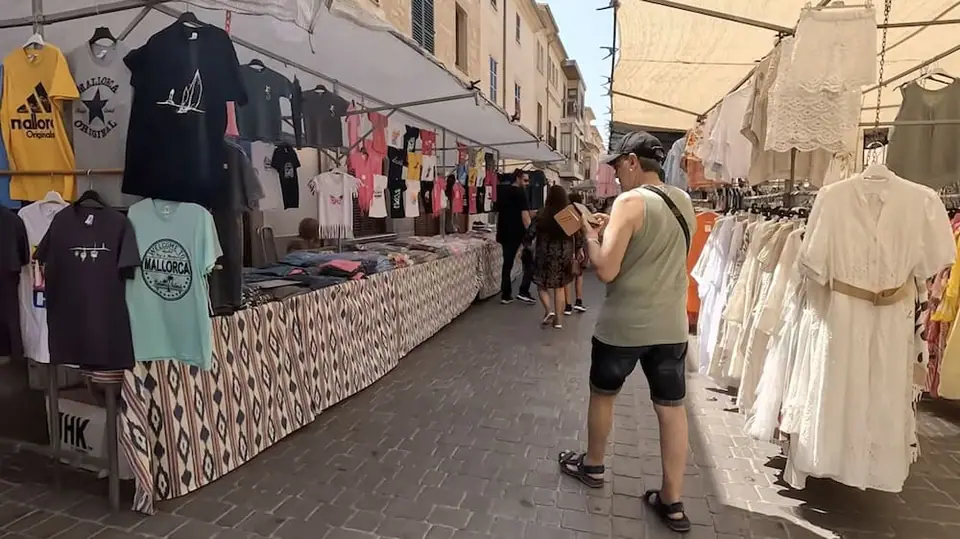
Local tip: the road to Llucmajor gives easy access to the cove of Cala Pi or the cliffs of Cap Blanc for a picnic after the market. It is a good starting point for other things to do in Mallorca on the same day.
Saturday markets: Santanyí and Sóller
Santanyí, on Wednesday and Saturday, is the most Instagrammable market. The golden stone of the buildings and the stalls of gourmet salts, aged cheeses and linen clothing draw a cosmopolitan crowd, many of them German. Prices are high, but so is the quality.
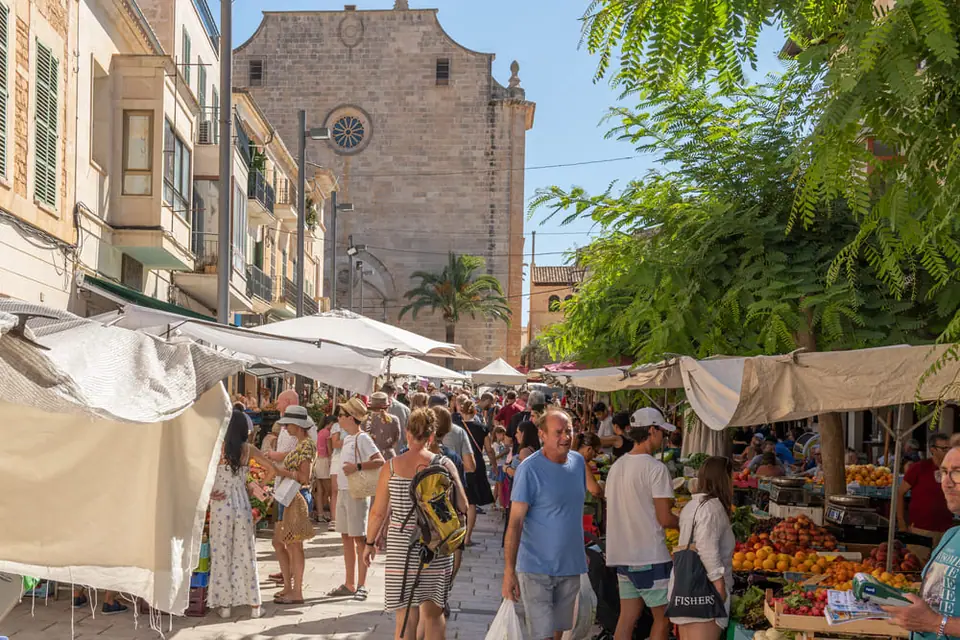
Sóller, in its valley of orange groves, is spectacular for its setting. The market fills the square in front of the modernista church. Arriving on the old wooden train from Palma adds to the charm, but the town is packed from 11am.
Local tip: for Santanyí, arrive before 9.30am without fail. After that, parking becomes mission impossible, and the local police ticket badly parked cars without mercy.
Sunday markets: Santa Maria del Camí and Pollença
Santa Maria is where residents go on a Sunday. It is the market of the Part Forana, the countryside. It is huge and specialises in organic produce, local wine and genuine crafts. This is where to stock up for the week.
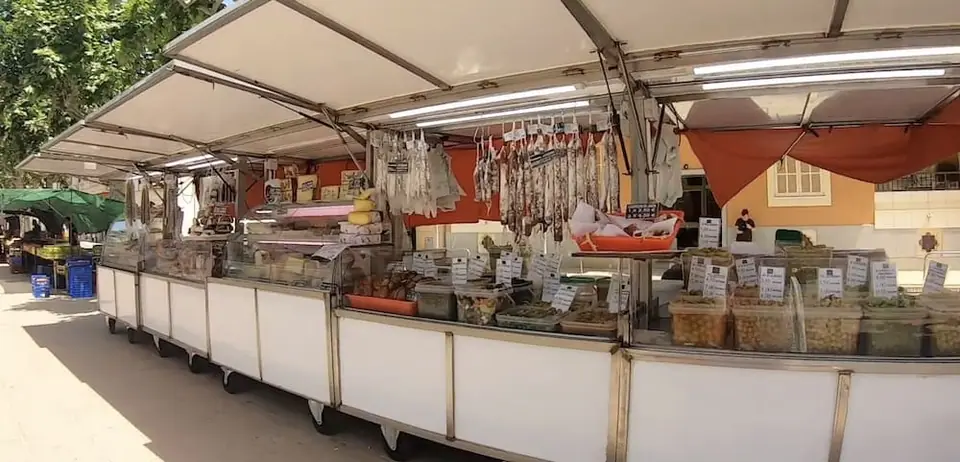
Pollença has a very attractive market on Plaça Major. Afterwards, tradition says you climb the 365 steps of the Calvari for the panoramic view.
Local tip: in Santa Maria, go to Bar Can Cotà or any café on the square and order a variat, a plate of several tapas (Russian salad, pica-pica, croquettes). It is a common breakfast here.
Market prices in Mallorca: what things really cost
A common mistake is to assume the market is always cheaper than the supermarket. It isn’t. In Mallorca you pay for freshness and “km 0” produce. Here are the average prices seen on the stalls, so you don’t get ripped off:
- Ramallet tomatoes (on the vine): €4 to €6 a string. They keep for months.
- Sobrassada (cured pork sausage): €15 to €25 a kilo for an artisan one (black pig). Below €12 it is often industrial.
- Ensaïmada (plain): €10 to €12 for a large one.
- Wicker basket (senalla): €25 to €45, depending on size and leather straps.
- Marinated olives: €6 to €10 a kilo.
On very busy markets such as Alcúdia or Sineu, prices are often slightly higher than in Santa Maria or Manacor.
Palma markets: the permanent food halls
Don’t confuse the weekly street markets (mercadillos) with the covered markets (mercats) open Monday to Saturday in Palma. If you are in the capital, they are a food stop worth building into your plans to visit Palma.
- Mercat de l’Olivar: Palma’s main covered market: meat, fruit and vegetables, and a spectacular fish hall. It is clean and bright, and the produce could not be fresher.
- Mercat de Santa Catalina: smaller, trendier and popular with expats and yacht chefs. The atmosphere is livelier, with plenty of stalls where you can snack on oysters or sushi.
What’s in season: what to buy and when
Strawberries are not in season in Mallorca in August. For the real taste of the island, follow the local farming calendar:
- January–February: oranges and lemons from the Sóller valley. Almonds are harvested at the end of summer but are available all year.
- April–May: strawberries from Sa Pobla, small and sweet. Loquats (nísperos) arrive too.
- June–August: tomatoes, green peppers (for frying), watermelons and melons. Figs come in at the end of August.
- September–October: grapes (Binissalem) and wild mushrooms (esclata-sangs) once the rain has come.
Practical tips for Mallorca’s markets
A successful market trip takes a little planning.
Cash is king
Contactless payment is spreading, but many small producers only take cash. Always carry small change: €50 notes are often refused in the morning because stallholders have little change in the till.
Parking on market day
Watch the colour of the road markings, especially in Santanyí and Alcúdia:
- Yellow line: no parking at all. You will be towed.
- Blue line: pay and display (ORA zone).
- White line: free (rare near the markets).
On market days, temporary car parks, often open fields, are signposted “Aparcamiento”. Use them and save yourself the stress.
Spotting genuine crafts
Be wary of stalls selling exactly the same white dresses or baskets as their neighbours. Look for the “Carta d’Artesà” label, often displayed by genuine makers. For food, choose “km 0” or pagès (farmer) stalls, whose fruit can look ugly but tastes good, unlike resellers of uniform produce imported from mainland Spain.
One last tip: in summer the heat becomes stifling from midday. Shop early and keep the 12 to 1pm slot for a drink in the shade before the stalls pack up.
FAQ
What day is the market in Palma?
The Mercat de l’Olivar (the biggest food hall) and the livelier Mercat de Santa Catalina open Monday to Saturday. Street markets: Pere Garau on Tuesday, Thursday and Saturday, Santa Catalina (Carrer de Soler) on Tuesday and Saturday, and the producers’ market on Plaça dels Patins on Tuesday and Saturday.
Which market is near Palmanova and Santa Ponsa?
Santa Ponsa has its market on Saturday morning (Avinguda de s’Hort), Peguera on Tuesday, Son Ferrer on Friday and Calvià village on Monday, along Carrer Major. Magaluf has had no daytime market since April 2025, and Palmanova since January 2026.
What day is Alcúdia market?
Tuesday and Sunday, at the foot of the old town walls (Passeig de Pere Ventayol, Plaça de Carles V); from June to October it also spreads into the central streets. Park at the free car park near the red school (Carrer de la Creu), five minutes’ walk away.
What day is Sineu market?
Wednesday, from around 7am to 2pm. It is one of the few markets in Mallorca where live animals are still sold, at the lower end of Plaça des Fossar. Afterwards, locals eat a frit mallorquí in one of the town’s cellers.
Do you need cash at Mallorca’s markets?
Yes, bring small change: many small producers only take cash, and €50 notes are often refused in the morning.
Book onlineThe most populartours
Book online before you go: you pick the time slot, and most tours can be cancelled for free up to 24 hours before.
 At sea
Mallorca boat trip
Compare tours, times and traveller reviews.
See prices →Free cancellation on most Guided tour
Serra de Tramuntana tour
Compare tours, times and traveller reviews.
See prices →Free cancellation on most Day trip
Caves of Drach
Compare tours, times and traveller reviews.
See prices →Free cancellation on most
Read next
Things to do in Mallorca: the highlights, tickets to book and itineraries
Things to do in Mallorca: Valldemossa, the Sóller train, the Caves of Drach, Formentor, Palma Cathedral, tickets to book and…
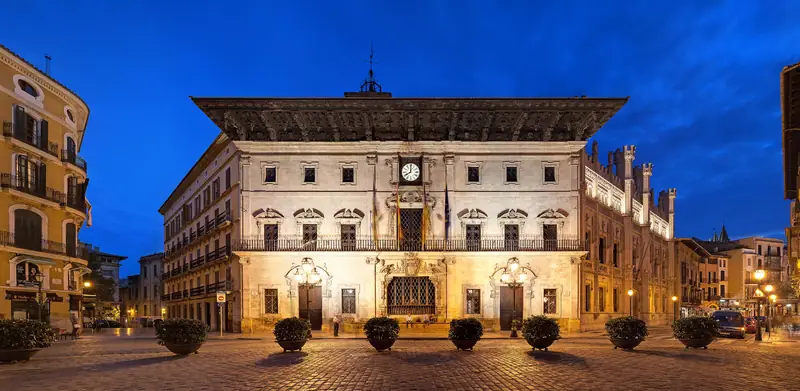
Things to do in Palma de Mallorca: what to see on foot and a one-day itinerary
Things to do in Palma de Mallorca: the cathedral and its terraces, old town patios, Arab baths, the Olivar market, Santa…
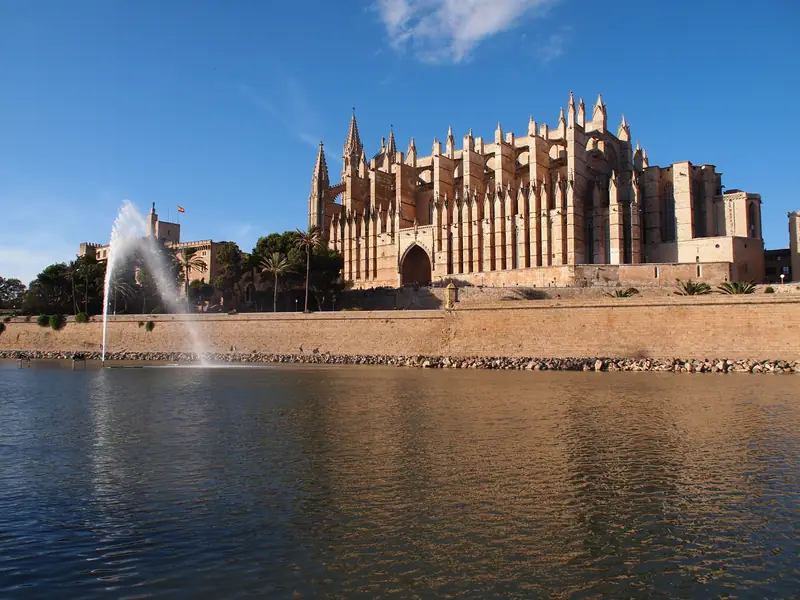
Palma Cathedral (La Seu): tickets, prices, opening times and rooftop terraces
Palma Cathedral tickets cost €11 online with the museum, €25 with the rooftop terraces; closed to visitors on Sundays. Opening…