Es Trenc beach, Mallorca: parking, access and how to avoid the crowds
7 min readUpdated  By Antoon
Contents
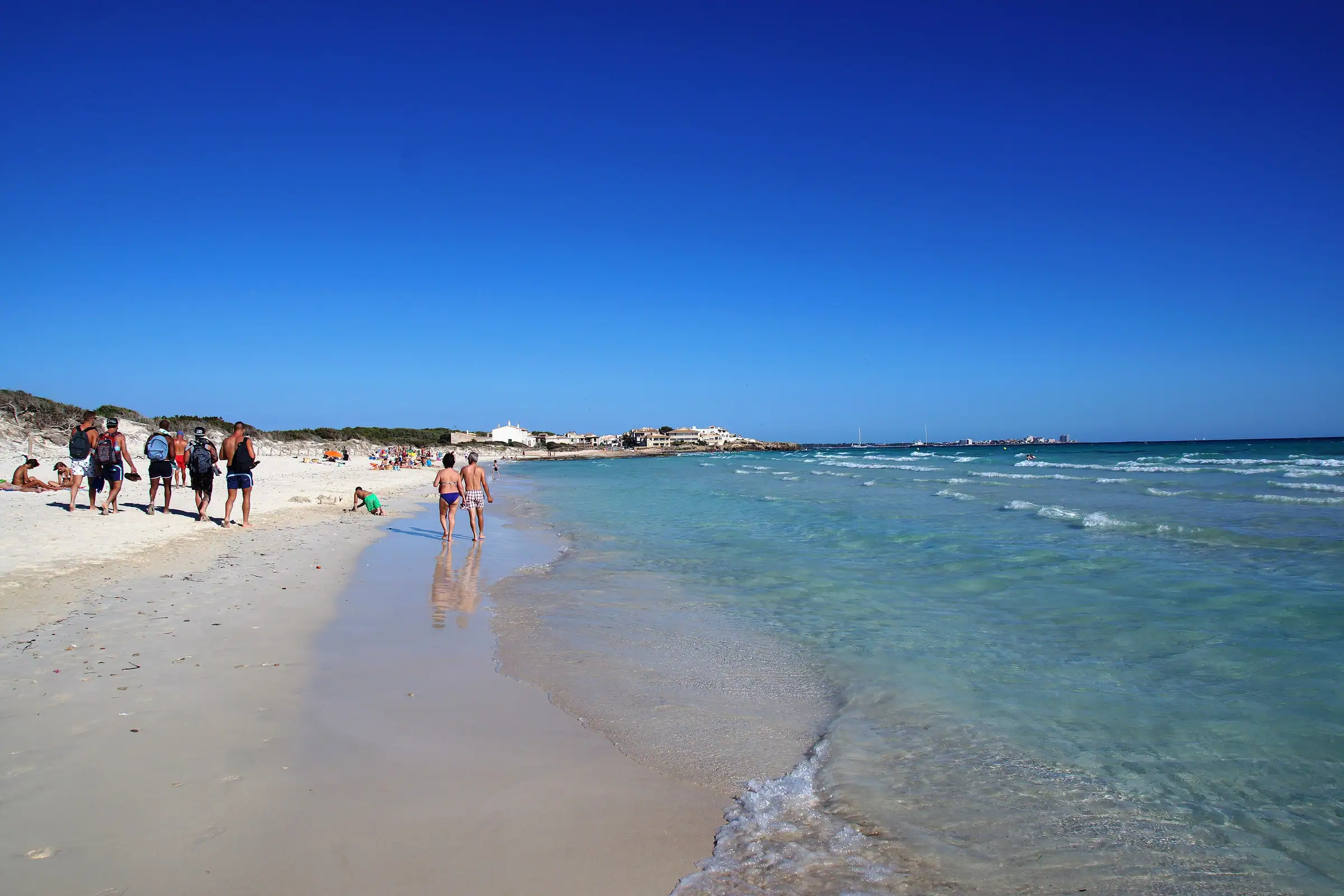
Es Trenc beach is the classic Mallorca postcard, the kind of image that sells thousands of plane tickets every year: a long strip of white sand, turquoise water and a real sense of being at the edge of the world. It is one of the best-known beaches on the island.
The reality is a little more mixed. In August, this protected beach can turn into an ordeal for the unprepared visitor. Between the traffic jams across the salt flats, chaotic parking and fierce heat with no shade at all, a dream day can become a logistical headache.
Should you cross Es Trenc off your list? Not at all. It is a natural site that deserves a visit, but you need to visit it cleverly. Here is how to get there, where to park and what to bring so you can enjoy it without nasty surprises.
Why Es Trenc beach is so popular
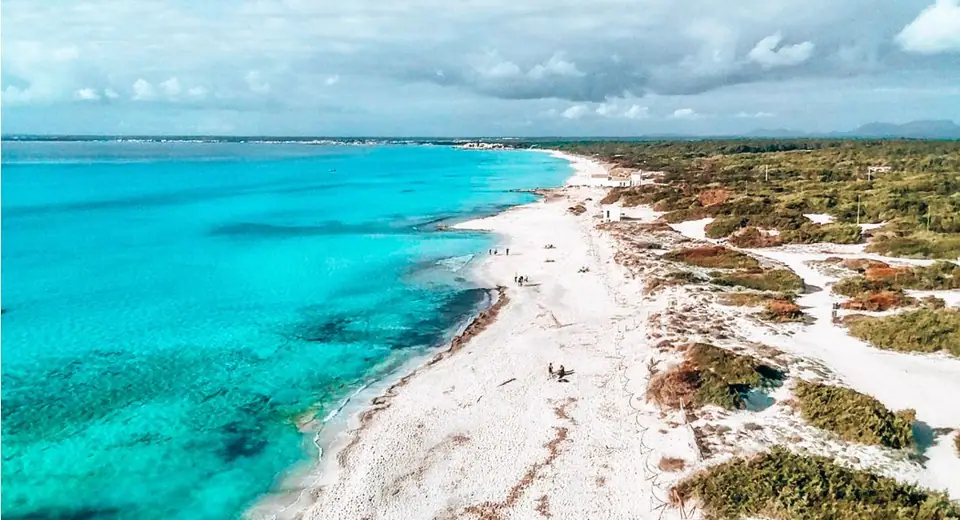
Es Trenc stirs such strong feelings because it is a geographical exception. Unlike most of the coves of Mallorca (the “calas”), tucked between rocky cliffs, Es Trenc is a huge open beach of more than two kilometres. There is no concrete and there are no oversized hotels spoiling the view behind you. Just dunes, pine trees in the distance and the sea as far as you can see.
The water is very clear. Thanks to the pale sandy seabed and the shallow depth, the sea takes on swimming-pool colours. It is ideal for families: you can walk fifty metres out with the water barely reaching your knees. For children, it is a huge, safe paddling pool.
What really gives Es Trenc its character are its concrete sentries. Old military bunkers, built from 1939 onwards, are slowly sinking into the sand. Today they make a striking contrast between a dark chapter of history and the brightness of the setting, and they are among the most photographed spots on the beach.
Getting there and parking at Es Trenc
Access is the sore point. The beach is reached by a narrow road that crosses the salt flats (salines). In summer this road fills up quickly, creating queues where traffic moves at walking pace.
Es Trenc parking: your two options
You have two main ways in. The first is through the village of Ses Covetes to the north. It is often the busiest. The few street spaces (ORA blue zone) are taken from 9am. If you see a free spot along a yellow line, do not stop there. The local police patrol constantly and hand out fines, and the tow truck is very active too.
The second option, safer but paid, is the large Parking Es Trenc to the south. It is a huge levelled plot of open ground. The price often comes as a shock: expect €8 to €10 for the day. It is a lot for a dusty field, but it is the price of peace of mind. Always carry some cash, because card terminals sometimes struggle to find a signal in the middle of the dunes.
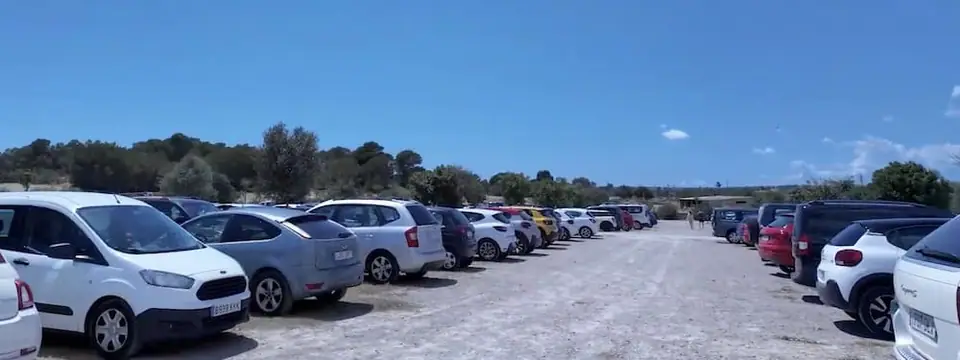
Once parked, do not expect to be at the water’s edge straight away. You will need to walk 5 to 10 minutes along scorching dirt tracks to reach the shore. If you arrive between 11am and 4pm, be ready for the possibility that the car park is full, forcing you to turn round after losing an hour in traffic. The local trick? Come for the sunset, after 6pm. The crowds have gone, and the light over the salt pans is superb.
Getting to Es Trenc without a car
If you follow our guide to public transport in Mallorca, TIB line 508 links Palma with Sa Ràpita all year round (line 518 comes from Campos). It is an adventure in itself. The bus drops you in Sa Ràpita, 2.5 km from the beach, which you still have to reach on foot. It is doable and cheap, but the journey back at the end of the day, tired and salty, can be hard going on a packed bus.
What to accept before you go
Since 2017, Es Trenc has been part of the Es Trenc-Salobrar de Campos maritime and land natural park, which means strict rules and basic facilities. Do not expect rows of freshwater showers, toilets every fifty metres or neatly kept boardwalks.
No shade at all
This is the detail that spoils the day for many families. Unlike Formentor beach, where the pines come down to the water, the land behind Es Trenc is made up of low dunes and thorny scrub. There is no natural shade. Forget the parasol and you will roast. The sun is strong, reflected by the white sand. Staying hydrated is essential, all the more so because places selling water are few and expensive.
The “dirty seaweed” debate
You will probably read negative online reviews complaining about a “dirty” beach full of seaweed. It is worth setting the record straight: it is not seaweed but Posidonia oceanica. This underwater plant, a protected species under Balearic Government rules, is the lung of the Mediterranean and the reason the water is so clear. The banks of dry leaves that build up on the shore are left there deliberately by the authorities, because they protect the sand from winter erosion. In summer they are sometimes pushed to one side, but not always removed. Posidonia is a sign of excellent environmental health, not of dirt. If you are after sand raked to perfection as in a private resort, Es Trenc may not be for you.
A long naturist tradition
Es Trenc is also the birthplace of naturism in Mallorca. The areas near the car parks (Ses Covetes) are mostly textile, but the further you walk towards the middle of the beach, the more swimsuits come off. Today both groups share the beach easily. Nobody stares and everyone gets on with their day. Note too that dogs, even on a lead, are banned from the beach and the water from March to October (guide dogs excepted).
The best trick: arrive by sea
There is a back door to Es Trenc that avoids both the parking battle and the walk through the dust: the boat. From the nearby harbour of Colònia de Sant Jordi, catamarans and excursion boats leave daily and drop anchor right off the beach.
It is a good choice for families with young children or groups of friends. You get the best of both worlds: the view of the wild coast and direct access to the turquoise water for a swim, with the comfort of a bar on board, guaranteed shade under the boat’s awning and no car stress at all. It costs more than the car park, but once you count the fuel and the stress you avoid, the sums add up quickly.
Beyond the beach: Mallorca’s white gold
Do not leave without looking around. The road to the beach crosses the Salines d’Es Trenc. This chequerboard of evaporation pools is fascinating, especially at sunset when the water turns pink.
This is where the famous Flor de Sal is harvested, considered one of the best salts in the world. There is a small official shop right on the road. Stopping for a little pot of salt with black olives or hibiscus is almost a ritual. It is the perfect food souvenir: light in the suitcase, not too expensive, and it brings the taste of Mallorca back to your kitchen.
At the end of the day, skip the beach bars (“chiringuitos”), often packed and overpriced, and head for the village of Ses Covetes or the town of Colònia de Sant Jordi. You will find proper restaurants with fresh fish at fairer prices, a good way to round off a day on the island’s most famous beach.
FAQ
Where do you park for Es Trenc beach?
Two options: the few ORA blue-zone spaces in the village of Ses Covetes, to the north, taken from 9am, or the large paid Parking Es Trenc to the south (€8 to €10 for the day). Then allow 5 to 10 minutes’ walk to the shore.
Is Es Trenc parking free?
Not in season: the large Parking Es Trenc costs €8 to €10 for the day and the street spaces in Ses Covetes are ORA blue zone. After 6pm the crowds have thinned out.
Can you get to Es Trenc by bus?
Yes: TIB line 508 links Palma with Sa Ràpita all year round (line 518 comes from Campos). From Sa Ràpita, the beach is another 2.5 km on foot. It is cheap, but the bus back can be packed.
Why is there seaweed on Es Trenc beach?
It is dried Posidonia oceanica, an underwater plant protected in the Balearics. The authorities leave these banks on the shore on purpose because they protect the sand from erosion. They are a sign of good water quality.
Is Es Trenc a naturist beach?
Es Trenc is the birthplace of naturism in Mallorca. The areas near the Ses Covetes car parks are mostly textile, and naturism becomes more common towards the middle of the beach. Dogs are banned from March to October, except guide dogs.
Read next
The best beaches in Mallorca: top 10, coves and the wind rule
The best beaches in Mallorca: Es Trenc, Caló des Moro, Cala Pi, Playa de Muro. Access, parking, the wind rule and tips to beat…
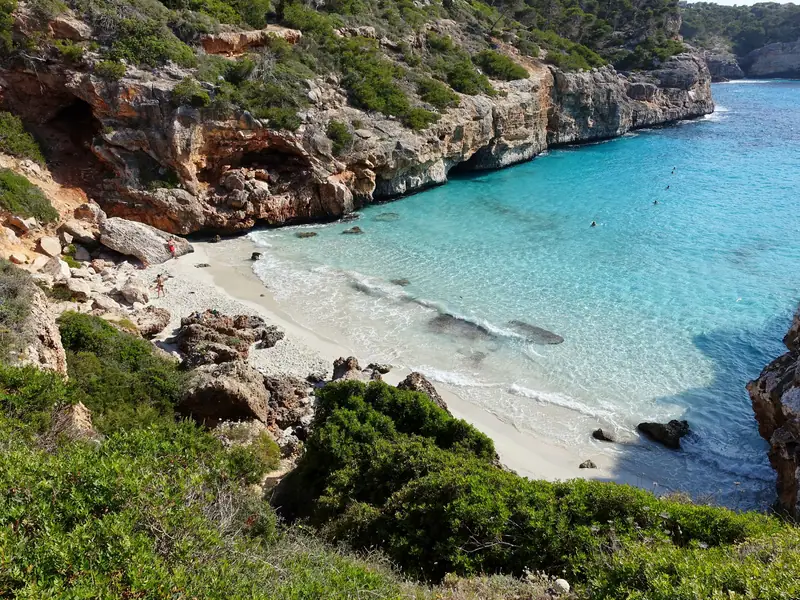
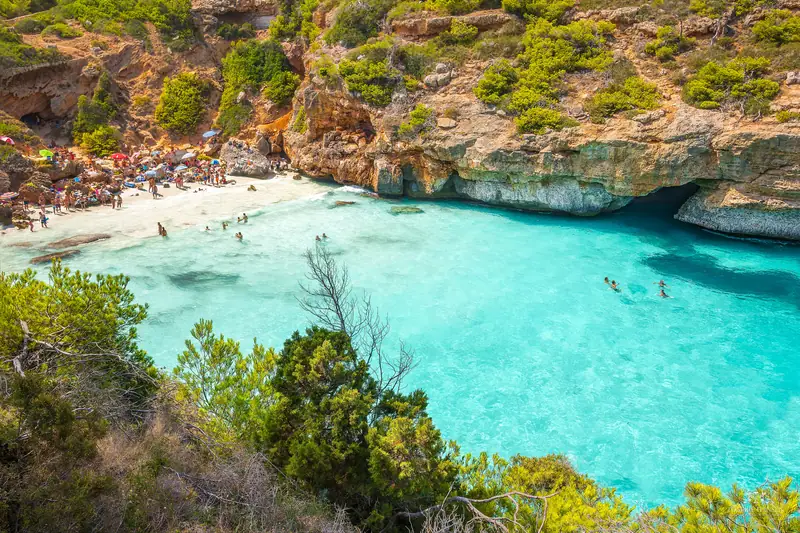
Caló des Moro: parking, access and the best time to go
Caló des Moro parking explained: the free visitor car park, a 25 to 30-minute walk, and why to arrive before 8am.
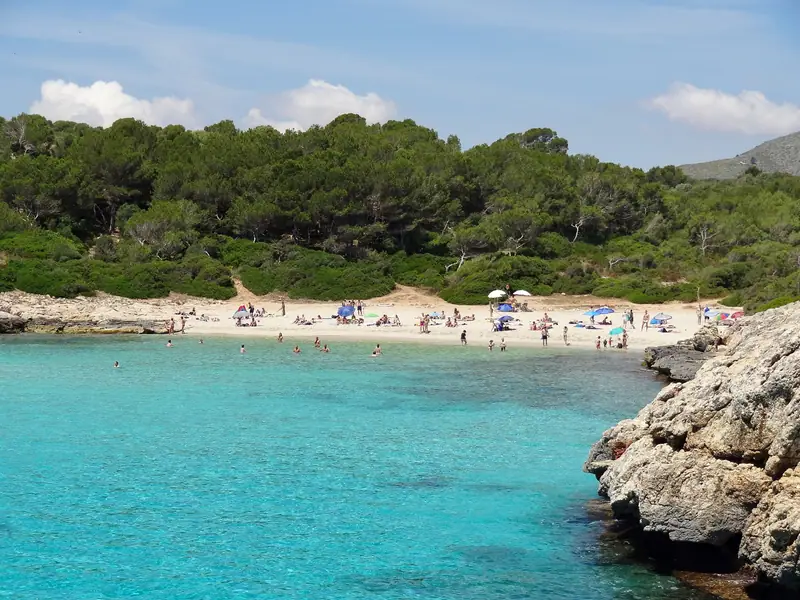
Cala Varques, Mallorca: how to get there, parking, caves and snorkelling
Cala Varques, a wild cove on Mallorca's east coast: the two paths, where to park since 2026, the sea caves, snorkelling spots and…