Cala Pi, Mallorca: the beach, the viewpoint, the steps and parking
5 min readUpdated  By Antoon
Contents
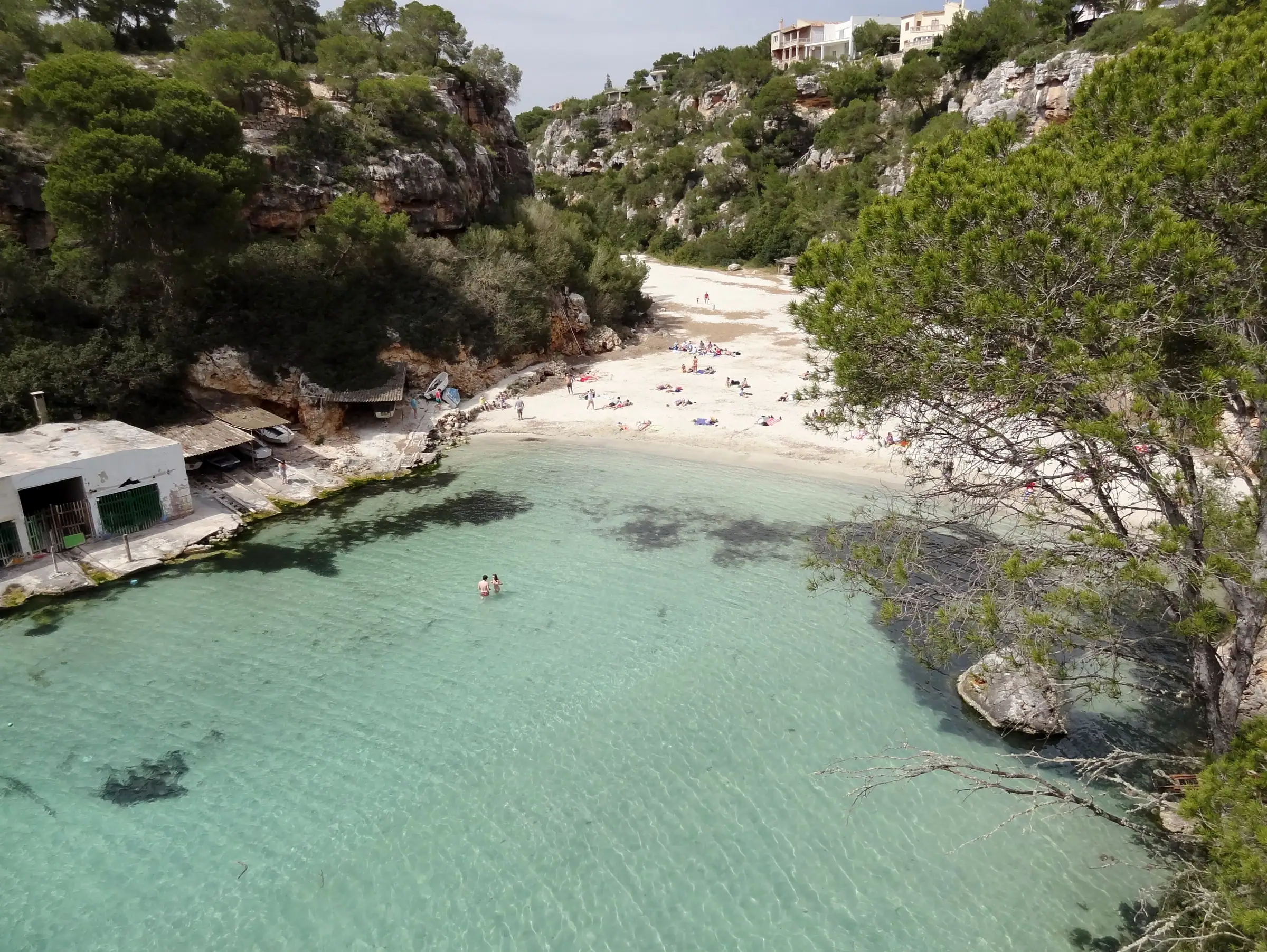
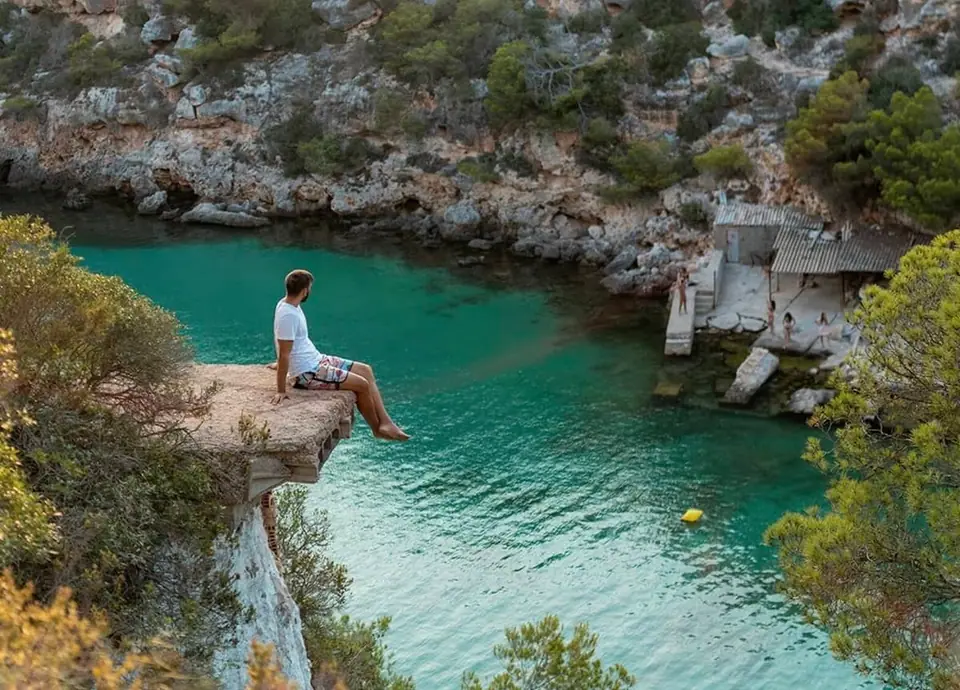
Cala Pi is a narrow cove in the far south of Mallorca, in the municipality of Llucmajor, wedged between two cliffs at the mouth of a stream. If you’ve scrolled through social media looking for Mallorca, you’ve seen it: turquoise water squeezed between towering cliffs, and that concrete platform that seems to float above the void, where everyone strikes a pose.
But beyond the perfect photo, is Cala Pi a good beach for a whole day, and is the access as hard as people say?
The famous photo: where is the Cala Pi viewpoint?
The famous viewpoint isn’t on the beach but before you go down. When you reach the village, head for the top of the stone staircase. Instead of going down, follow the small path along the cliff to the left. You’ll soon see the concrete slab jutting out over the drop.
To be clear: this spot is not secured. There’s no barrier and a fall would be fatal. If you’re travelling with lively children or suffer from vertigo, stay well back. In high season, you may wait up to 20 minutes for your turn on the rock. Photo tip: the best light (and the smallest crowds) comes in the morning, before 10am. In the afternoon, the sun drops behind the cliff and the cove falls into shade quite early.
Getting down to Cala Pi beach: the 147 steps
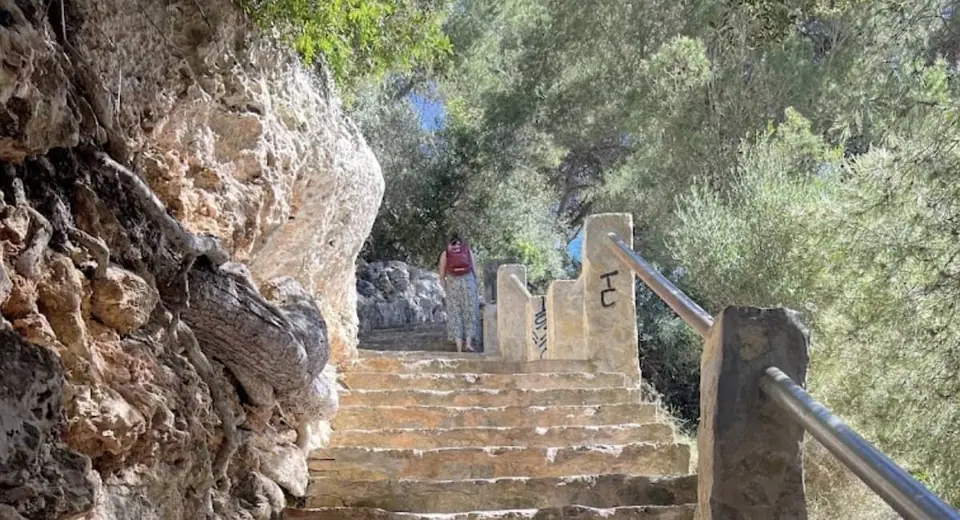
You have to earn Cala Pi. The cove sits at the mouth of a stream, the Torrent de Cala Pi, which means it lies right at the bottom of the rocky plateau. To reach the sand, you go down a fairly steep stone staircase of 147 steps.
The way down is easy, but keep some energy for the climb back at the end of the day, especially if you’re carrying a cool box and a parasol. The steps make the beach difficult for people with reduced mobility. With small children, leave the pushchair behind and bring a baby carrier.
Cala Pi beach: turquoise haven or trap?
Once at the bottom, the setting is impressive. You’re enclosed between two 30-metre rock walls, which shelter the bay from wind and waves. The water is often calm and very clear, ideal for snorkelling along the rocks.
There are two things to know, though, so you’re not disappointed:
- Posidonia: because the beach is the mouth of a stream, its shape changes with the winter storms. You’ll often find banks of dried posidonia (seagrass). It isn’t dirty seaweed but a sign of healthy water, though it can cover part of the sand.
- Limited space: the beach is only about 45 metres wide, although it runs a long way back. In July and August, it’s towel to towel from 11am.
Facilities are basic. There’s a small chiringuito (beach bar) for cold drinks and ice creams, and sunloungers to hire in season. However, there are no public toilets or showers on the sand itself, so plan ahead. Phone signal is also patchy at the foot of the cliffs: perfect for switching off, less so if you’re waiting for a call.
The watchtower: a historic sentinel
Look up from the sand towards the right-hand point and you’ll spot a stone building: the Torre de Cala Pi. Built in 1663, it protected the south coast from Barbary pirate raids. After your swim, you can walk there from the top of the cliff (on the opposite side from the steps, via Carrer de la Torre). The inside is usually closed, but the view from the foot of the tower stretches all the way to the island of Cabrera. It’s an easy 10-minute walk.
Cala Pi restaurants: where to eat
The village is very small and residential, so don’t expect a string of restaurants as in Palma. There are, however, a couple of handy options at the top of the steps:
- The beach restaurant: right on the sand. Handy for an ice cream or a basic burger, but you’re mostly paying for the view.
- Gastrobar Cala Pi: up in the village, with more careful cooking (tapas, fish) and a pleasant terrace.
If you want to eat really well, drive 15 minutes to the town of Llucmajor, where prices are half as high and the food more authentic.
How to get to Cala Pi: car or bus
Cala Pi is isolated: part of its charm, and its main drawback.
By car (essential): clearly the best option. From Palma, allow about 40 minutes via Llucmajor. The road is good and fairly straight, nothing like the stressful bends of the drive down to Sa Calobra. If you’ve hired a car, park in the streets of the housing estate and follow the road markings: in summer, the spaces closest to the steps go early.
By bus (complicated): it’s doable but tedious. TIB line 519 links Llucmajor with Cala Pi, and line 505 links Cala Pi with Tolleric, where line 504 continues to Palma, but services are infrequent. For a simple swim, it’s an expedition that can take two hours.
Things to do near Cala Pi
If you’ve come this far, don’t leave straight after your swim. About 15 minutes’ drive away is Cap Blanc and its lighthouse. The view of the cliffs is impressive and far less busy, and it’s an excellent spot for sunset.
Cala Pi is also a logical stop on our 7-day Mallorca itinerary, which focuses on the south of the island in its first days. It’s often the last “wild” stop before heading on to the famous (and very flat) Es Trenc beach.
Is Cala Pi worth it?
Cala Pi remains a visual highlight, and the layout of the place is unique in Mallorca.
- Go for: the souvenir photo, the spectacular enclosed setting and safe swimming (no waves).
- Skip it if: you hate stairs, you want kilometres of fine sand or you need full toilet facilities.
FAQ
Where is the Cala Pi viewpoint?
Before you go down to the beach: at the top of the stone staircase, follow the small path along the cliff to the left until you reach the concrete slab. There’s no barrier, so be careful.
Where to park at Cala Pi?
In the streets of the housing estate, following the road markings: Llucmajor council announces no paid parking zone for Cala Pi. In summer, arrive early.
Are there facilities on Cala Pi beach?
There’s a small beach bar and sunloungers to hire in season, but no public toilets or showers on the sand.
Can you get to Cala Pi by bus?
Yes, but it takes time: TIB line 519 runs from Llucmajor, and line 505 from Tolleric, connecting with line 504 to Palma. Services are infrequent: allow up to two hours, against about 40 minutes by car.
Read next
The best beaches in Mallorca: top 10, coves and the wind rule
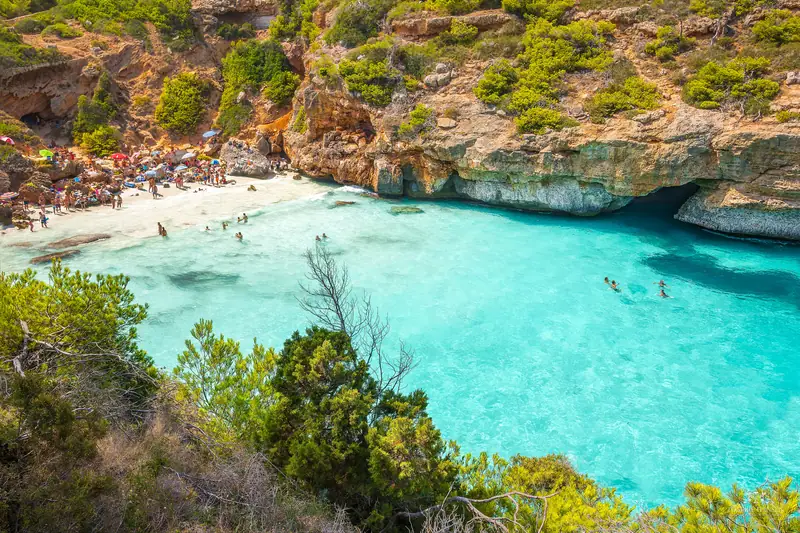
The best beaches in Mallorca: Es Trenc, Caló des Moro, Cala Pi, Playa de Muro. Access, parking, the wind rule and tips to beat…
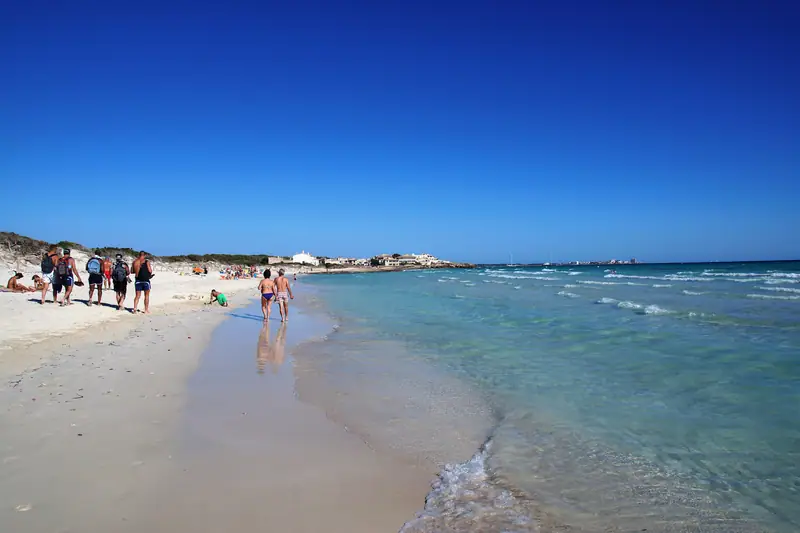
Es Trenc beach, Mallorca: parking, access and how to avoid the crowds
Over two kilometres of white sand with no concrete: where to park at Es Trenc (€8 to €10 a day), how to avoid crowds and seaweed…
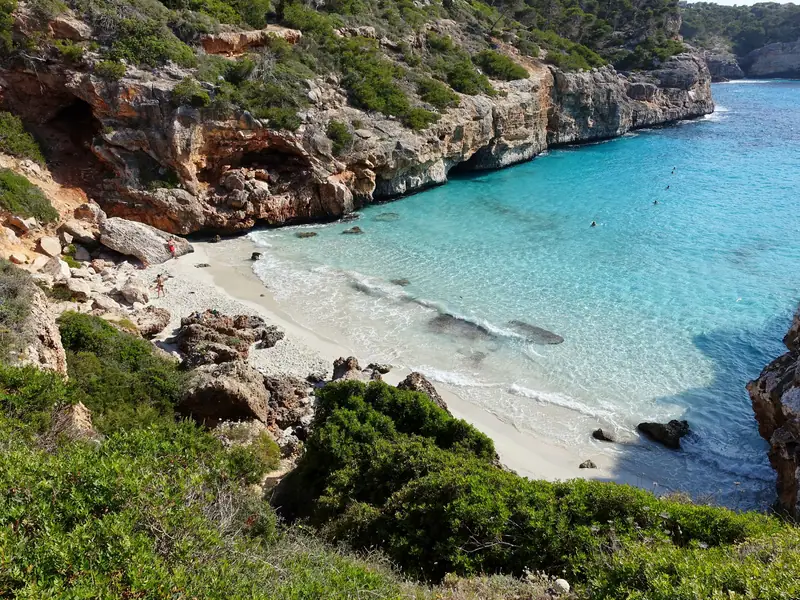
Caló des Moro: parking, access and the best time to go
Caló des Moro parking explained: the free visitor car park, a 25 to 30-minute walk, and why to arrive before 8am.