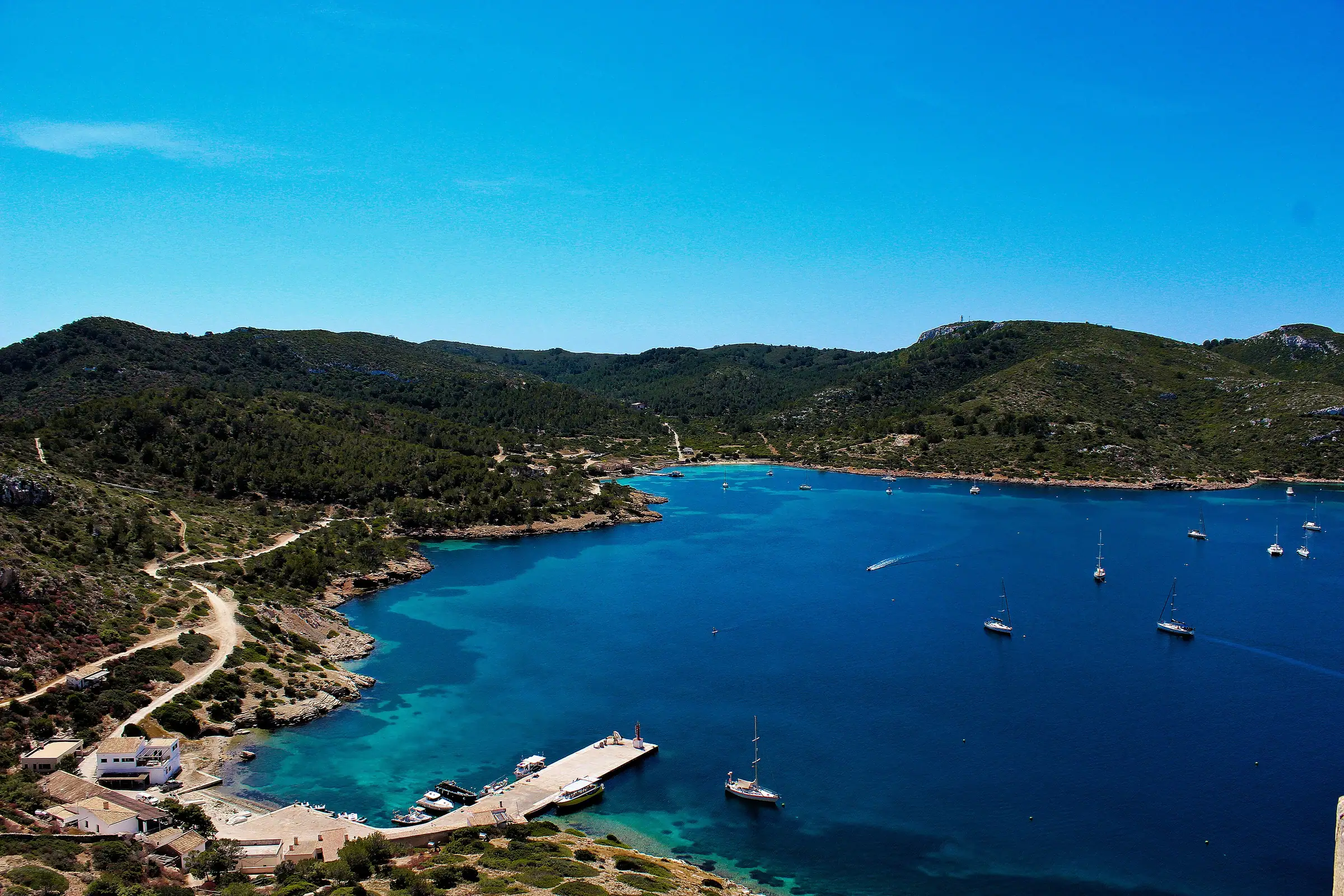
Cabrera Island, Mallorca: boat trips, how to get there and permits
6 min readUpdated  By Antoon
Contents
Cabrera Island lies about ten kilometres south of Cap de ses Salines, and the easiest way to get there is a boat trip from Colònia de Sant Jordi: around an hour at sea, €58 per adult for the day with four hours on the island. Everyone talks about it, few know how to get there without getting tangled up in the booking system: here is how the national park works.
The Cabrera archipelago has been a maritime-terrestrial national park since 1991, the first marine national park in Spain. Access is deliberately limited: a daily visitor quota applies, private boats need an entry permit, and the only tourist boats allowed to land leave from Colònia de Sant Jordi. The result: an almost untouched island and some of the clearest water in the Mediterranean.
How to get to Cabrera Island: three options
Option 1: a Cabrera boat trip from Colònia de Sant Jordi. The park authorises four companies: Excursions a Cabrera, Marcabrera, Aventura IB Sub and Life&Sea. The times and prices below are those of Excursions a Cabrera and Marcabrera. Marcabrera’s day trip leaves at 9.30am and returns at 3.30pm; Excursions a Cabrera leaves at 10am or 12.30pm, for about six hours. Expect to pay €58 per adult and €31 to €32 per child for the day, up to €71 with a tour of the archipelago; three-hour trips start at €45, crossing and park access included. Book online, as seats go fast in July and August; the company handles the park permits.
Option 2: from Portopetro. This route has gone: no company from Portopetro appears on the park’s list of authorised operators in 2026. If you are staying in the south-east (Santanyí, Cala d’Or), you need to get to Colònia de Sant Jordi.
Option 3: your own boat, with a navigation permit. The park has 50 daytime mooring buoys, free and first come, first served, and anchoring is banned everywhere. You apply online for the navigation permit from the national park, which has been managed by the Balearic government (Govern balear) since 2009. It is free and valid for one year. What you do book is an overnight buoy, which is paid: two nights at most in July and August, seven the rest of the year. Scuba diving requires written authorisation, and recreational fishing is banned throughout the park. To reach Colònia de Sant Jordi from Palma by public transport, our guide to TIB buses in Mallorca covers the routes and timetables.
What you will see on Cabrera
The archipelago has around twenty islands and islets, of which Cabrera Grande (15.7 km²) is by far the largest; the army has had no permanent detachment there since 1999. Almost all of the island is off-limits to protect its wildlife and plants. Here is what you can actually do.
The castle above the harbour
The medieval castle overlooking the natural harbour dates from the late 14th century. The walk up takes about 20 minutes from the quay, and the view over the harbour and the islets is one of the finest on the island for little effort. The path is open, but the building itself is closed for safety reasons: you enjoy the view from outside.
Snorkelling in the natural harbour
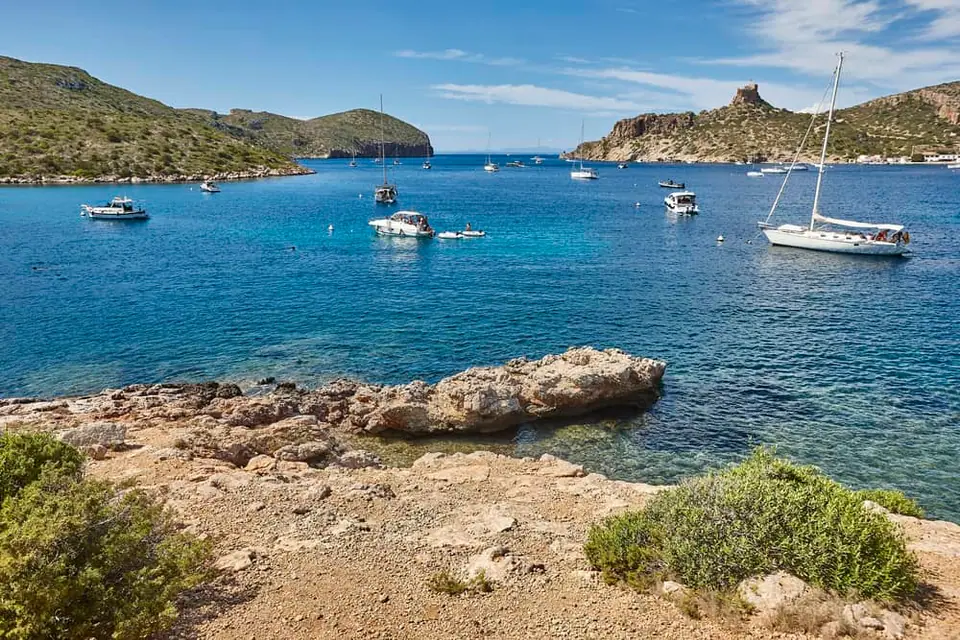
The natural harbour of Cabrera is one of the most sheltered anchorages in the Balearics. For snorkelling, it is a treat: at two or three metres deep you can see the seabed as if in an aquarium. Dense posidonia meadows, groupers that come up close without fear, starfish within arm’s reach. These waters have been protected for decades, and it shows.
The Blue Cave (Cova Blava)
The Cova Blava (Blue Cave) is the highlight of the return trip. Boats stop there on the way back when the sea and weather allow. Light filters under the water and turns the ceiling deep blue. Go in, even for a few minutes.
Beaches and the lighthouse
The island’s three beaches (Sa Platgeta, Platja d’Es Pagès and S’Empalmador) are small and hard to reach away from the permitted paths. The open path towards the N’Ensiola lighthouse stops at the Coll Roig viewpoint: the lighthouse itself can only be visited with a park guide.
Cabrera Island National Park: why its wildlife is unique
The archipelago is home to more than 460 plant species, around thirty of them endemic. What really sets Cabrera apart is what you no longer find elsewhere: the Balearic lizard (Podarcis lilfordi), an endemic species that has disappeared from Mallorca and Menorca because of invasive species, lives here in dense populations. You will see them on the rocks as soon as you step off the boat.
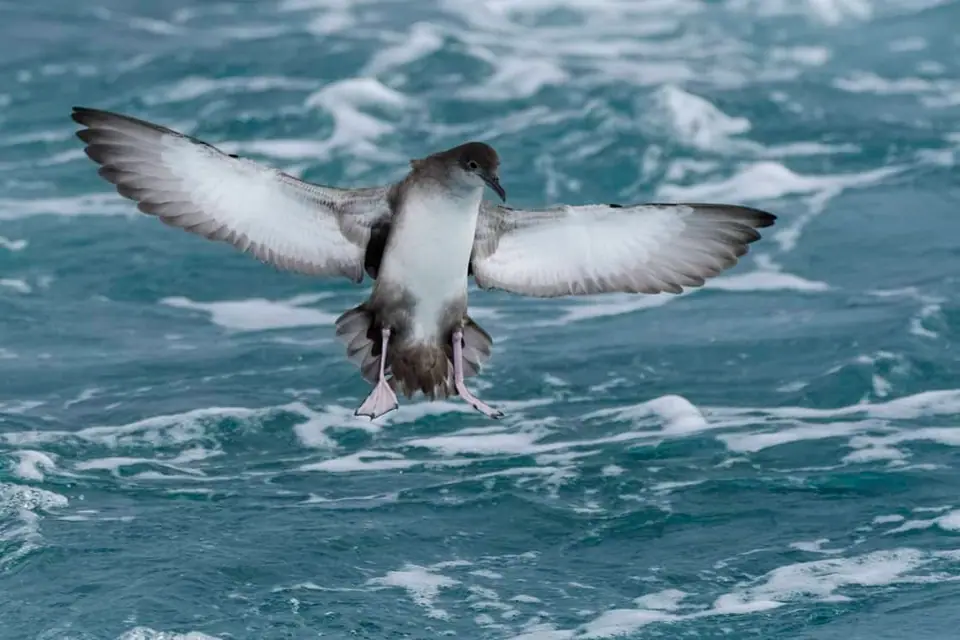
For birds, Cabrera is one of the most important nesting sites in the Mediterranean for the Balearic shearwater (Puffinus mauretanicus), a critically endangered species. In summer they nest on inaccessible cliffs; from the boat you see them skimming the waves.
After decades of protection, groupers, barracudas and moray eels are plentiful. The posidonia meadows on the seabed are among the best preserved on the Spanish coast. For qualified divers, specialist trips from Colònia de Sant Jordi offer dives in the authorised zones.
When to go and what to bring
May to June and September are the best windows: fewer people, calm seas, water already at 21 to 24°C, and boats are not booked up weeks ahead. In July and August boats are often full, so booking several weeks in advance becomes almost essential. In winter, crossings depend entirely on the weather and some companies suspend their service. For the bigger picture, see our guide to Mallorca’s weather and seasons.
What you must bring: there is no restaurant on the island (only a basic bar near the harbour), no pharmacy, no Wi-Fi and no cash machine, and the harbour canteen takes cash only. Bring water and food for the whole day, sun cream, a snorkelling mask if you have a decent one (there is nothing to hire on the island; Marcabrera hires them at the port before boarding), and suitable shoes if you want to walk up to the castle. Leave some slack in your plans for the return: if the weather turns during the day, the crossing can be delayed.
Practical questions
How long is the crossing to Cabrera?
About 50 minutes to an hour from Colònia de Sant Jordi. By private boat from Palma, allow around two hours depending on the boat. The sea between Mallorca and Cabrera can be rough, especially in a north wind: if you suffer from seasickness, take precautions before boarding.
Can you fish on Cabrera?
No. Recreational fishing is banned throughout the national park, spearfishing included; only small-scale professional fishing is allowed.
Is Cabrera suitable for young children?
Absolutely. Snorkelling in the natural harbour works well from the age of six to eight, the castle is within walking reach for children aged eight and over, and the day is spent mostly on or near the boat. For a family, it beats a simple catamaran outing by a long way.
FAQ
How do you get to Cabrera Island?
By tourist boat from Colònia de Sant Jordi, with Excursions a Cabrera or Marcabrera, in 50 minutes to an hour. No company leaves from Portopetro in 2026. With a private boat, you need a free navigation permit from the national park.
How much does a Cabrera boat trip cost?
Allow €58 per adult and €31 to €32 per child for the day, up to €71 with a tour of the archipelago; three-hour trips start at €45. Book online in July and August, as seats go fast.
Can you stay overnight on Cabrera?
Not on land. Camping is banned in the park and the harbour hostel is closed until further notice. Only people sailing their own boat spend the night, on a mooring buoy booked with the park.
How do you book a mooring at Cabrera?
The navigation permit is requested online, free and valid for a year. By day, 50 free buoys are first come, first served; at night, you book and pay for a buoy (two nights at most in July and August, seven the rest of the year). Anchoring is banned throughout the park.
Read next
Things to do in Mallorca: the highlights, tickets to book and itineraries
Things to do in Mallorca: Valldemossa, the Sóller train, the Caves of Drach, Formentor, Palma Cathedral, tickets to book and…
Things to do in Palma de Mallorca: what to see on foot and a one-day itinerary
Things to do in Palma de Mallorca: the cathedral and its terraces, old town patios, Arab baths, the Olivar market, Santa…
Palma Cathedral (La Seu): tickets, prices, opening times and rooftop terraces
Palma Cathedral tickets cost €11 online with the museum, €25 with the rooftop terraces; closed to visitors on Sundays. Opening…