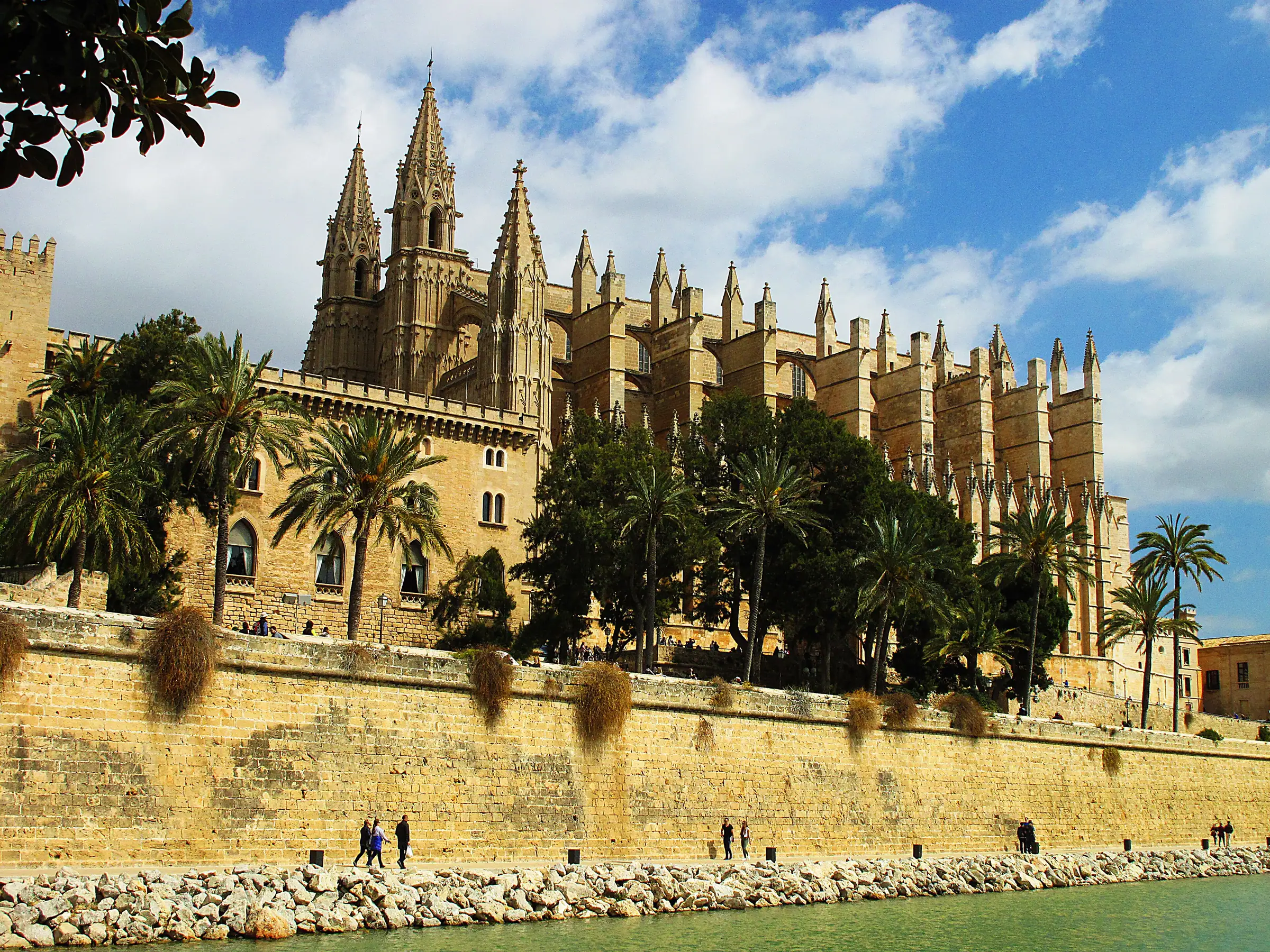
Parking in Palma: free car parks, the ORA blue zone and costly traps
7 min readUpdated  By Antoon
Contents
- Free parking in Palma: the park-and-ride car parks
- Free street parking in Palma: hunting for white lines
- The ORA blue zone: park like a local
- Underground car parks in Palma: the “door test”
- Is it safe to leave luggage in the car?
- Costly traps: ACIRE zones, the low-emission zone and the tow truck
- Special cases: electric cars and scooters
- FAQ
Parking in Palma is the one part of a Mallorca road trip that can turn freedom into a logistics headache. The Balearic capital is an old city, laid out for horses and carts rather than modern SUVs. Between the maze of one-way streets, pedestrian zones that grow a little every year and the constant fear of a ticket, stress levels rise quickly.
If you have just picked up the keys from your car hire desk, you are probably asking the big question: how do you enjoy the city without paying €25 a day to park?
Know this first: the city council is strict. A parking fine usually costs €90 (halved if you pay quickly), but the real cost lies elsewhere. Your hire company will charge an admin fee of around €40 to €50 for every fine it receives, so the bill can double very quickly.
Here is the full guide to parking smartly in Palma, keeping your car safe and saving your holiday budget for restaurants and sightseeing.
Free parking in Palma: the park-and-ride car parks
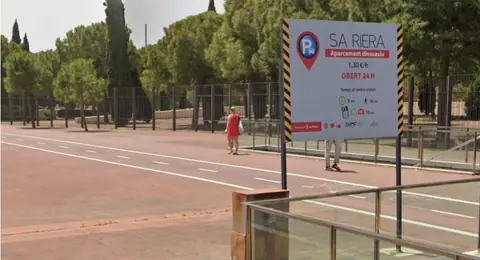
One myth refuses to die among visitors: the “little hidden street” near Palma Cathedral where you can supposedly park for free. Forget it straight away. The historic centre is completely locked down by paid and residents-only zones. To take traffic out of the centre, though, the city has built an effective alternative: park-and-ride car parks (aparcaments dissuasius).
Option one: Son Fuster
This is the cheapest option. Son Fuster sits at the entrance to the city (off the Ma-13 motorway) and is a huge open-air car park. Its big advantage is the connection. Once you have parked (for free), it is only a few metres to Son Fuster Vell metro station. A ticket costs less than €2 and the line drops you on Plaça d’Espanya in five minutes flat. You come out right in the heart of Palma, ready to explore on foot or to catch the famous Sóller train.
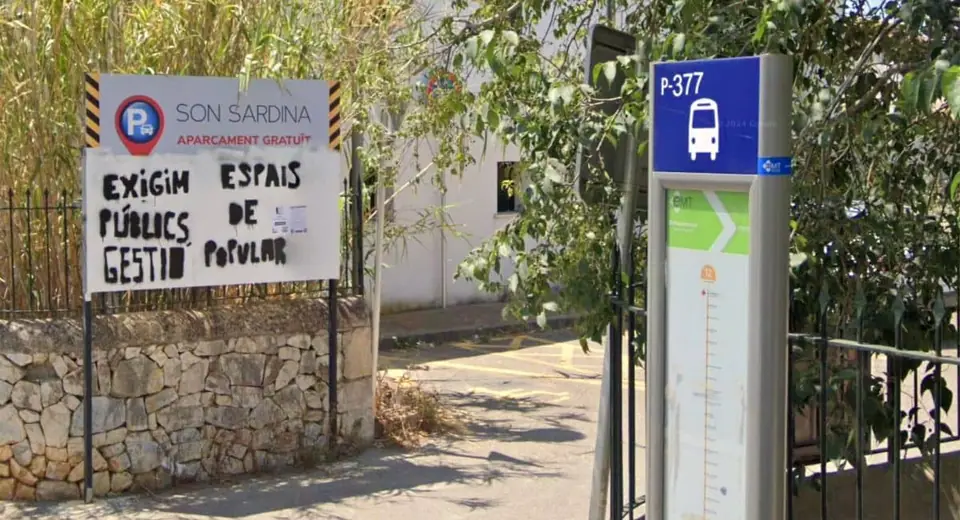
The northern alternative: Son Sardina
If you are staying in the Serra de Tramuntana (towards Valldemossa, Deià or Sóller), there is no point crossing all the city traffic to reach Son Fuster. The Son Sardina car park is your best bet. It works on the same principle, with a metro connection (line M1), and keeps you out of the jams on the Via de Cintura ring road. It is a quiet area, generally safe, where you can leave the car for the day without worrying.
Free street parking in Palma: hunting for white lines
If public transport is not for you and you are set on parking in the street without paying, you need to look for white lines. In Mallorca the colour code is simple: white means free. To be honest, these spaces are an endangered species. You will never find them in the tourist heart of the city. Aim instead for the residential districts on the edge of the centre, such as Foners, Pere Garau or the streets around the bullring (Plaza de Toros).
This approach takes patience. You can easily drive round for 20 minutes before finding a space. Once parked, expect a 20 to 30-minute walk to the cathedral or the seafront. In midsummer, at 35 degrees, the few euros you save can quickly be paid back in sweat and tiredness.
The ORA blue zone: park like a local
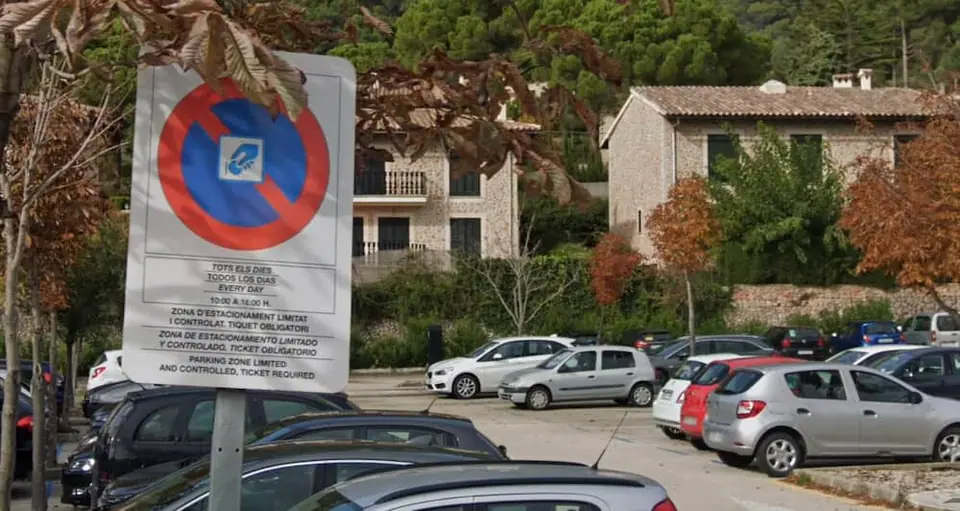
As soon as the road markings turn blue, you are in the ORA zone. Parking there is paid and time-limited (often to 2 or 3 hours at most). Wardens in high-visibility vests patrol the streets constantly. Still, the system has a few loopholes that work in favour of well-informed visitors.
The siesta trick
Palma lives on Spanish time, with a long lunch break. The blue zone is paid in the morning (usually from 9am to 2.30pm) and in the evening (4.30pm to 8pm). That leaves a very handy window: between 2.30pm and 4.30pm, parking is free. If you come into town for a late lunch, you can park right in the centre without a ticket during this slot.
Weekends are more relaxed too. Parking becomes free from 2.30pm on Saturday and stays free all day on Sunday and on public holidays.
The app you need
Download the official MobiAPParc app. It has two advantages. First, it lets you extend your ticket remotely: you are in a restaurant and dessert is on its way? Add 30 minutes from your phone. Second, it has a sort of rescue function. If you get back late and find an overstay notice on the windscreen, do not panic. The app (or the machine) lets you cancel the notice for a flat fee of €3.50 to €6 depending on the zone, as long as you act quickly.
Underground car parks in Palma: the “door test”
If you prefer the security and cool of an underground car park, bear in mind that they are not all equal. Expect to pay around €2 an hour in the municipal car parks; prices in private car parks vary. But the real criterion is not the price, it is the width of the bays.
Many of the older car parks in the centre, such as those under Plaça Major or Via Roma, were dug decades ago. They were designed for the small cars of the time, not for the family SUVs that hire companies hand out today. If you have hired a large car, choose the Parc de la Mar car park instead. It sits beneath the motorway, facing the cathedral, and is more modern, brighter and has slightly wider bays. You also come out right by the sea, a superb starting point to explore Palma. The Passeig Mallorca car park is another good option, handy for dinner in the trendy Santa Catalina district.
Is it safe to leave luggage in the car?
Mallorca is a very safe island with a very low rate of violent crime. Thefts from cars do happen, though, mostly in car parks at tourist sites and at isolated viewpoints. The golden rule is simple: leave nothing visible inside. No jacket, no charging cable, no coins and certainly no bag. Even in an underground car park with CCTV, if your boot is full, try to park with the boot against a wall to make it harder to open.
Costly traps: ACIRE zones, the low-emission zone and the tow truck
Mallorca enforces a strict highway code and the fines are steep. The biggest trap for visitors is the ACIRE zone. These are residents-only districts, marked by a sign at every entrance. There is no barrier to stop you, but cameras scan every number plate at the entrance. If you drive past that sign in your hire car, the fine is automatic. Even if your sat nav insists on sending you that way to save two minutes, ignore it and stick to the main roads.
The low-emission zone (ZBE) in the centre is enforced by number plate cameras, and the Spanish environmental sticker does not need to be displayed. In 2026, cars with a B, C, ECO or 0 sticker can enter freely; from 1 January 2027, a B sticker is no longer enough. A car registered abroad must be entered in the city council’s authorisation register at least five days before it enters the zone (online form on mobipalma.mobi, authorisation valid for 30 days): without it, the fine is €200. The ZBE gives no right to drive in pedestrian or residents-only zones.
My car has gone: what should I do?
You come back from your walk and the car is not there? Look at the ground. The local police usually leave a fluorescent orange triangular sticker with a phone number on the exact spot where your car was parked. It means you were parked illegally (often on a yellow line or in a loading bay) and the tow truck has been. Call that number to find out where to collect your car: you will need to show your rental agreement and driving licence, and pay the towing and storage fees.
Special cases: electric cars and scooters
Electric driving is growing fast in the Balearics. If you have an electric vehicle (“Distintivo 0 Emisiones” sticker), parking in the ORA zone in Palma is free, with no time limit and no ticket to take: all that counts is the DGT zero-emission sticker. When you collect the car, check with your hire company that it has this sticker.
Scooters, of which there are a great many in Palma, follow strict rules. You must park in bays marked “Motos”. Parking on the pavement is only tolerated if it is more than 3 metres wide and leaves enough room for pedestrians. Never lock your scooter to a tree or a lamp post, or you may find your lock cut and the scooter at the pound.
FAQ
Where can I park for free in Palma de Mallorca?
At the Son Fuster (off the Ma-13) and Son Sardina park-and-ride car parks, both linked to the centre by metro. Free white-line spaces also exist in outer districts such as Foners, Pere Garau or around the bullring, but they are rare.
What are the ORA blue zone hours in Palma?
The blue zone is usually paid from 9am to 2.30pm and from 4.30pm to 8pm, with a limit of 2 or 3 hours. It is free from 2.30pm on Saturday, all day Sunday and on public holidays.
Where should I park near Palma Cathedral?
The Parc de la Mar underground car park sits beneath the motorway, right opposite the cathedral. It is more modern than the older car parks of the centre and its bays are slightly wider, which helps with a large hire car.
How much does an underground car park cost in Palma?
Around €2 an hour in the municipal car parks; prices in private car parks vary.
How much is a parking fine in Palma?
Usually €90, halved if you pay quickly. Hire companies often add an admin fee of €40 to €50 per fine, and being towed adds towing and storage fees.
Read next
Getting around Mallorca: buses, trains, taxis, car hire and ferries
Getting around Mallorca: A1 airport bus, TIB and EMT buses paid by card, Sóller train and metro, taxi fares, car hire, parking in…
Mallorca weather by month: the best time to visit, sea temperature and prices
The best time to visit Mallorca is June or September: 28°C, a 21-25°C sea, fewer crowds. Mallorca weather by month (AEMET…
Mallorca in winter: temperatures, what’s open and a month-by-month verdict
Is Mallorca in winter worth it? October to February month by month: temperatures, sea, rain, what closes, almond blossom and how…