Inca market, Mallorca: the Thursday market, leather outlets and cellers
8 min readUpdated  By Antoon
Contents
The Inca market in Mallorca is the island’s biggest weekly market, and it is the best reason to stop in a town that many visitors drive straight past. Come on a Thursday morning and you get a lively market, the smell of tanned leather in the streets and shoes made a couple of kilometres away selling for around €40 a pair.
Inca lies about 30 km north-east of Palma and has more than 36,000 inhabitants. It also has something even some island residents overlook: the best leather bargains in the whole archipelago. Shoes, bags, belts, and a market that fits neatly into Mallorca’s market calendar. You can come away with things you would not find elsewhere on the island at the same price.
Here is what you need to know before you go: the leather outlets worth the trip, how the Thursday market really works, and the traps to avoid.
Why Inca is Mallorca’s leather capital
An industry dating back to the 19th century
The leather industry settled in Inca in the mid-19th century. The town had water, raw materials and a skilled local workforce. Within a few decades, dozens of tanneries and shoemaking workshops had set up in the area.
In the 1960s Inca had nearly 2,000 shoe factories and workshops and exported all over Europe. There are far fewer factories today, but the know-how has stayed, and so have the outlets.
Global brands born here
Camper was founded in Mallorca in 1975 by Lorenzo Fluxà, whose family had been making shoes in Inca since 1877. Yanko, another internationally known brand, was also born in Inca.
That history has a very practical consequence. It is why you can find genuine leather shoes in Inca for €40 or €50, when the same model sells for €120 in Palma or Paris.
Inca market: what you will really find on a Thursday
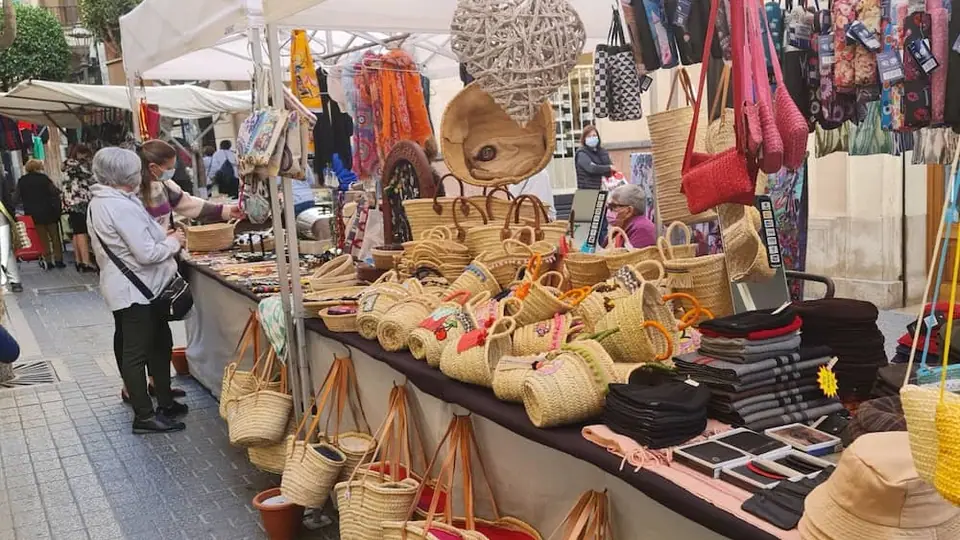
Inca market takes place every Thursday morning. It is the largest weekly market in Mallorca, with hundreds of stalls spreading through the town centre, from the plaça de l’Àngel into the surrounding streets.
Inca market day, opening times and location
The market opens at 8am and closes around 2pm. Get there before 9.30am if you want to beat the coach parties that arrive mid-morning. The heart of the market is around plaça de l’Àngel and carrer Major.
From Palma, the easiest option is the train or bus to Inca (see the transport section below). By car, allow 30 to 40 minutes from Palma, but parking gets tight after 10am on market days.
What is worth buying (and what is not)
The stalls that really deserve your attention sell local leather goods (belts, wallets, small bags), leather shoes on the stalls at the edges of the market, olives and Mallorcan produce. The stalls run by local sellers, often away from the main square, are the ones offering real leather at fair prices.
What is not worth your time: the souvenir stalls in the middle of the square. Prices are the same as in Palma’s shops, sometimes higher, and a good share of the “leather” on sale is actually synthetic. Be wary of shops showing “-50%” all year round: that is marketing, not an outlet.
Dijous Bo: Inca’s big November fair
Once a year the Thursday market gives way to Dijous Bo, Inca’s great agricultural, livestock and trade fair, which the town council describes as the most important in Mallorca, with more than 200,000 visitors each year. In 2026 it falls on Thursday 19 November. The date changes every year: it is the fourth Thursday after the Sunday following St Luke’s Day (18 October), often the third Thursday in November.
The celebrations start the evening before with Dimecres Bo, on Wednesday 18 November. In 2025, the Wednesday brought farm machinery lined up along the Gran Via de Colom, a farmers’ market in the old town, livestock on the plaça del Bestiar and the black Mallorcan pig competition, followed by music in the bars until the early hours. On the Thursday, the livestock show ran from 9.30am to 5.30pm and the traditional market and traders’ stands from 10am to 8pm, with horse displays and xeremiers (traditional bagpipers) during the morning. Most activities are free. Friday 20 November is a public holiday in Inca.
Take the train: from Palma’s Intermodal station, lines T1, T2 and T3 reach Inca in about 35 minutes, and SFM adds extra trains for Dijous Bo, including night trains after the Wednesday festivities (42 trains in 2025). By car it is the Ma-13 motorway, exit 27, but the local press recommends the train on that day. Other events of the month are in Mallorca in November.
The best Inca leather outlets
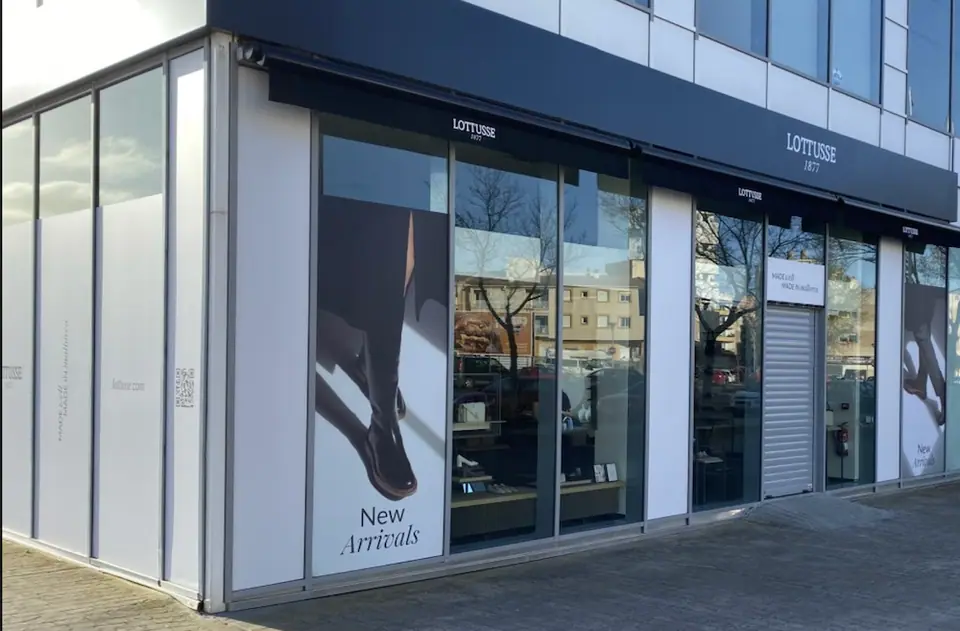
The outlets are the real reason to come to Inca. Several factories and brands have opened factory shops here, with prices 30 to 60% below those of regular shops.
Camper Factory Outlet
The Camper outlet in Inca is probably the best known. You will find last season’s models, end-of-line stock and a few outlet exclusives. Prices start at around €40 for genuine leather shoes, compared with €100 to €150 in the shops.
It is at carrer del Quarter 91, on Inca’s industrial estate (the Polígon de Ca’n Matzarí), not in the town centre: allow a 15-minute walk from the station or take a taxi. Opening hours change with the season, so check them before you go.
Farrutx and Yanko: the insiders’ choice
Farrutx is a Mallorcan brand. Its Inca outlet sells good-quality women’s shoes for €50 to €90, for models easily worth twice that elsewhere.
Yanko, born in Inca, makes men’s shoes. The workshop is in Inca and the factory shop is just next door. For full-grain leather derbies or loafers, expect around €60 to €100. In a luxury boutique the same model often costs more than €200.
Direct-sale factories on the industrial estate
Beyond the big names, Inca’s industrial estate has several small manufacturers selling straight to the public. They are not always easy to find: no website, no up-to-date Google Maps listing. But they offer the best prices on the island.
The method: walk around the Polígon Industrial and look for signs saying “Fàbrica” or “Venda directa”. These small family workshops sell shoes made on site for €25 to €60.
Spotting fake leather: how to recognise a real outlet
Before you buy, check the label inside: it should say “cuero” or “piel” (leather in Spanish and Catalan). If it says “material sintético”, it is synthetic. Real leather also has a distinctive smell that plastic cannot copy. And slightly irregular stitching is often a sign of genuine handwork, not a defect.
Things to do in Inca beyond shopping
Inca is not just a shopping stop. It deserves a full half-day.
The cellers: eating in a traditional wine cellar
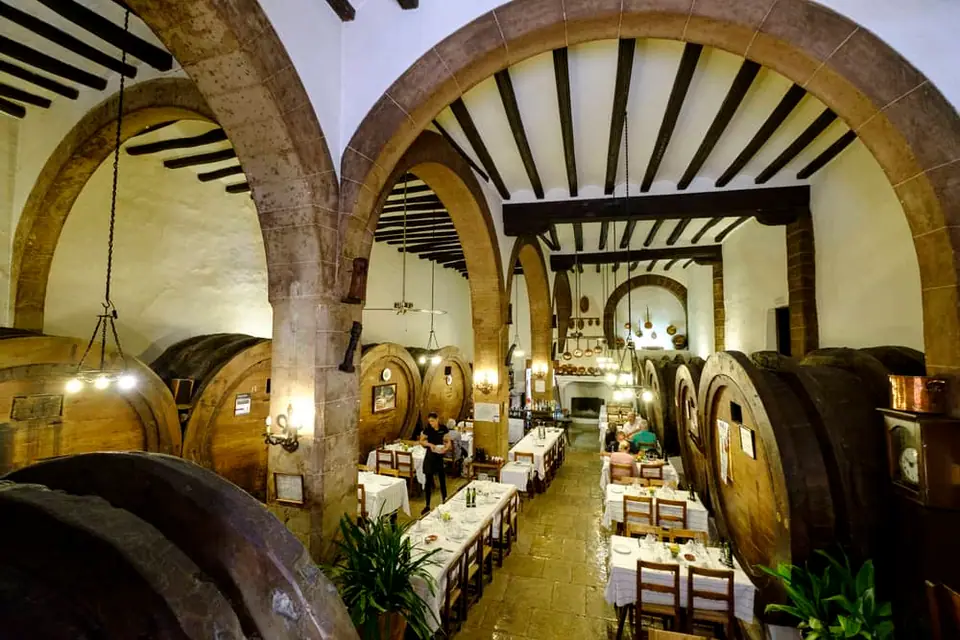
Cellers are restaurants set in old wine cellars, a tradition specific to Inca. The rooms are dark, there are barrels everywhere, and the food is classic Mallorcan.
Celler Can Ripoll (carrer de Jaume Armengol 12) occupies a cellar dating from the 16th to 18th centuries, owned by the Ripoll family since the 18th century. Expect frit mallorquí (offal fried with vegetables), crespells (local biscuits) and roast lamb. Celler Sa Travessa is a little less known to tourists, which often makes it the better choice on a Thursday lunchtime when the coaches roll in.
Santa Maria la Major church and the old town
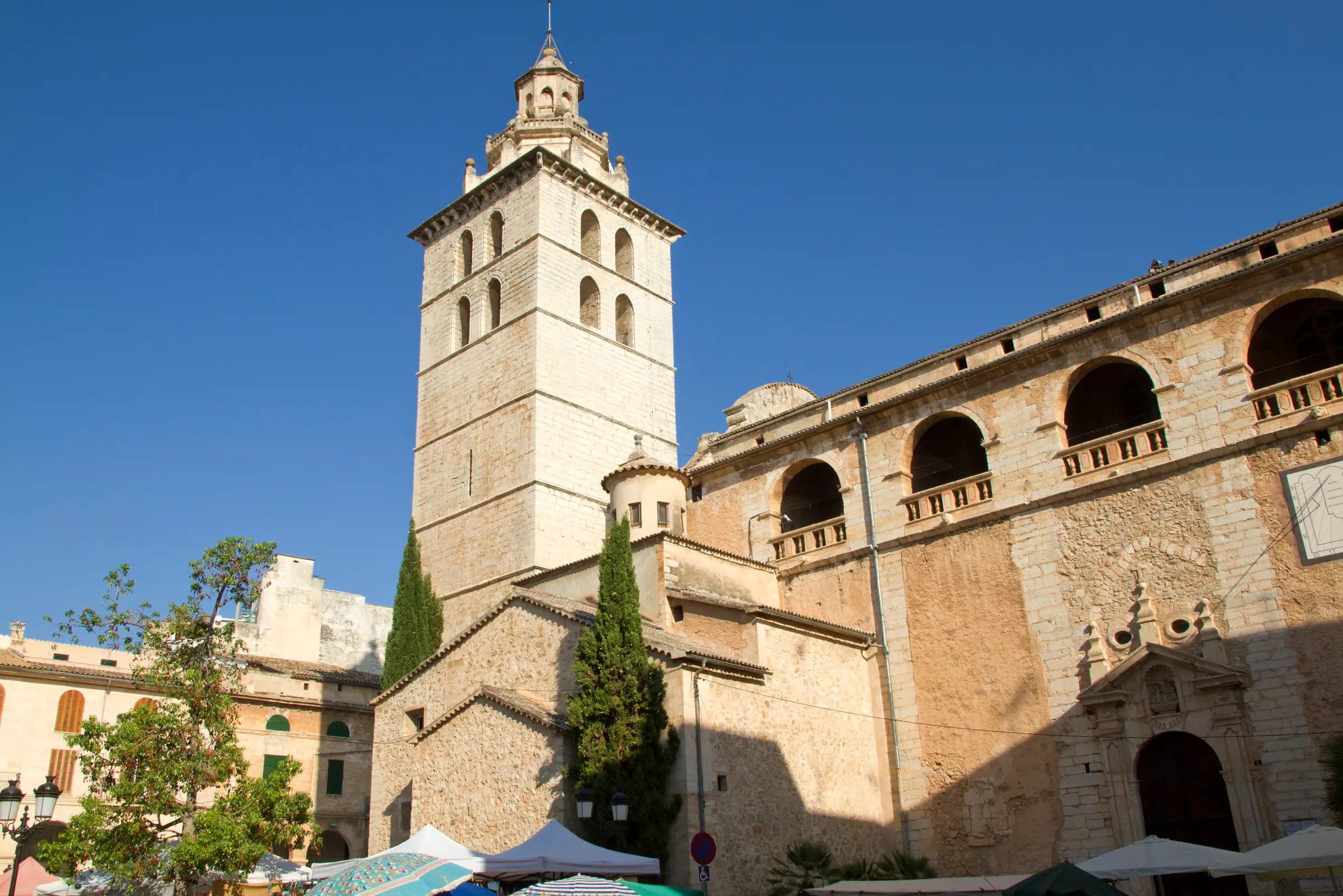
The church of Santa Maria la Major, built in the 14th century and enlarged in the 18th, dominates the town, and its bell tower can be seen from afar. The interior is worth ten minutes, especially the Baroque altarpiece.
You can walk around the old town in less than 30 minutes. Carrer Major and plaça d’Espanya hold most of its charm: beige stone façades, a few cafés with terraces and an atmosphere that feels more local than touristy.
How to get to Inca from Palma
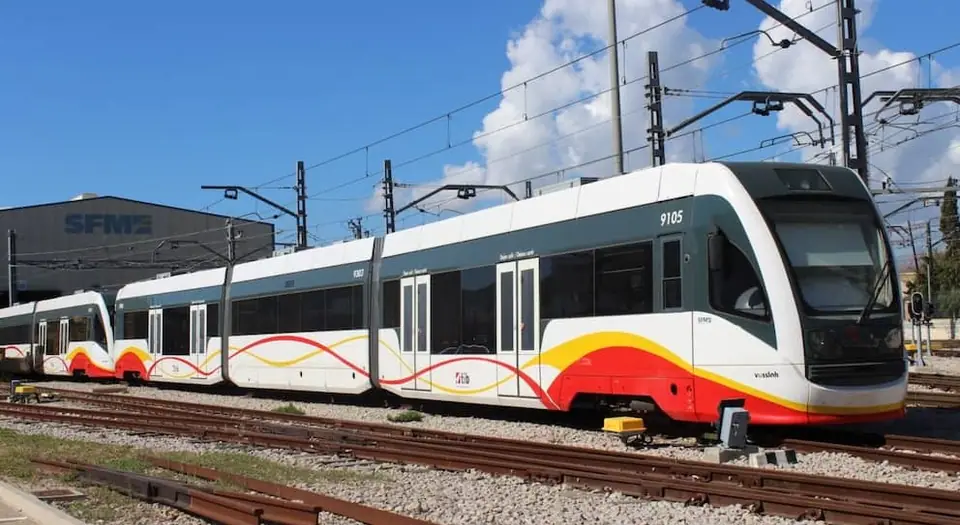
By train: the best option
The train is by far the best way to get to Inca. Lines T1, T2 and T3 stop at Inca from Palma’s Intermodal station. The journey takes 35 minutes; the single fare depends on the number of zones you cross and is lower with the Targeta Única. Inca station is a 5-minute walk from the town centre and the market. Check the timetable on the Serveis Ferroviaris de Mallorca (SFM) website before you set off. The island has another famous line, too: our guide to the Sóller train covers it in full.
By car: Inca market parking
By car, allow 30 to 40 minutes from Palma on the Ma-13 motorway. Parking is free on the industrial estate, but in the town centre it fills up quickly on Thursday mornings. On market day, arrive before 9am or park in the residential streets on the outskirts and walk for 10 minutes. It is less stressful than a packed car park.
A day in Inca: the ideal plan
Here is a good way to organise a Thursday in Inca.
- 8am–10am: the market first. Arrive early, before the coaches, and head for the local leather stalls on the edges of the main square.
- 10am–12pm: the outlets in the town centre, then those on the industrial estate. Start with Farrutx or Yanko, then try the direct-sale factories.
- 12.30pm–2pm: lunch in a celler (booking recommended on Thursdays).
- 2pm–3pm: a walk around the old town, Santa Maria la Major church and a coffee on a terrace.
- 3pm–4pm: train back to Palma.
Three to four hours are enough for a quick visit. If you like taking your time to hunt down the best addresses, plan a full day.
FAQ
What can you buy in Inca, Mallorca?
Inca is known for genuine leather shoes and goods. There are outlets of big brands such as Camper, Farrutx and Yanko, plus direct-sale factories on the industrial estate. The Thursday market also sells local produce, crafts and textiles.
What day is Inca market?
Inca market is held every Thursday morning, from 8am to around 2pm. It is the biggest weekly market in Mallorca and fills the town centre around plaça de l’Àngel and carrer Major.
Are shoes cheaper in Inca?
Yes, noticeably. In the outlets and direct-sale factories, prices are 30 to 60% below those in Palma or on the mainland. Genuine leather shoes start at around €40.
Is there a Camper outlet in Inca?
Yes. The Camper outlet is on Inca’s industrial estate (Polígon de Ca’n Matzarí, carrer del Quarter). It sells last season’s models and end-of-line stock at reduced prices.
When is Dijous Bo in Inca?
On Thursday 19 November 2026, preceded the evening before by Dimecres Bo. It is Mallorca’s biggest fair: livestock, a traditional market, stands and music. Friday 20 November is a public holiday in Inca.
Read next
Things to do in Mallorca: the highlights, tickets to book and itineraries
Things to do in Mallorca: Valldemossa, the Sóller train, the Caves of Drach, Formentor, Palma Cathedral, tickets to book and…
Things to do in Palma de Mallorca: what to see on foot and a one-day itinerary
Things to do in Palma de Mallorca: the cathedral and its terraces, old town patios, Arab baths, the Olivar market, Santa…
Palma Cathedral (La Seu): tickets, prices, opening times and rooftop terraces
Palma Cathedral tickets cost €11 online with the museum, €25 with the rooftop terraces; closed to visitors on Sundays. Opening…