Getting around Mallorca: buses, trains, taxis, car hire and ferries
8 min readUpdated  By Antoon
Contents
- Getting around from Palma airport: A1 bus, taxi or hire car
- Mallorca public transport: TIB and EMT buses
- The Sóller train, SFM trains and the metro
- Car hire in Mallorca: freedom, with a few traps
- Parking in Palma: park and ride, blue zone and no-go areas
- Mallorca without a car: what works and what doesn’t
- Ferries to Mallorca and between the Balearics
- Six tips for getting around Mallorca
- FAQ
Getting around Mallorca is easier than it looks: Palma airport is only 8 km from the city, the public bus network reaches the main towns and resorts, and a contactless bank card is all you need to pay. Mallorca public transport has its limits, though. For the hidden coves of the south and the mountain villages, a hire car is still the most practical option. Here is how each way of getting around works, from the airport bus to the ferry, with prices and the traps to avoid.
Getting around from Palma airport: A1 bus, taxi or hire car
You make the choice in the ten minutes after you collect your luggage, and it depends mostly on where you are staying.
The EMT A1 bus links the airport with central Palma for €5 in cash, or around €3 with a contactless bank card. On winter weekdays it runs every 15 minutes from 5.30am, with night departures until 3.10am. It stops at Plaça d’Espanya and Passeig Mallorca, among others, but not at the port. It is the obvious choice if you are on your own or a couple, travelling light and staying in Palma.
A taxi to the centre costs around €20 on the meter by day (€22 at night) and takes about a quarter of an hour outside rush hour, including the €4.65 airport supplement; luggage travels free. The taxi rank is on level 0, on the arrivals side. Uber has operated on the island since June 2023, with the price shown in the app before you book: compare the two in our guide to Uber and taxis in Mallorca.
In July and August, expect to wait. Baggage belts can take 30 to 45 minutes, and car hire desks can have queues of 20 to 30 minutes, even with a booking. On the way home, arrive 3 hours before a morning flight in high season; the new security checks on level 2 let you leave liquids and laptops in your cabin bag.
If you are staying outside Palma, a hire car is the most practical option: the rental desks are on the ground floor of the terminal. TIB buses also run direct from the airport to several resorts, such as the A11 to Magaluf, and the A32 in summer or the A33 in winter to the north. Everything else is in our guide to Palma airport.
Mallorca public transport: TIB and EMT buses
Two bus networks share the island: TIB, in red and yellow, for travelling from town to town, and EMT, in blue, within Palma.
TIB buses across the island
TIB buses leave from the Estació Intermodal under Plaça d’Espanya. The station is underground: take the escalators down, as nothing leaves from street level. Pay with a contactless Visa or Mastercard: tap the reader when you get on, then tap again at the rear door when you get off. One card covers a group of up to five people, with a discount for each extra passenger.
The most useful routes:
- 302 to Alcúdia and Can Picafort
- 301 to Port de Pollença
- 204 to Sóller through the tunnel
- 203 to Valldemossa and Deià
- 515e to Santanyí and Cala d’Or (late March to October)
Timetables change a lot between winter and summer, so check on tib.org before you set off. The full how-to is in our guide to TIB buses in Mallorca.
EMT buses in Palma
In Palma, EMT charges a flat fare of €2, payable by card or in cash. Line 1 links the port, on the Porto Pi side, with Plaça d’Espanya; line 4 runs out to the coves of Illetas and line 25 to the beach at S’Arenal.
Where the bus stops being useful
Buses have their limits. Scheduled services to Sa Calobra are rare and often full, and the boat from Port de Sóller is more comfortable. For Es Trenc, the bus drops you at Ses Covetes, quite a way from the shore.
The Sóller train, SFM trains and the metro
Mallorca has a wooden tourist train and a modern rail network. Both leave from near Plaça d’Espanya, but they have nothing else in common.
The Sóller train, running since 1912, is a private attraction: an hour’s journey, 13 tunnels and a stop at the Pujol viewpoint. A single costs €23 and a return €30, or €40 including the tram down to the port. The orange tram, dating from 1913, crosses the centre of Sóller and runs along the bay to the port in about half an hour; on its own it costs €10 one way, paid on board. On the way up, sit on the left for the view over the valley. Read our review of the Sóller train.
To reach Sóller quickly and for a few euros, TIB bus 204 takes about 35 minutes through the tunnel, which has been free for cars since 2017. By car, you can drive up over the Sóller pass and its hairpin bends, then come back down through the tunnel.
The SFM network, train and metro, also leaves from the Estació Intermodal. The train is handy for markets: Inca on Thursdays and Sineu on Wednesdays, while Binissalem and its vineyards are 30 minutes away. The metro also links the park-and-ride car parks at Son Fuster and Son Sardina with the centre.
Car hire in Mallorca: freedom, with a few traps
The coves of the south, the mountain villages and the more remote beaches are much easier to reach by car.
Prices start at around €10 to €15 a day in low season for a small car, but double or triple in July and August if you have not booked. Choose a full-to-full fuel policy and fill up before you return the car; basic insurance leaves an excess that can reach €1,000. Compare deals on our car hire page.
Go for a small car: on the road to Sa Calobra, a compact car gets past the coaches far more easily than a big SUV. See our tips for driving to Sa Calobra.
At Cap de Formentor, the road is closed to private cars from 10am to 10pm in summer (from 15 May to 18 October in 2026), enforced by number-plate cameras. Drive up before 10am or take TIB bus 334: our guide to Formentor without a fine explains the rules.
Parking in Palma: park and ride, blue zone and no-go areas
Palma’s old town is best explored on foot. Leaving the car in the right place saves you a fine, usually €90.
The free option is the Son Fuster park and ride, where the Ma-13 enters the city: the metro gets you to Plaça d’Espanya in five minutes from Son Fuster Vell station. On the Tramuntana side, the car park at Son Sardina works the same way. On the street, the ORA blue zone is generally paid from 9am to 2.30pm and from 4.30pm to 8pm, and free on Saturdays from 2.30pm, on Sundays and on public holidays.
Restrictions in Palma’s low-emission zone, which is controlled by number-plate cameras, begin on 1 January 2027, and cars registered abroad need a specific authorisation. If your car has vanished, look for the orange local police sticker on the ground: towing costs around €130 to €150, plus storage.
For covered parking, the Parc de la Mar car park, opposite the cathedral, has wider spaces than the old car parks in the centre. Beware of the ACIRE zones, reserved for residents and watched by cameras: the fine is automatic. All our tips are in parking in Palma and in our directory of car parks in Palma.
Mallorca without a car: what works and what doesn’t
You can see Palma, Sóller, Valldemossa, Alcúdia and the big resorts without a car: TIB buses link them all to the capital, and the SFM train takes you to the inland markets. In Palma, the old town is best on foot, and the EMT buses and the A1 to the airport do the rest. For remote coves and mountain villages, though, a car remains far more practical, and Sa Calobra and Es Trenc are awkward to reach by bus.
Ferries to Mallorca and between the Balearics
You can still arrive by sea from mainland Spain, France and the neighbouring islands.
From Barcelona, overnight ferries reach Palma in around 7 to 8 hours with Baleària, Trasmed or GNV, and Baleària’s fast ferry gets to Alcúdia in 3 hours 30 minutes. From Valencia, allow 7 to 9 hours, mostly overnight. Cars are accepted, but some hire companies forbid the crossing: check your contract.
From France, the only published route is Toulon to Alcúdia with Corsica Ferries, often calling at Menorca. Between the islands, Ciutadella to Alcúdia takes 1 hour to 2 hours 15 minutes, several times a day, and Ibiza to Palma 2 hours 15 minutes by fast ferry. At Palma port, EMT bus 1 takes you to Plaça d’Espanya, and taxis add a €4.65 port supplement. All the routes: ferries to Mallorca.
With Baleària, check in at least 60 minutes before departure as a foot passenger and 90 minutes with a car on Balearic routes. Keep valid ID and your boarding pass, on paper or on your phone, to hand.
Six tips for getting around Mallorca
- Pay for TIB buses by contactless card and remember to tap out when you get off.
- In a group, use one bank card for everyone, up to five people.
- In Palma, park at Son Fuster and take the metro to Plaça d’Espanya.
- Choose a full-to-full hire deal and a small car, more at ease on mountain roads.
- For Formentor in summer, drive up before 10am or take the TIB 334 shuttle.
- In July and August, get to the airport 3 hours before a morning flight.
FAQ
How do I get from Palma airport to the city centre?
Take EMT bus A1, for €5 (around €3 by bank card), every 15 minutes on winter weekdays and until 3.10am, or a taxi for around €20 on the meter by day. Prices to 20 destinations: from the airport to your hotel.
How much is a taxi in Mallorca?
On the 2025 rates, the pick-up charge is €2.50 and each kilometre €1.20, with a €4.65 supplement from the airport or the port. Allow around €20 by day from the airport to central Palma, €22 at night.
How do you pay for the bus in Mallorca?
On TIB buses, with a contactless bank card, tapping when you get on and again when you get off. On Palma’s EMT buses, a ticket costs €2, by card or in cash.
Can you get around Mallorca without a car?
Yes for Palma, Sóller, Valldemossa, Alcúdia and the big resorts, all linked by TIB buses. For remote coves and mountain villages, a car is still more practical.
Does Uber work in Mallorca?
Yes, since 8 June 2023, with licensed private-hire drivers and the price shown in the app before you book. Official taxis charge a public metered fare; you can also book one by phone through the radio-taxi firms (€1.15 supplement).
Book onlineThe most populartours
Book online before you go: you pick the time slot, and most tours can be cancelled for free up to 24 hours before.
 At sea
Mallorca boat trip
Compare tours, times and traveller reviews.
See prices →Free cancellation on most Guided tour
Serra de Tramuntana tour
Compare tours, times and traveller reviews.
See prices →Free cancellation on most Day trip
Caves of Drach
Compare tours, times and traveller reviews.
See prices →Free cancellation on most
Read next
Mallorca weather by month: the best time to visit, sea temperature and prices
The best time to visit Mallorca is June or September: 28°C, a 21-25°C sea, fewer crowds. Mallorca weather by month (AEMET…
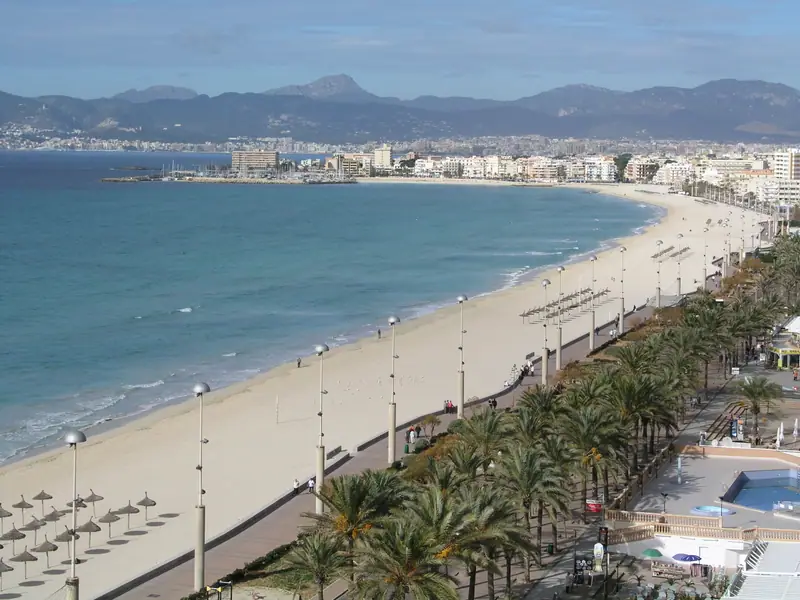
Mallorca in winter: temperatures, what’s open and a month-by-month verdict
Is Mallorca in winter worth it? October to February month by month: temperatures, sea, rain, what closes, almond blossom and how…
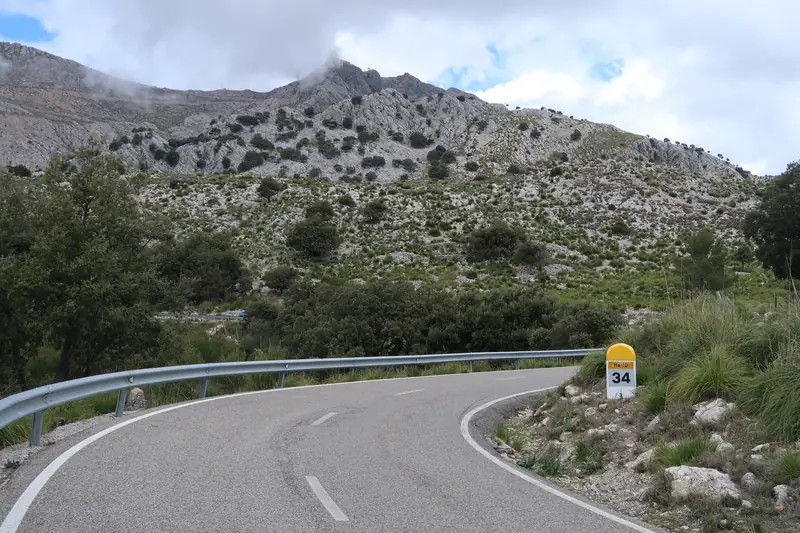
Mallorca itinerary for 7 days: a one-week road trip, day by day, with budget
Mallorca itinerary for 7 days: a road trip with two bases, from Palma and Caló des Moro to Formentor, Sa Calobra and Valldemossa…