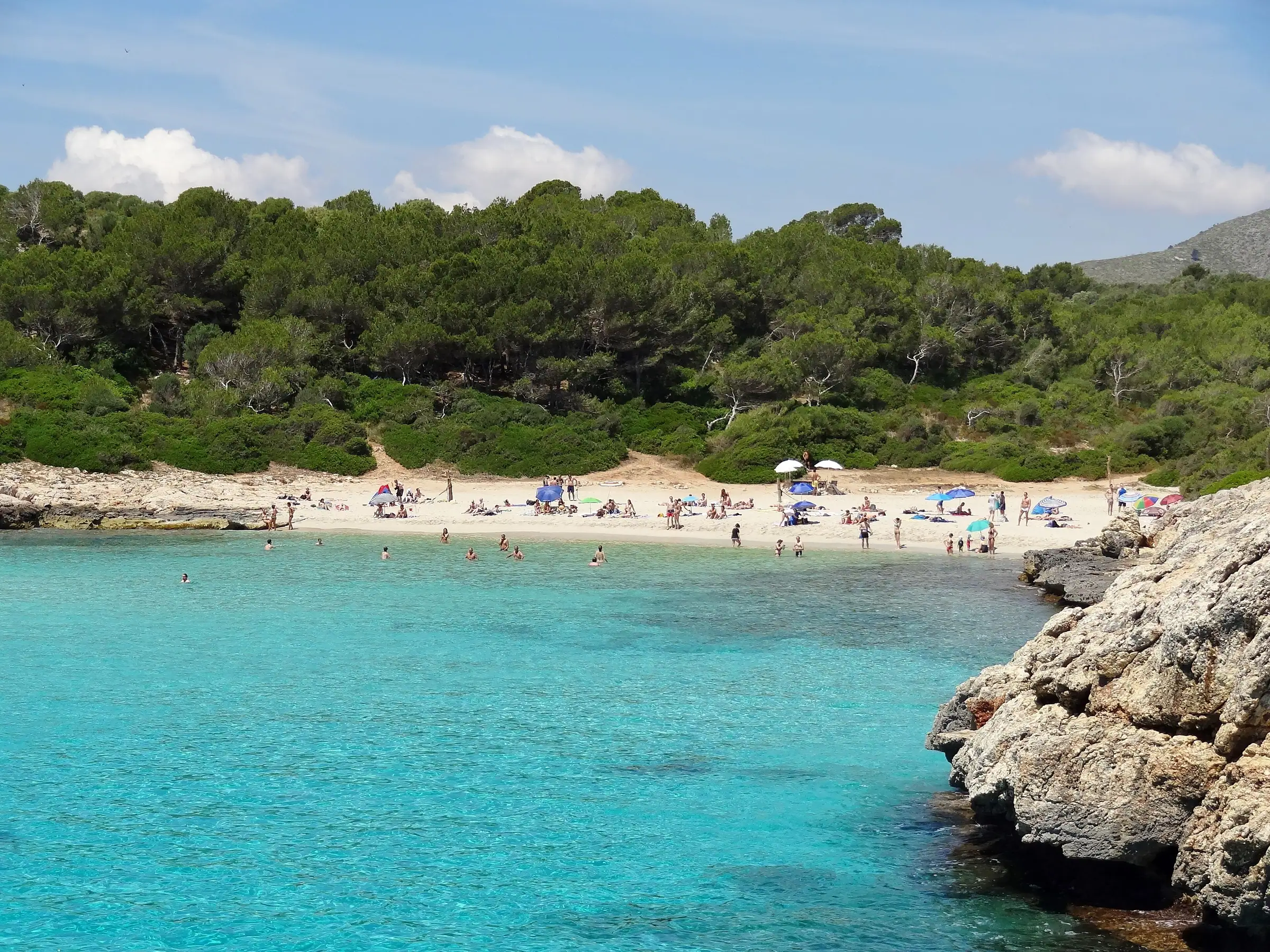
Cala Varques, Mallorca: how to get there, parking, caves and snorkelling
6 min readUpdated  By Antoon
Contents
Cala Varques has no beach bar, no lifeguards and no car park 50 metres from the sand. To get there you walk 20 to 40 minutes through pine woods, climb over two low stone walls and cross private land: whether the path is a public right of way has been disputed for years between the landowner, who has already locked the gates in the past, and campaigners for public paths. The reward is a white-sand cove on Mallorca’s east coast with exceptionally clear water, sea caves you can swim into, a natural stone bridge, and so many fish that you realise what the Mediterranean was like before overtourism.
It’s a good choice if you want a beach with no facilities at all. But it needs a little preparation: this guide tells you exactly how to get there, where to park, what to bring and how to avoid the classic mistakes.
How to get to Cala Varques: two paths, only one recommended
Path 1 (direct, 20 to 40 min): from Manacor, follow signs for Cales de Mallorca and then Porto Cristo (the Ma-4015, then the Ma-4014). Since March 2026, the old stretch of the Ma-4014 that served as an informal car park has been closed to parking: only use authorised spaces and follow the road signs. The path starts behind a gate. You’ll cross two low walls, where stones have been moved aside to let walkers through. Never park on private land: the fines are real and handed out regularly.
Path 2 (coastal, 50 min from Cala Romantica): park at the Cala Romantica car park (s’Estany d’en Mas) and follow the waymarked coastal path south. You’ll pass the natural arch of Es Pontet, the little cove of Calo Blanc and Cala Falco before reaching Cala Varques. It’s longer but far more beautiful, and the one to choose if you have a whole morning.
Cala Varques parking
The Cala Romantica car park is bigger and less crowded than the alternatives, which makes the coastal path the easier option in summer. For the direct path, the old roadside parking on the Ma-4014 is closed: park only in authorised spaces, and remember the walk takes 20 to 40 minutes depending on where you leave the car.
By boat from Porto Cristo
From Porto Cristo, speedboat trips take you straight to the Cova des Coloms from the sea, with snorkelling gear provided. It’s a practical option if you want to see the caves without the walk.
The caves: why Cala Varques is in a league of its own
What sets Cala Varques apart from every other cove in south-east Mallorca is its cave system. Two types sit side by side here.
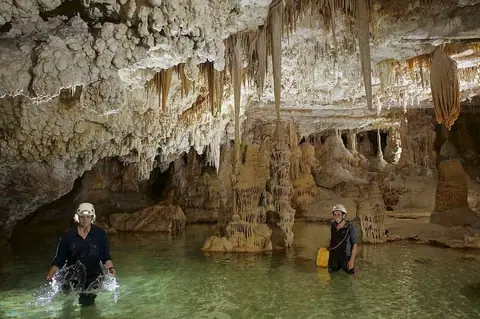
The land caves (the Pirates’ Cave, Cova del Pirata) open straight off the beach, in the cliff on the right. You can walk in with a torch. The stalactites and stalagmites are impressive for a cave you can visit without a guide or a ticket. The Cave of the Bridge, a little further along the cliff, lets you swim surrounded by limestone formations, with natural light pouring in through the opening above.
The sea caves (Cova des Coloms) can only be reached from the water, by swimming from the beach. The main cave runs around 200 metres into the cliff: you need a waterproof torch, you need to be comfortable swimming in enclosed spaces, and it’s not for anyone claustrophobic. A guided trip, such as the boat excursions from Porto Cristo, is the safest way to explore it. If you go on your own, a waterproof head torch is essential, go in pairs at the very least, and avoid days with a heavy swell.
Snorkelling at Cala Varques: the best spots
Cala Varques is one of the best snorkelling beaches you can walk to in Mallorca, for a simple reason: with no motorboats in the cove, the seabed is well preserved. The posidonia seagrass meadows, between 1 and 4 metres deep, are dense and in excellent condition. Expect shoals of salema, gilt-head bream, moray eels in the crevices and octopus under the boulders. The best spots are the cliffs on the right and left as you face the sea, and the submerged rocks 50 to 80 metres from the shore.
Nudity has been tolerated in practice for years, without being officially allowed, and Cala Varques is known locally as a naturist beach. To identify what you’ll see underwater, our guide to marine life in Mallorca is useful. For comparable snorkelling sites on the east coast, our guide to diving and snorkelling in Mallorca covers the island’s best spots.
Combine Cala Varques with the Caves of Drach
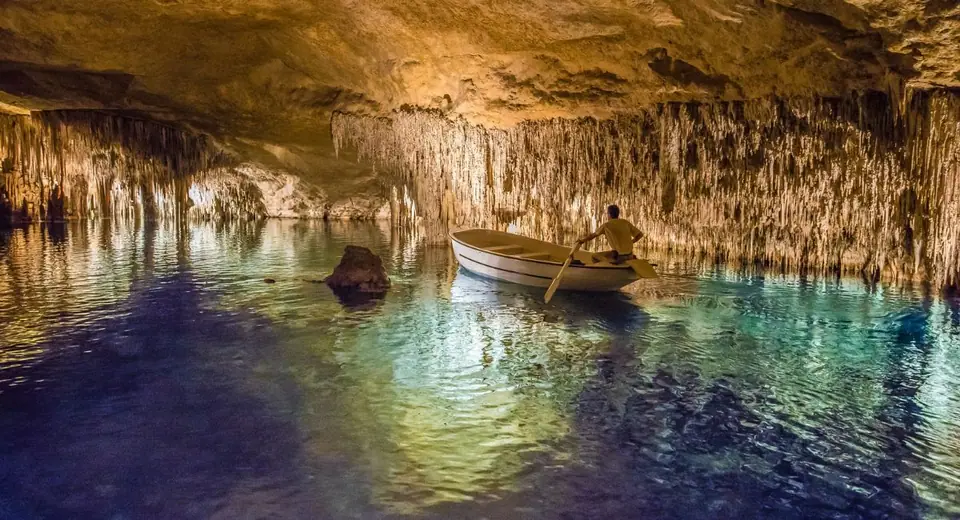
The Caves of Drach are just 8 km north of Cala Varques, in Porto Cristo. They’re one of the best-known visits on the east coast: a network of underground caves with Lake Martel, one of the largest underground lakes in the world, and a classical music concert played from boats. Our guide to the Caves of Drach tells you whether they’re worth it (short answer: yes, but book ahead). Cala Varques in the morning and the Caves of Drach in the afternoon is one of the most logical day trips on the east coast.
If you’d rather stay on the beach, Cala Mondragó, further south in the municipality of Santanyí, is a good choice for families with children if Cala Varques feels too demanding to reach. Our guide to Cala Mondragó and S’Amarador compares the two coves.
What to bring to Cala Varques
There are no facilities at all: no beach bar, no toilets, no bins. Bring, without exception: at least 1.5 litres of water per person, food for the day, sun cream, closed walking shoes (flip-flops won’t do on the path), a waterproof torch if you want to explore the caves, and a mask and snorkel. Phone signal is patchy in the pine woods, so download an offline map before you set off.
Best time to go: June and September. In July and August the cove gets more visitors than it can reasonably handle: arrive before 9.30am or after 4.30pm. In September the sea is still warm (24.7°C on average at Palma) and the paths are almost empty after 4pm.
FAQ
Can you get lost on the way to Cala Varques?
The direct path is waymarked but has a few forks in the pine woods. Always follow the most-used track and the paint marks on the stones. If in doubt, retrace your steps rather than trying a shortcut, and download the map on Maps.me or komoot before you lose signal.
Where do you park for Cala Varques?
The easiest option is the Cala Romantica car park, 50 minutes away on the coastal path. Since March 2026 you can no longer park on the old stretch of the Ma-4014: use authorised spaces only and never park on private land.
Are there jellyfish at Cala Varques?
Occasionally, when the wind blows from the east, as along the whole east coast of Mallorca. The fairly enclosed cove gives partial protection. Check our guide to jellyfish in Mallorca before you go for current alerts.
Can you get to Cala Varques by public transport?
Not easily. TIB line 401 runs from Palma to Porto Cristo via Manacor all year round. From late March to late October, line 427 continues from Porto Cristo to Cala Romantica, where the coastal path reaches Cala Varques in 50 minutes. Our guide to TIB buses in Mallorca has the timetables and connections.
Read next
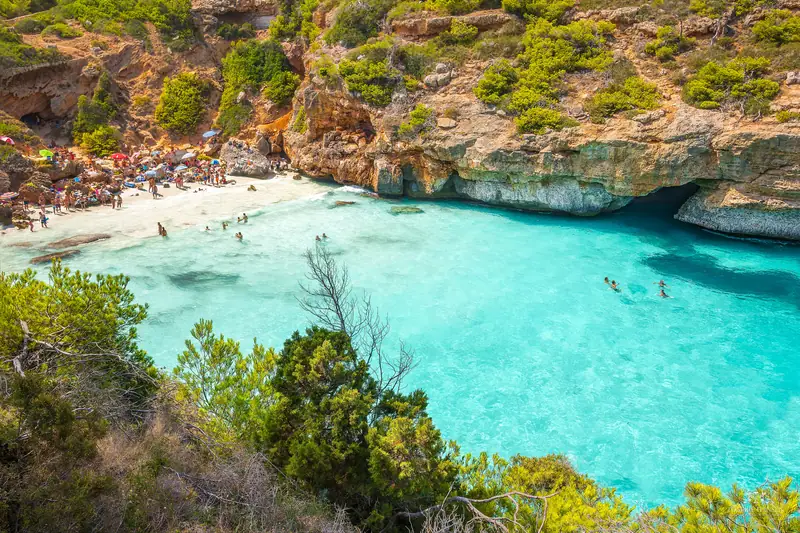
The best beaches in Mallorca: top 10, coves and the wind rule
The best beaches in Mallorca: Es Trenc, Caló des Moro, Cala Pi, Playa de Muro. Access, parking, the wind rule and tips to beat…
Es Trenc beach, Mallorca: parking, access and how to avoid the crowds
Over two kilometres of white sand with no concrete: where to park at Es Trenc (€8 to €10 a day), how to avoid crowds and seaweed…
Caló des Moro: parking, access and the best time to go
Caló des Moro parking explained: the free visitor car park, a 25 to 30-minute walk, and why to arrive before 8am.