Porto Cristo, Mallorca: things to do between the harbour and the caves
13 min readUpdated  By Antoon
Contents
- Arriving in Porto Cristo
- Porto Cristo caves: the Drach and the Hams from the harbour
- Things to do in Porto Cristo
- Porto Cristo market: day, place and fiestas
- A day in Porto Cristo
- History of Porto Cristo: from the Coves Blanques to “Porto Rojo”
- Around Porto Cristo: Manacor, pearls and Rafa Nadal
- Porto Cristo through the seasons
- How to get to Porto Cristo by bus or car
- Where to stay in Porto Cristo: harbour, S’Illot or the southern coves
- What you miss if you only pass through
- FAQ
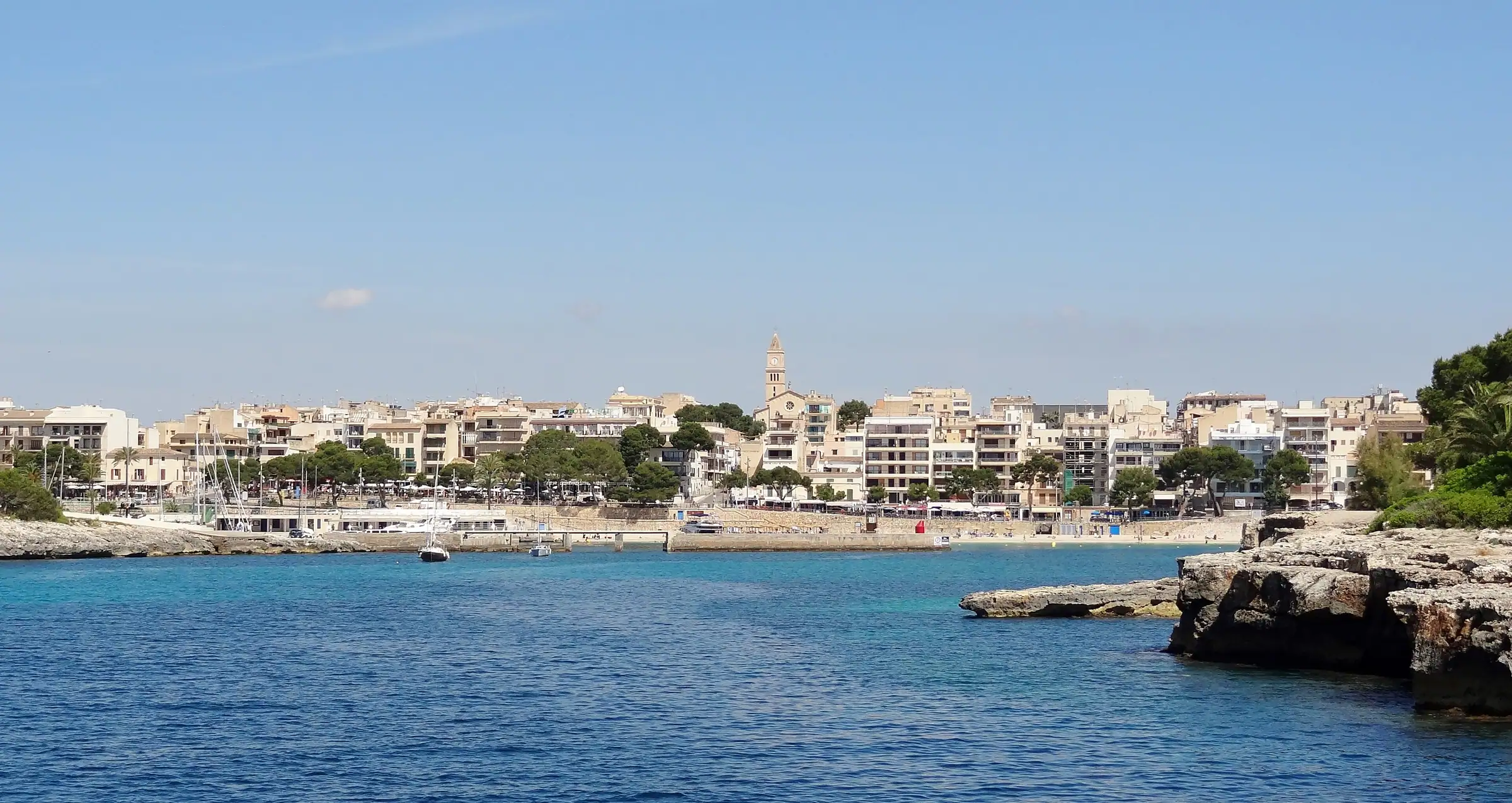
Porto Cristo (Portocristo in Catalan) is the harbour of the municipality of Manacor, on the east coast of Mallorca (Majorca), 64 km from Palma and 12 km from Manacor town. The village of around 9,500 inhabitants wraps around a narrow inlet, or cala, that serves as a natural harbour, with a sandy beach at its head. The Caves of Drach and their 117 m Lake Martel are 900 m on foot from the harbour, and the Caves of Hams 2 km away.
Porto Cristo suits you if you want to see the Caves of Drach without a car (bus 401 comes from Palma, and the entrance is 12 minutes’ walk from Plaça de s’Aljub), if you have young children (the harbour beach is about 300 m long, with shallow, sheltered water at the back of the inlet), or if you like working fishing harbours, where boats, boatyards and the fishermen’s guild share the inlet with the Club Nàutic. It suits you less if you want a long open beach (Sa Coma and Cala Millor are 6 and 9 km to the north) or clubs, which are in Palma and Magaluf, an hour or more away by road. Allow half a day for the harbour, the beach and the Drach, a full day with the Hams and Manacor.
Arriving in Porto Cristo
Bus 401 from Palma and Manacor stops on the Carretera de Son Servera, a few streets from the harbour. Further down, Plaça de s’Aljub has the tourist office, open on weekdays from 9am to 2pm, and the taxi rank. In front of you, the inlet cuts deep inland: this is the harbour, sheltered to the south-east by the rock of Es Morro de sa Carabassa.
The first sound you hear is the halyards of the yachts. The Es Riuet marina fills the northern arm of the inlet. On the other bank, the boats of the fishermen’s guild and the boatyards are a reminder that the village lived from fishing before the caves.
At the head of the inlet, the harbour beach stretches for about 300 m of fine sand. The Passeig de la Sirena runs alongside it, following Carrer de Bordils: this is where the Sunday market sets up, and where the glass-bottom boats that cruise along the coast leave from.
Above the beach, the white cliff is pierced by the Coves Blanques, caves where fishermen lived in the 19th century. For the Caves of Drach, head south up the road to the caves (Carretera de les Coves): 885 m and 12 minutes on foot from Plaça de s’Aljub.
Porto Cristo caves: the Drach and the Hams from the harbour
According to Manacor’s tourist office, the two most visited caves on the island are in Porto Cristo. The Coves del Drach open at the southern end of the village, at the end of the caves road. The Coves dels Hams are at kilometre 11 of the Manacor road, 2 km from the harbour. Each visit takes about an hour, at 17 to 21°C.
- Plaça de s’Aljub, the starting point. Set off from the harbour square, next to the tourist office. Head south along the marina, then up the caves road between houses and pines.
- The entrance to the Caves of Drach. The entrance is 200 m from the caves car park. Visits leave at fixed times, from 10am to 5pm in season and four times a day in winter. Arrive 15 minutes before your slot.
- The galleries. The route is about 1,200 m long and goes down to 25 m below the surface, past stalactites and pools of clear water. Flash photography is banned, as are tripods and selfie sticks.
- Lake Martel and its concert. The lake is named after Édouard-Alfred Martel, the French speleologist who explored it in 1896. It is 117 m long and 30 m wide, and 4 to 12 m deep. Every visit ends here with a concert of around 10 minutes, played since 1935 by a quartet (cello, harpsichord and two violins). Photos and video are not allowed during it.
- The crossing and the exit. After the concert, you cross the lake by boat or walk along it, at no extra cost. The way out passes through the Majorica shop at the cave entrance.
- The Caves of Hams. Discovered in 1905 by Pere Caldentey, they are named after their hook-shaped formations, hams meaning fish hooks in Mallorcan. The visit goes through 12 galleries to the lake known as the “Mar de Venecia”, where a musical show takes place. Pushchairs are not allowed.
Things to do in Porto Cristo
The first six places are less than 30 minutes’ walk from Plaça de s’Aljub.
Porto Cristo beach and the Passeig de la Sirena
The fine sandy beach measures about 300 m by 30 m, at the head of the inlet, in the middle of the village, with shallow water. The Passeig de la Sirena borders it along Carrer de Bordils and hosts the Sunday market and the fiestas.
The harbour, Es Riuet and the Club Nàutic
The inlet forms a natural harbour open to the south-east. The Es Riuet marina occupies its inner arm, and the Club Nàutic runs around 200 berths there, next to the fishing boats and the boatyards. The quays are open to all.
The Coves Blanques
These sea-level caves next to the beach sheltered fishermen in the early 19th century, and a walkway cut into the cliff runs past them. Since a rockfall in January 2026, a section has been closed by the council: respect the barriers. They are 522 m, or 7 minutes on foot, from Plaça de s’Aljub.
The church of the Mare de Déu del Carme
The first church was built in 1890 on Plaça del Carme. Enlarged in stages, it was inaugurated in August 1949 and its bell tower completed in 1957. It is a neo-Romanesque basilica with a nave and side aisles, 436 m (6 minutes on foot) from Plaça de s’Aljub.
The Caves of Drach
About 1,200 m of galleries down to 25 m deep, then Lake Martel and its concert. Adult entry costs €18.50 online and €19.50 at the ticket office, and €11.50 online for a child aged 3 to 12. The caves are 885 m from the harbour and close on 25 December and 1 January. Full details are in our guide to the Caves of Drach, and our page on Mallorca’s caves compares them with the others.
Torre dels Falcons and the lighthouse
The watchtower was raised in 1577 on the Serral dels Falcons to keep an eye out for corsairs. Bombed in 1936, it was rebuilt in 1960. The lighthouse, at the tip of Es Morro de sa Carabassa, dates from 1851. The tower is at the end of Avinguda de Joan Servera Camps, 1.4 km from the harbour.
The Caves of Hams
Discovered in 1905 and open to the public since 1910, they lead to the “Mar de Venecia” lake. Adult tickets cost €18.50 online and €19.50 at the ticket office, and €12.50 online for a child. They are on the Ma-4020 at km 11, with a free car park, and open from 10am to 4.30pm in winter.
Cala Varques
This sandy cove, with no facilities at all, is 10 km south on the Ma-4014, then a 20 to 40-minute walk through pinewoods. Its sea caves can be reached by swimming. See our guide to Cala Varques.
Porto Cristo market: day, place and fiestas
The Sunday market is held all year on the Passeig de la Sirena, from 8.15am to 2pm, under Manacor’s municipal regulations. You’ll find fruit and vegetables, plants, cheeses, olives and cured sausages (embotits). It used to take place in front of the church.
From June to September, a Thursday market sets up in the same place, from 8.30am to 1.30pm. On the third Saturday of the month, from 10am to 1.30pm, there is also a second-hand market. See the calendar of Mallorca’s markets.
The village fiesta falls on 16 July, the day of the Mare de Déu del Carme, patron saint of sailors, at the end of two weeks of celebrations: the Mostra de Cuina Marinera seafood showcase, a night fair and fireworks. Sant Antoni is celebrated here on 17 January; see Sant Antoni in Mallorca.
A day in Porto Cristo
Come on a Sunday for the market, or on a summer Thursday. Book the 10am cave visit online.
- 8.30am: the market on the Passeig de la Sirena. On Sundays, stalls of fruit, vegetables, cheese and cured sausages set up facing the beach until 2pm.
- 9.30am: on foot to the Drach. Leave Plaça de s’Aljub 30 minutes before the 10am slot: 12 minutes’ walk, plus the 15 minutes’ margin requested.
- 10am: Lake Martel in peace. The first visit of the day, with the concert on the lake, takes about an hour.
- 1pm: lunch on the harbour. The terraces on the Passeig de la Sirena and Carrer de Bordils face the beach and the fishing boats.
- 3pm: a swim at the harbour beach. The water stays shallow for the first few metres, sheltered by Es Morro de sa Carabassa.
- 5.30pm: the Torre dels Falcons. The 1577 watchtower is 1.4 km from the harbour, at the end of Avinguda de Joan Servera Camps: 19 minutes on foot.
- 7.30pm: back via the harbour. Walk down to Plaça de s’Aljub, or catch the 401 to Manacor and Palma, which runs into the evening.
History of Porto Cristo: from the Coves Blanques to “Porto Rojo”
Before the village there was the cala of Manacor and its caves. In the early 19th century, fishing families lived in the Coves Blanques above the beach. The Torre dels Falcons, built in 1577, already watched the coast for corsairs, and the lighthouse on Es Morro de sa Carabassa went up in 1851.
The settlement was officially founded in 1888 as the Colònia del Carme, in honour of the Mare de Déu del Carme. A customs house opened the same year, and the name Portocristo began to appear in documents. In 1895 the village had just 103 inhabitants.
On 16 August 1936, at the start of the Spanish Civil War, Republican troops under Captain Alberto Bayo landed at Porto Cristo and at Punta de n’Amer, to the north. The village was renamed “Porto Rojo”. Under bombing by the Italian air force, they re-embarked on 4 September 1936. The Torre dels Falcons, partly destroyed in the fighting, was only rebuilt in 1960.
Around Porto Cristo: Manacor, pearls and Rafa Nadal
Manacor, the main town of the municipality (49,153 inhabitants in 2025), is 12 km away on the Ma-4020, 15 minutes by car or a ride on the 401. Its market is on Monday morning on Plaça de Ramon Llull.
Majorca pearls have been made in Manacor by Majorica since 1902. The brand has two shops in Porto Cristo: at the entrance to the Caves of Drach and at no. 33 on the caves road.
The Rafa Nadal Academy is 12 km from the harbour, on the road to Cales de Mallorca. Its museum, which reopened on 14 May 2026, is open daily from 10am to 4.30pm, with adult tickets from €20: do the caves in the morning and Nadal in the afternoon.
Further afield, the prehistoric site of s’Hospitalet Vell, from the Bronze and Iron Ages, is 11 km south on the road to Cales de Mallorca, and Cala Petita, a sandy cove 2.4 km north of the harbour, can only be reached on foot.
Porto Cristo through the seasons
Spring. On 16 March, the Caves of Drach switch to their summer schedule, with visits from 10am to 5pm. The summer buses return on 27 March (in 2026): the A42 to the airport, the 424 to Cala Ratjada and the 427 to Cala Mendia. May and June are good months, ideally on a Sunday morning: market, then the 10am Drach visit.
Summer. On 16 July, Porto Cristo celebrates the Mare de Déu del Carme, patron saint of sailors, after two weeks of fiestas. From June to September, the Thursday market joins the Sunday one. The 425 links Cala Bona with the harbour from 15 May to mid-October.
Autumn. Summer lines A42, 424, 427 and 428 stop on 31 October. From 1 November, the Drach drops to four visits a day, at 10.30am, 12pm, 2pm and 3.30pm. The 401 is then the only bus to Manacor and Palma. September is still a good month to visit.
Winter. On 17 January, for Sant Antoni, the village blesses the animals and holds a parade of floats. The Caves of Drach close on 25 December and 1 January, and the Hams open from 10am to 4.30pm.
How to get to Porto Cristo by bus or car
By car, Porto Cristo is 64 km from Palma and 64 km from the airport, about an hour on the Ma-15 to Manacor, then the Ma-4020. From the village, the Ma-4023 also runs to Son Servera (9 km) and the Ma-4014 to Portocolom (18 km). For the Caves of Drach, park in the caves car park, 200 m from the entrance; the Hams car park, at km 11 on the Ma-4020, is free. On Sunday mornings, the market takes over the Passeig de la Sirena. To compare deals, see our page on car hire in Mallorca.
TIB bus 401 links Cala Millor, Sa Coma, S’Illot, Porto Cristo, Manacor and Palma’s Estació Intermodal all year. On weekdays it runs every 25 to 45 minutes, from 6am until late evening, and takes 1 hour 15 to 1 hour 30 minutes to Palma. On Sundays, expect around one departure an hour.
From late March to late October, the A42 goes straight to the airport via Manacor. In winter, take the 401 to Palma, then EMT bus A1. See also our guide to TIB buses.
- 401: Cala Millor – Sa Coma – S’Illot – Porto Cristo – Manacor – Palma, 1 hour 15 to 1 hour 30 minutes to Palma, every 25 to 45 minutes on weekdays, all year.
- A42: Cala Bona – Cala Millor – Porto Cristo – Manacor – airport, from 27 March to 31 October (2026).
- 424: Cala Ratjada – Canyamel – Cala Millor – S’Illot – Porto Cristo, from 27 March to 31 October (2026).
- 425: Cala Bona – Cala Millor – Sa Coma – S’Illot – Porto Cristo, from 15 May to 16 October (2026).
- 427: Porto Cristo – Cala Anguila – Cala Mendia – Cala Romàntica, from 27 March to 31 October (2026).
- 428: Porto Cristo – Cales de Mallorca – Portocolom – Cala d’Or, from 24 April to 31 October (2026).
Where to stay in Porto Cristo: harbour, S’Illot or the southern coves
Porto Cristo itself has mostly small hotels around the harbour. The big beach hotels are in S’Illot, 6 km north, and in the coves of Cala Anguila and Cala Mendia, 4 km south.
The harbour and the beach
Stay near the Passeig de la Sirena to walk to the beach, the market and the Caves of Drach (885 m). The adults-only THB Felip is at no. 41 Carrer de Bordils, facing the beach, and the three-star Hotel Bini at no. 27 Carrer d’en Sureda. Best for couples and travellers using the bus.
S’Illot
The resort is 6 km north, on the 401 route. Its sandy beach is the longest in the area, and Cala Morlanda, a rocky cove, keeps the remains of a square talaiot. Perla de S’Illot is on Carrer Murtera and 07 Colombo on Carrer Lluc. Best for families who want a longer beach; see also Sa Coma beach and Cala Millor.
Cala Anguila and Cala Mendia
These two sandy coves are 4 km south, 7 minutes by car, served in summer by bus 427. The four-star Blau Punta Reina Club aparthotel stands on the Punta Reina headland. Best for a cove holiday with a car.
What you miss if you only pass through
- The Torre dels Falcons in the evening light, 19 minutes’ walk from the harbour, and the view of the 1851 lighthouse.
- The Coves Blanques above the beach, where fishermen lived before the village was founded in 1888.
- Cala Petita, a sandy cove 2.4 km north of the harbour, reachable only on foot.
- The prehistoric site of s’Hospitalet Vell, from the Bronze and Iron Ages, 11 km south on the Cales de Mallorca road.
FAQ
Where is Porto Cristo?
On the east coast of Mallorca, 64 km from Palma by road, about an hour’s drive. Porto Cristo belongs to the municipality of Manacor, whose centre is 12 km inland, which is why it is also called the “Port de Manacor”.
What day is Porto Cristo market?
Sunday from 8.15am to 2pm, all year, on the Passeig de la Sirena facing the beach. From June to September, a second market is held there on Thursday from 8.30am to 1.30pm, and a second-hand market on the third Saturday of the month.
Can you walk to the Caves of Drach from Porto Cristo?
Yes. The entrance is 885 m from Plaça de s’Aljub, on the caves road, a 12-minute walk. The Caves of Hams are further, 2 km away beside the Manacor road: 27 minutes on foot or 5 minutes by car.
How do you get to Porto Cristo from Palma by bus?
TIB bus 401 leaves Palma’s Estació Intermodal all year and runs via Manacor, taking 1 hour 15 to 1 hour 30 minutes. On weekdays it leaves every 25 to 45 minutes. From late March to late October, the A42 also links Porto Cristo with the airport.
Is there a beach in Porto Cristo?
Yes, at the head of the inlet, right in the village: about 300 m of fine sand, with calm, shallow water. The longer beaches of S’Illot and Sa Coma are 6 km to the north.
Read next
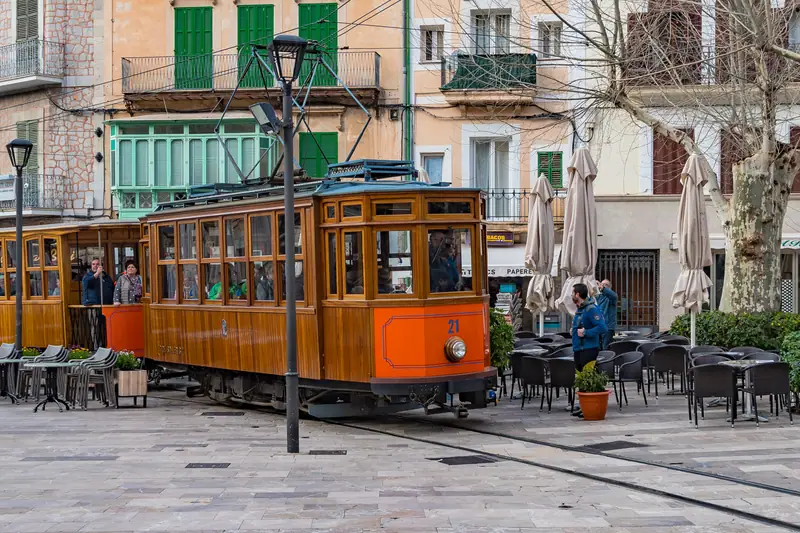
Things to do in Sóller, Mallorca: the train, the tram, the port and the valley
Things to do in Sóller, Mallorca: train or free tunnel, Sant Bartomeu church, the tram to the port, red prawns and where to park.
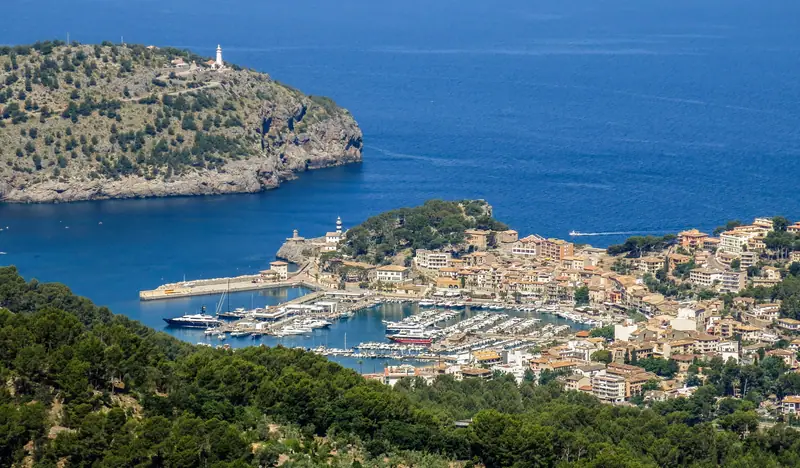
Port de Sóller, Mallorca: things to do, the tram, beaches, lighthouses and where to stay
Things to do in Port de Sóller: the 1913 tram from Sóller (30 min, €10), Repic beach, the Cap Gros lighthouse, boats to Sa…
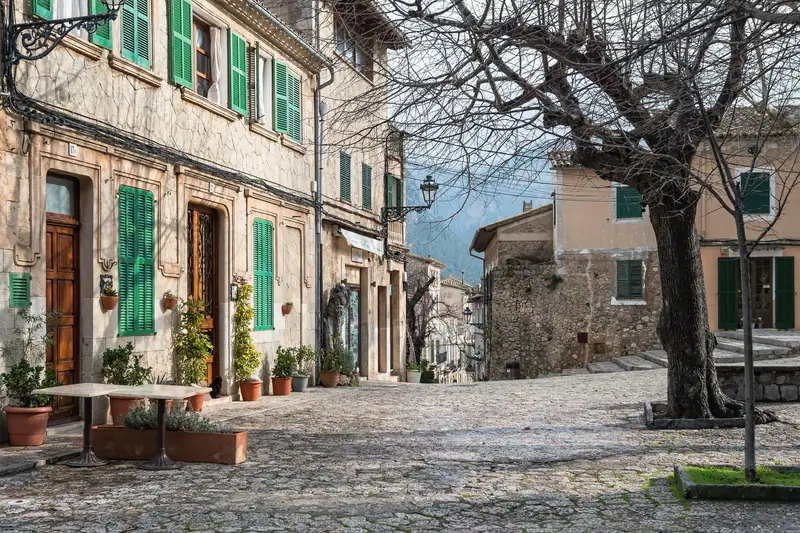
Valldemossa, Mallorca: the Charterhouse, coca de patata and parking
Valldemossa without the crowds: Chopin's Charterhouse (€12.50), coca de patata at Ca'n Molinas, the best viewpoint, the…