Olivar market and Santa Catalina market in Palma: opening hours and what to buy
6 min readUpdated  By Antoon
Contents
The Olivar market in Palma (Mercat de l’Olivar), near Plaça d’Espanya, is open Monday to Friday from 7am to 2.30pm, with some stalls open until 8pm, and on Saturday from 7am to 3pm. Palma has two covered markets worth the trip, and they work in very different ways. The Mercat de l’Olivar has been the city’s market since 1951: a monumental hall where Palma’s residents still do their everyday shopping. The Mercat de Santa Catalina is the hub of a neighbourhood in full transformation, trendier and more foodie. Both are worth a visit, but not for the same reasons, nor at the same times of day.
This guide covers what to buy in each market, when to go, and what to steer clear of.
Mercat de l’Olivar: Palma’s real food market
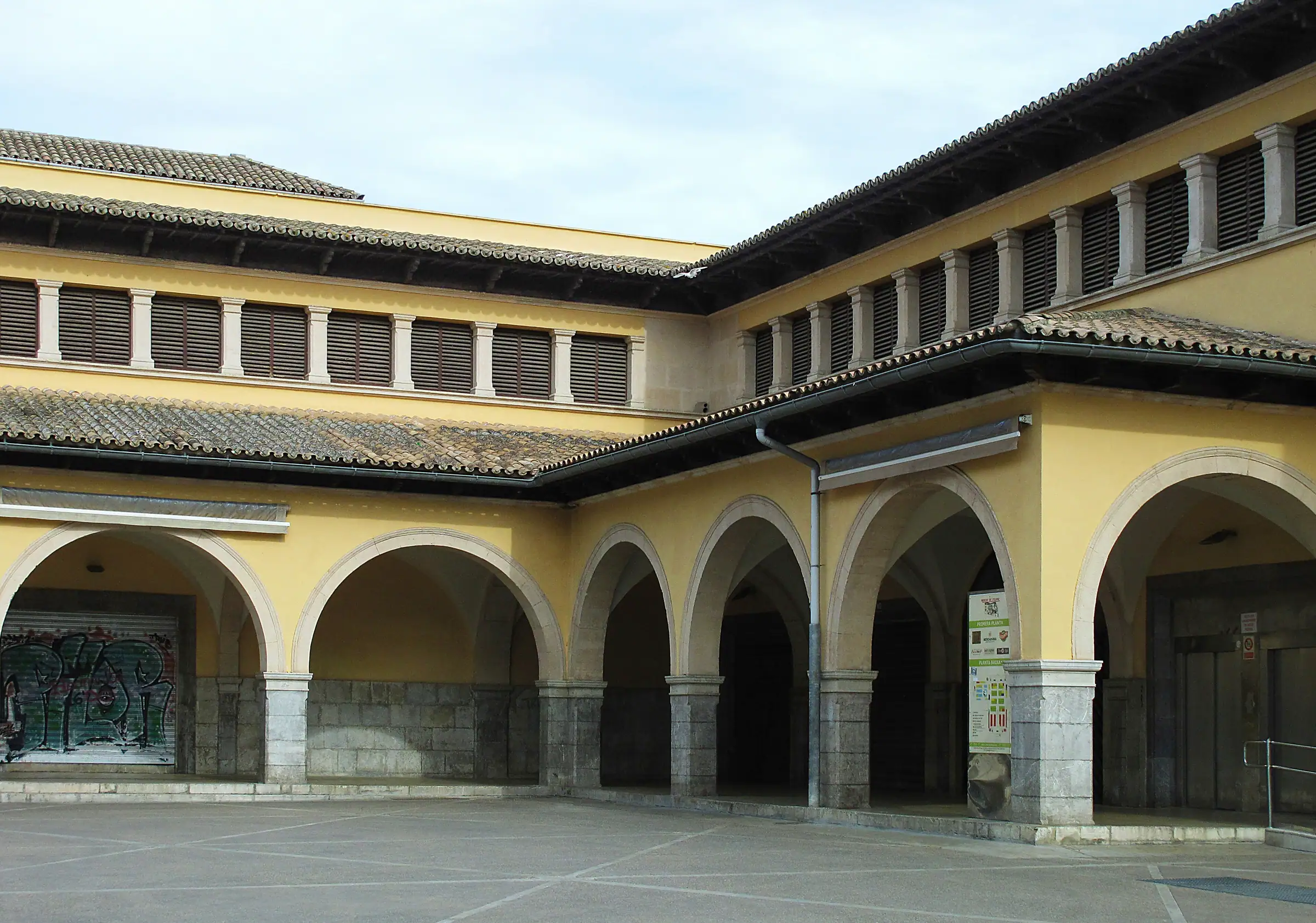
It is an architecturally superb hall, built in 1951, with mosaic floors, natural light and clearly defined sections over two levels. The building has been fully renovated in recent years while keeping its character, and it has a clean car park reached from Plaça de l’Olivar.
Olivar market opening hours
Official hours: Monday to Friday from 7am to 2.30pm, with some stalls open until 8pm, and Saturday from 7am to 3pm. Closed on Sunday. The food area (bars and restaurants inside the market) is open Monday to Saturday until 4pm.
- Address: Plaça de l’Olivar, 4, Palma (between Plaça d’Espanya and Carrer Sant Miquel)
- Phone: +34 971 72 03 14
- Website: mercatolivar.com
- Parking: on site, with direct access from the square
The sections not to miss
The fish market (on the east side of the hall) is the best in Palma for fresh Mediterranean fish: sea bass, sea bream, red mullet, octopus and all kinds of cephalopods. Arrive before 9am for the best choice. Note that on Mondays most fishmongers are closed, with only a few opening now and then. The bars in the fish section serve oysters, sea urchins and seafood to eat on the spot, standing at the counter, from 8am.
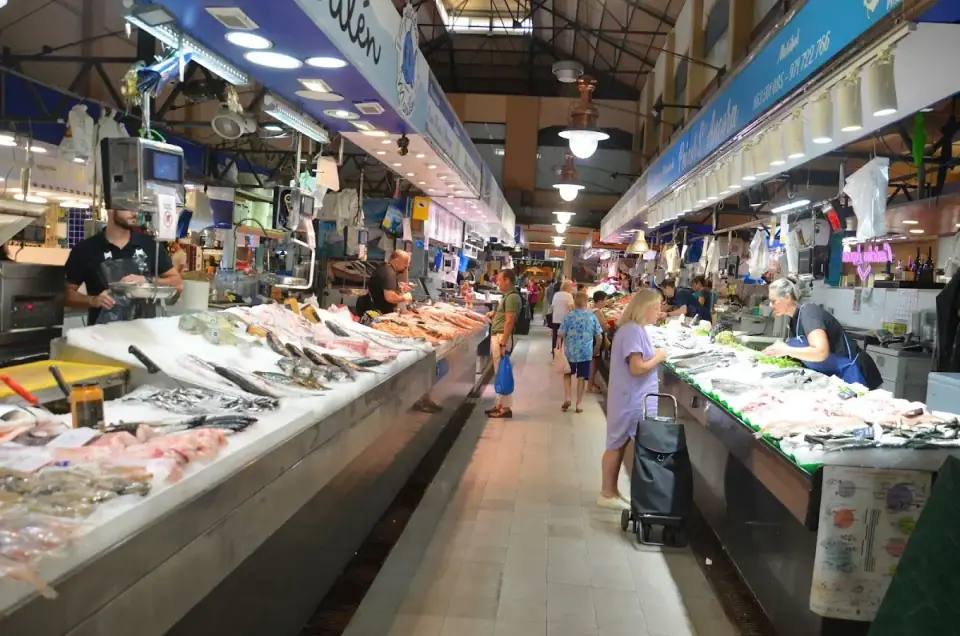
The charcuterie stalls are a must if you love local produce. You’ll find sobrasada PGI in standard pork and black pork versions (more marbled, more intense), botifarró (a spiced blood sausage) and camaiot, a peppery cold cut you’ll hardly find outside Mallorca. Our tips on what to take home are in our guide to sobrasada and local products to bring back from Mallorca.
The cheese counters cover handmade Mallorcan sheep’s cheeses as well as matured Mahón from Menorca, and farm cheeses from the Serra de Tramuntana you won’t find in supermarkets. Some stalls offer tastings with no obligation to buy.
The fruit and vegetables on the lower level give a good picture of what the Plain of Palma grows: local tomato varieties, island capers, almonds and fresh herbs in summer. It isn’t the organic, straight-from-the-farmer market (that’s more Santa Catalina), but the choice and freshness are real.
One thing to watch: the stalls around the outside of the hall are often tourist-oriented grocers, with imported products passed off as local. Stay inside the main hall for genuine local sellers and producers.
Santa Catalina market: the market of Palma’s trendy district
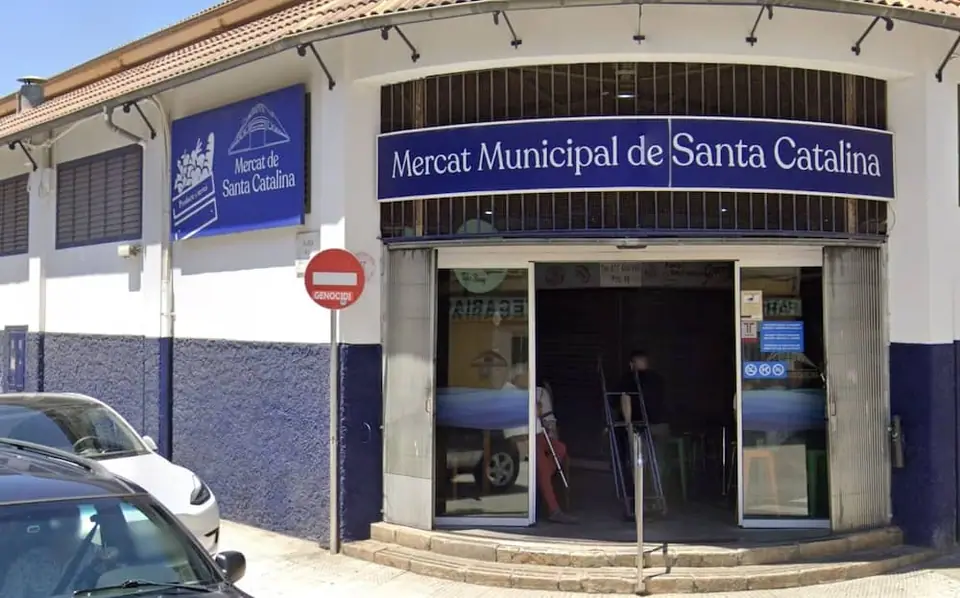
The Mercat de Santa Catalina, a covered market and Palma’s oldest municipal market (1920), opens Monday to Saturday: 7am to 3pm for the shops and until 5pm for the bars and food counters; the fishmongers are closed on Mondays. It is both a neighbourhood market and a food address: its bars and counters serve tapas and market dishes until mid-afternoon, Monday to Saturday. In a few years the surrounding district has become the liveliest in Palma for eating and going out.
What Santa Catalina does better than the Olivar is direct-from-producer food. Several stalls are run by farmers from the Plain of Palma or the Serra de Tramuntana selling their own vegetables, fruit, honey and herbs. Before 10am is the best time for food shopping, with the day’s deliveries. The Saturday street food stalls (oysters, pa amb oli with black pork, matured cheeses) reach a quality you won’t find at the Olivar.
The Santa Catalina district is worth a visit even without the market: the streets around Carrer de Sant Magí and Carrer de la Fàbrica are lined with restaurants that have made it Palma’s food hub for about ten years. For the nightlife side of Santa Catalina, our guide to nightlife in Palma explains why locals prefer it for a night out.
How to combine both markets in one morning
The ideal route if you have three hours: start at the Olivar from 8am for the fish and charcuterie (the best stalls empty after 10am), then head to Santa Catalina around 9.30 to 10am for vegetables and breakfast at the market. The two are 15 minutes apart on foot, or 5 minutes by bike. This route works Monday to Saturday; avoid Monday if you’re after fish, as most fishmongers are closed.
For parking, our guide to free parking in Palma lists options within 10 minutes’ walk of both markets. The Olivar has its own car park on site, which makes it easy to reach by car from anywhere on the island.
Other markets in Palma and around the island
If you want more, Palma has other markets that round off the route nicely. The flower and plant kiosks on La Rambla are popular with residents. The craft market on Plaça Major (Monday, Friday and Saturday, 10am to 2pm) leans towards crafts and second-hand goods rather than food, but the setting in the heart of the old town is exceptional.
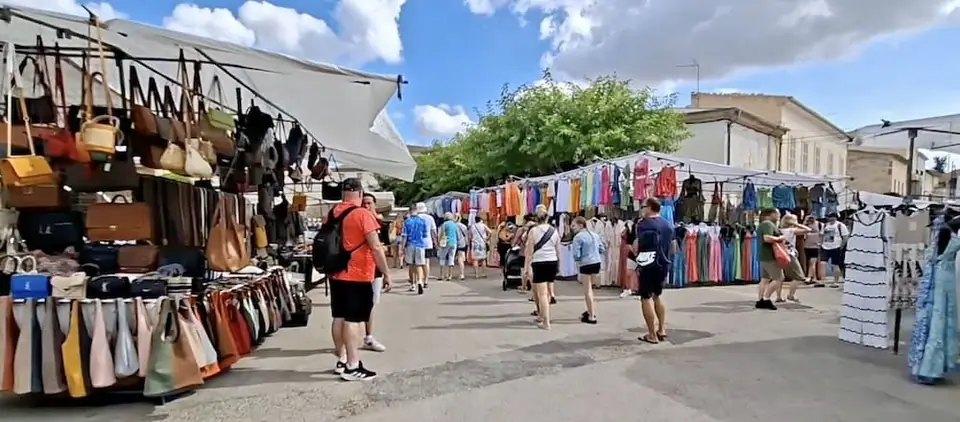
Beyond Palma, the weekly village markets are another way to buy local. Inca market (every Thursday) is the biggest on the island outside Palma, famous for leather and shoes. Sineu market (Wednesday) is considered the most authentic farmers’ market inland, with livestock sales in the morning. Our guide to village markets in Mallorca lists the days and specialities village by village, and the calendar of Mallorca’s weekly markets shows which market is on each day.
FAQ
What are the Olivar market opening hours?
Monday to Friday from 7am to 2.30pm, with some stalls open until 8pm, and Saturday from 7am to 3pm. The bars and restaurants inside open Monday to Saturday until 4pm. The market is closed on Sunday.
Are Palma’s markets open on Sunday?
No. Neither the Olivar nor Santa Catalina holds a market on Sunday. The Olivar is completely closed.
Can you eat at the markets?
At the Olivar, yes, from 8am: the bars in the fish section serve seafood, tapas and glasses of wine at the counter. At Santa Catalina, the market bars serve Monday to Saturday until about 5pm. Saturday brunch around the market is popular with locals: book the best-known restaurants.
Can you take market products home in your luggage?
Yes, without restriction within the EU. A whole sobrasada in its casing travels well (bring a cool bag for the flight). Raw-milk cheeses can be a problem outside the EU, while vacuum-packed charcuterie is fine anywhere. Many Olivar stalls vacuum-pack for free.
Is there parking at the Olivar market?
Yes, the Olivar has its own car park on site, reached from Plaça de l’Olivar. It is one of the few markets in central Palma with direct car access, handy for a big shop. Our guide to free parking in Palma covers the blue and white zones nearby.
Read next
Things to do in Mallorca: the highlights, tickets to book and itineraries
Things to do in Mallorca: Valldemossa, the Sóller train, the Caves of Drach, Formentor, Palma Cathedral, tickets to book and…
Things to do in Palma de Mallorca: what to see on foot and a one-day itinerary
Things to do in Palma de Mallorca: the cathedral and its terraces, old town patios, Arab baths, the Olivar market, Santa…
Palma Cathedral (La Seu): tickets, prices, opening times and rooftop terraces
Palma Cathedral tickets cost €11 online with the museum, €25 with the rooftop terraces; closed to visitors on Sundays. Opening…