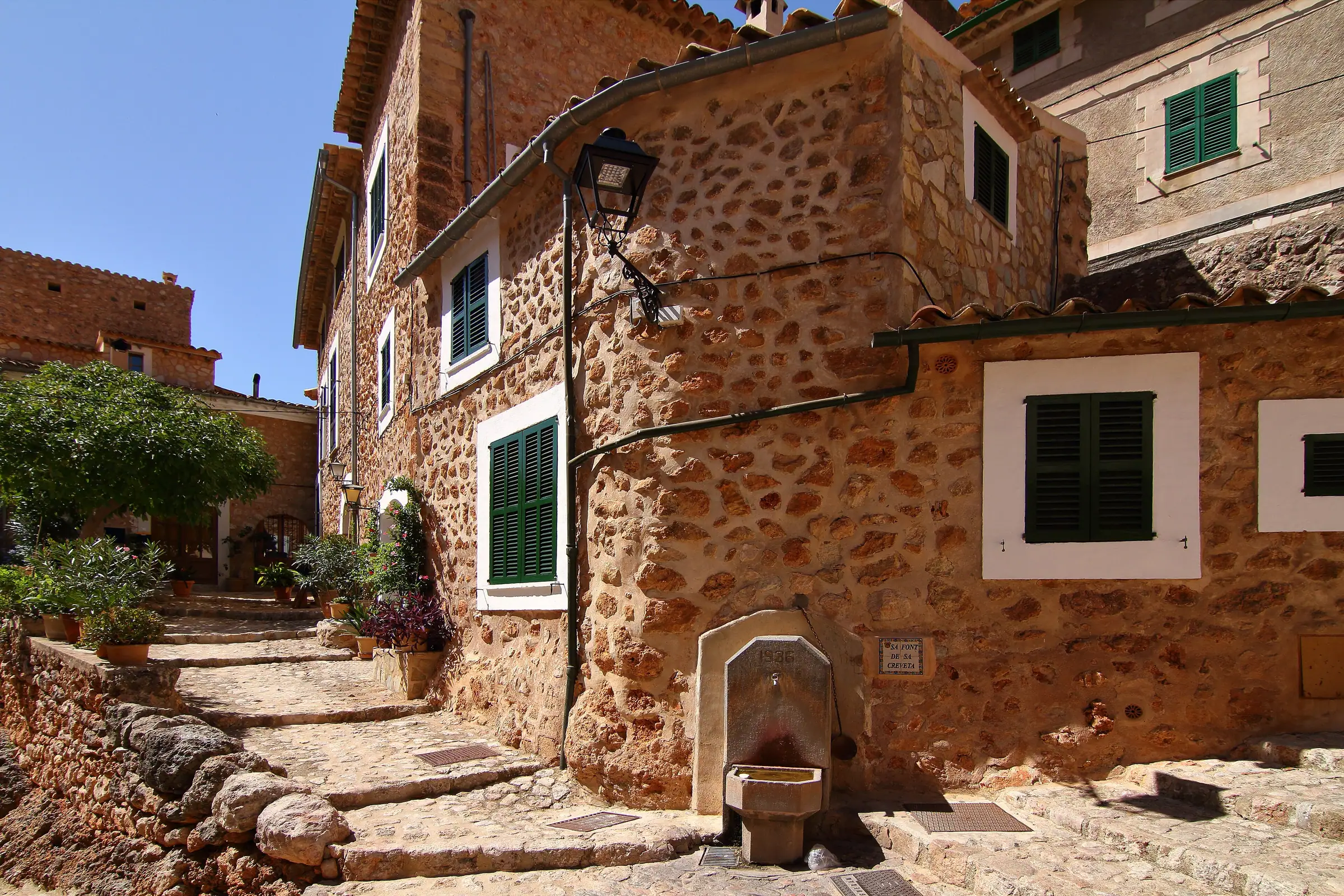
Fornalutx, Mallorca: things to do, getting there and parking
7 min readUpdated  By Antoon
Contents
Fornalutx, in Mallorca’s Serra de Tramuntana, is a village of 700 people, four streets and orange trees everywhere, clinging to the mountainside above the Sóller valley. It doesn’t cover much ground. But in 1983 it won second prize in Spain’s national competition for well-kept, embellished villages, and since 2017 it has carried the label of the Most Beautiful Villages in Spain (Los Pueblos más Bonitos de España), an association of 126 villages across the country, two of them in the Balearics: Fornalutx and Alcúdia.
The best way to see it is on a morning out of season, when mist still hangs over the road up from Sóller. As you reach the village, the first rays light up the red-tiled roofs and ochre stone façades, and there is hardly anyone about. That is the moment you understand why Fornalutx earned its reputation.
Why Fornalutx stands out: 1,000 years of stone and stubbornness
A label like this doesn’t come out of nowhere. Here it rewards a constant collective effort to keep the architectural heritage intact. In Fornalutx, new buildings must use the local ochre stone. From the paving of the streets to the walls of the houses, everything is stone. The green shutters, the bougainvillea spilling over the stone steps, the roofs with their teules de moro (Moorish tiles with painted patterns): every detail is regulated to protect the whole.
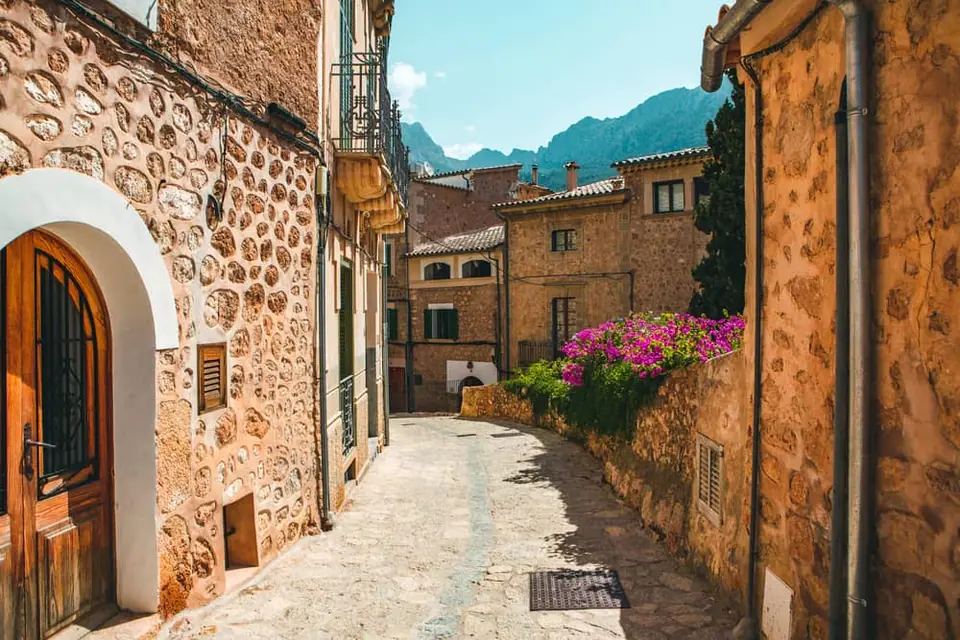
The story starts much earlier. A thousand years ago, Fornalutx was just an Arab farmstead in the mountains. After the Catalan conquest in the 13th century, the village began to take its present shape, built in terraces on the slopes of the Puig Major, the highest point in the Balearics at 1,436 metres. These farming terraces (marjades), inherited from Moorish water-management techniques, can still be seen in the orange groves and orchards around the village.
Fornalutx was part of the municipality of Sóller several times in its history, and has only had its own town council since 1837. Residents have held on to a rare rule ever since: nothing changes without a reason.
Things to do in Fornalutx: what you see as you wander
Fornalutx has to be explored on foot. The council has even published two walking routes, available at the tourist office: two loops that cover the most remarkable lanes.
Plaça d’Espanya: the heart of the village under the plane trees
This is the natural starting point. The main square is ringed by tall plane trees that filter the summer light. Two cafés have terraces here, ideal for ordering a café amb llet and watching village life before you set off. The Fornalutx bakery, right next door, opens early and sells the day’s local pastries: ensaïmadas, cocas and almond croissants. Arrive before 10am for the best choice.
The town hall and its 14th-century defence tower
The town hall occupies the former manor house of Can Arbona. Its large square defensive tower, dating from the 14th century, is the most striking building in the village: it was used to watch over the surroundings and to shelter from raids. There is no access inside, but the façade, one of the finest in the Tramuntana, is worth a photo.
Can Xoroi museum: 278 painted tiles and an olive mill
On Carrer de sa Font, the Casal de Can Xoroi is the cultural address to see in Fornalutx. This former 19th-century olive oil mill houses a collection of 278 painted tiles (the famous teules de moro), restored and shown in their historical context. These decorative tiles marked the end of building work on a house and protected it against bad luck. Open on Thursdays and Fridays only, from 10.30am to 1.30pm.
The church and the cemetery: a view over the valley
The parish church combines an early Gothic nave with Baroque changes added over the centuries. The cemetery, above the village towards the Puig Major, is often described as one of the calmest and most beautiful spots in Fornalutx: the view over the valley of orange trees from here is moving. Free access.
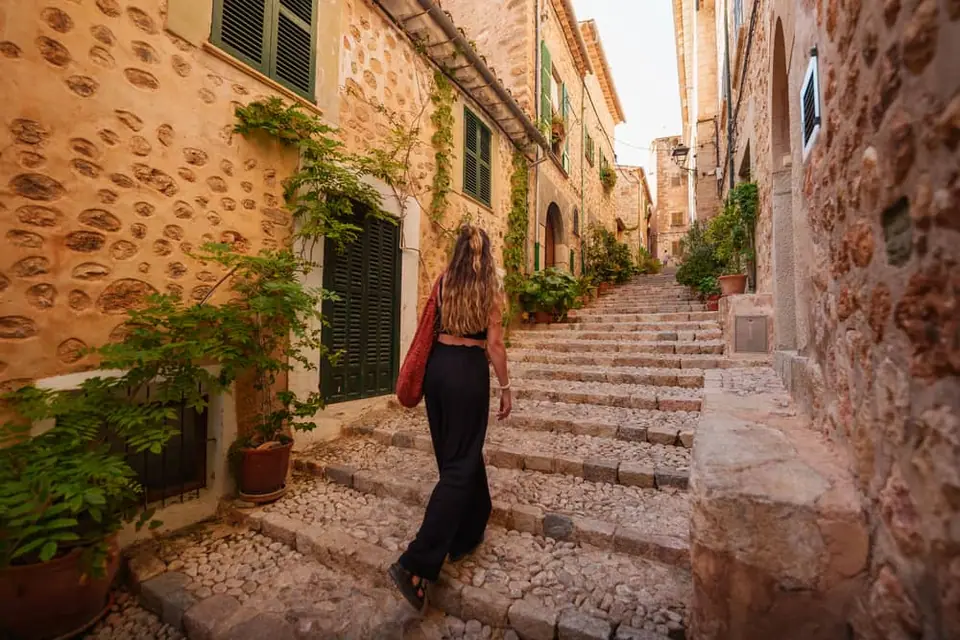
Walks from Fornalutx: the GR221 and the orange groves
Its position in the Serra de Tramuntana makes Fornalutx an excellent base for walking. The GR221, the long-distance trail across the Tramuntana from Port d’Andratx to Port de Pollença, passes close by through Biniaraix, and a link path reaches Fornalutx. A few routes from the village:
- Fornalutx to Biniaraix to Sóller: 6 km, about 2 hours, moderate climbs. The path runs past lemon and orange groves in one of the island’s most beautiful valleys. Easy to intermediate, suitable for everyone.
- Fornalutx to Binibassí loop: short and gently sloping, the easiest walk, ideal for linking the two hamlets without effort.
- Sa Figuera path: 2½ hours, mixed difficulty, with views of the Gorg Blau reservoir. For experienced walkers.
The agencies Mallorca Hiking and Tramuntana Tours, based in Sóller, offer local guides and electric bike hire for those who would rather pedal through the valley.
Fornalutx restaurants and hotels
Restaurants
Can Benet, a short walk from Plaça d’Espanya: generous tapas and hearty salads in a stone setting. The village’s safe bet, with a pleasant terrace and reasonable prices (€15 to €25). Es Turó, a little higher up: a fine terrace with panoramic views over the valley, black rice (arroz negro) and grilled fish as specialities. Allow €25 to €40. For breakfast, the bakery on Plaça d’Espanya is a good choice.
Where to stay
Fornalutx is not a beach resort. Accommodation means charming houses and small mountain hotels, quiet, with views over the orange trees. Can Verdera and Fornalutx Petit Hotel are the best known. Rooms start at €150 a night in season, reflecting a clearly upmarket positioning. Book well ahead from April to October. For other bases on the island, see our guide on where to stay in Mallorca.
How to get to Fornalutx from Palma or Sóller
Fornalutx is 4 km from Sóller and about 35 km from Palma. From Palma, you have two options:
- The vintage train from Palma to Sóller (from Palma station, about an hour, €30 return), then a bus or taxi from Sóller (5 to 7 minutes). The most enjoyable option, through tunnels and mountain scenery.
- By car: through the Sóller tunnel (toll-free since late 2017) from Palma, then a mountain road up to Fornalutx. Allow 40 minutes from Palma. The road is winding and narrow: concentrate and drive slowly.
Parking in Fornalutx
There are three municipal car parks in Fornalutx. The main one, Ses Barques, is full before 10.30am in July and August. Arrive early, or leave the car in Sóller and take the local bus (regular services, a few minutes’ ride).
When to visit Fornalutx: the seasons at a glance
Spring (March to May): the lemon and orange trees are in blossom, and the scent in the lanes is unforgettable. Soft light, few people. The best season for walking from the village.
Summer (June to August): the village gets busy, especially between 10am and 4pm when groups arrive from Sóller. Come before 9am or after 5pm for peace and quiet. The heat in the lanes is intense in midsummer.
Autumn and winter (September to February): Fornalutx gets its soul back. The orange trees are heavy with fruit, the light is low and golden, and the lanes are empty. The village is open and alive all year round: it is a real community, not a seasonal museum.
FAQ
Is Fornalutx the most beautiful village in Spain?
It is often called that because of two distinctions: it won second prize in Spain’s national competition for embellished, well-kept villages in 1983, and since 2017 it has carried the label of the Most Beautiful Villages in Spain, shared by 126 villages. In the Balearics, only Alcúdia also has it.
How long do you need to visit Fornalutx?
You can walk round the village in 1 to 1½ hours. To make the most of it (coffee on the square, Can Xoroi museum, a stroll to the cemetery, lunch), allow half a day. Add Sóller and a valley walk for a full day.
Is there parking in Fornalutx?
Yes, there are three municipal car parks. The main one, Ses Barques, is usually full before 10.30am in July and August, so arriving early is the best plan. Otherwise, leave the car in Sóller (bigger car parks) and take the local bus to Fornalutx.
Can you get to Fornalutx without a car?
Easily. From Palma, take the vintage train to Sóller (€30 return, about an hour), then the local bus from Sóller to Fornalutx (a few minutes, a few euros). Ideal in high season.
When is the best time to visit Fornalutx?
Spring (March to May) is ideal: the orange trees are in blossom, it is mild and quiet. Autumn (September to November) is also lovely, with fruit on the trees and beautiful light. In summer, come before 9am or after 5pm to avoid the groups.
Read next
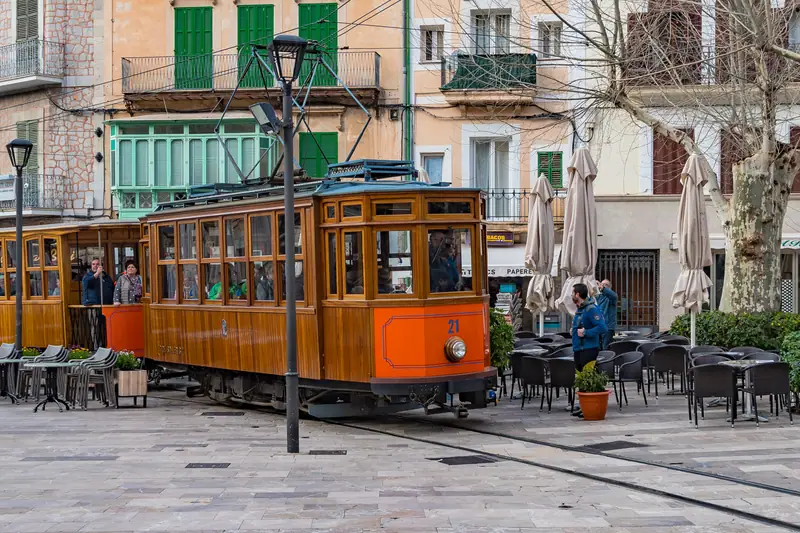
Things to do in Sóller, Mallorca: the train, the tram, the port and the valley
Things to do in Sóller, Mallorca: train or free tunnel, Sant Bartomeu church, the tram to the port, red prawns and where to park.
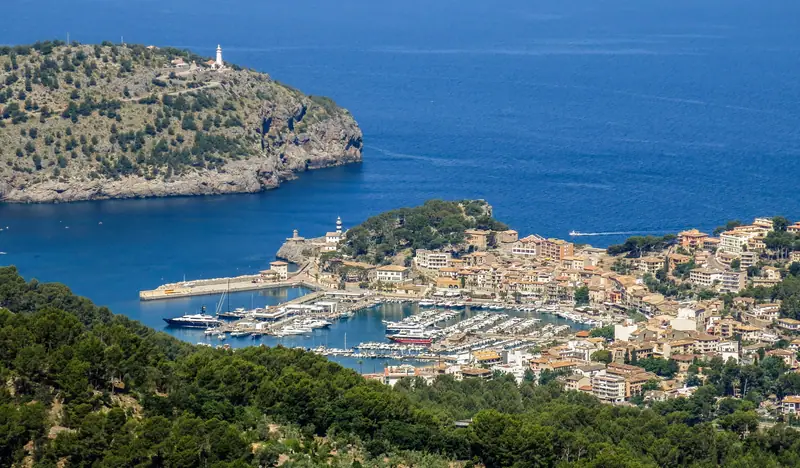
Port de Sóller, Mallorca: things to do, the tram, beaches, lighthouses and where to stay
Things to do in Port de Sóller: the 1913 tram from Sóller (30 min, €10), Repic beach, the Cap Gros lighthouse, boats to Sa…
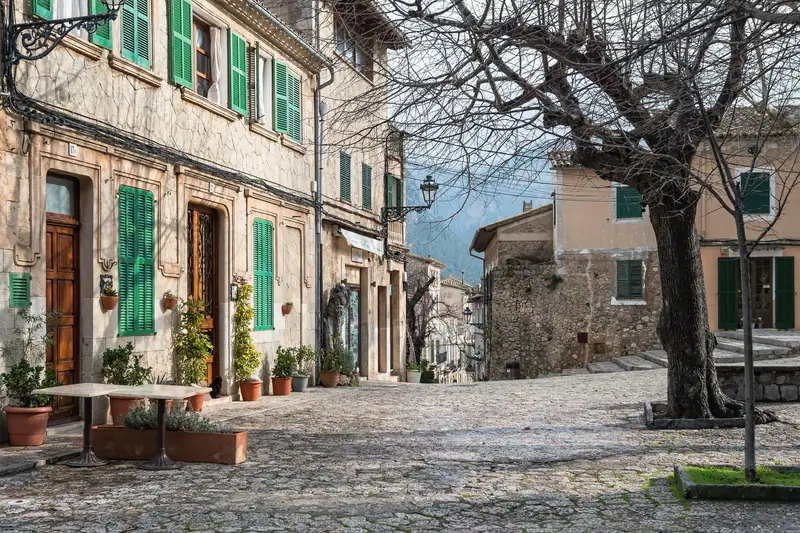
Valldemossa, Mallorca: the Charterhouse, coca de patata and parking
Valldemossa without the crowds: Chopin's Charterhouse (€12.50), coca de patata at Ca'n Molinas, the best viewpoint, the…